Alberta’s Opposition leader has asked Premier Danielle Smith to call off or postpone the province’s planned referendum on separation, arguing the vote should not proceed while Canada is engaged in a mounting trade dispute with the United States.
Political fight meets trade conflict
Naheed Nenshi, leader of the Alberta New Democratic Party, told reporters in Calgary that the Oct. 19 vote — which asks whether the provincial government should begin the legal process that could lead to a future binding vote on separation — is ill-timed. “It’s time to call off the referendum,” Nenshi said, asserting the premier is “pandering to separatists” and that holding the vote now displays weakness and disunity on the national stage.
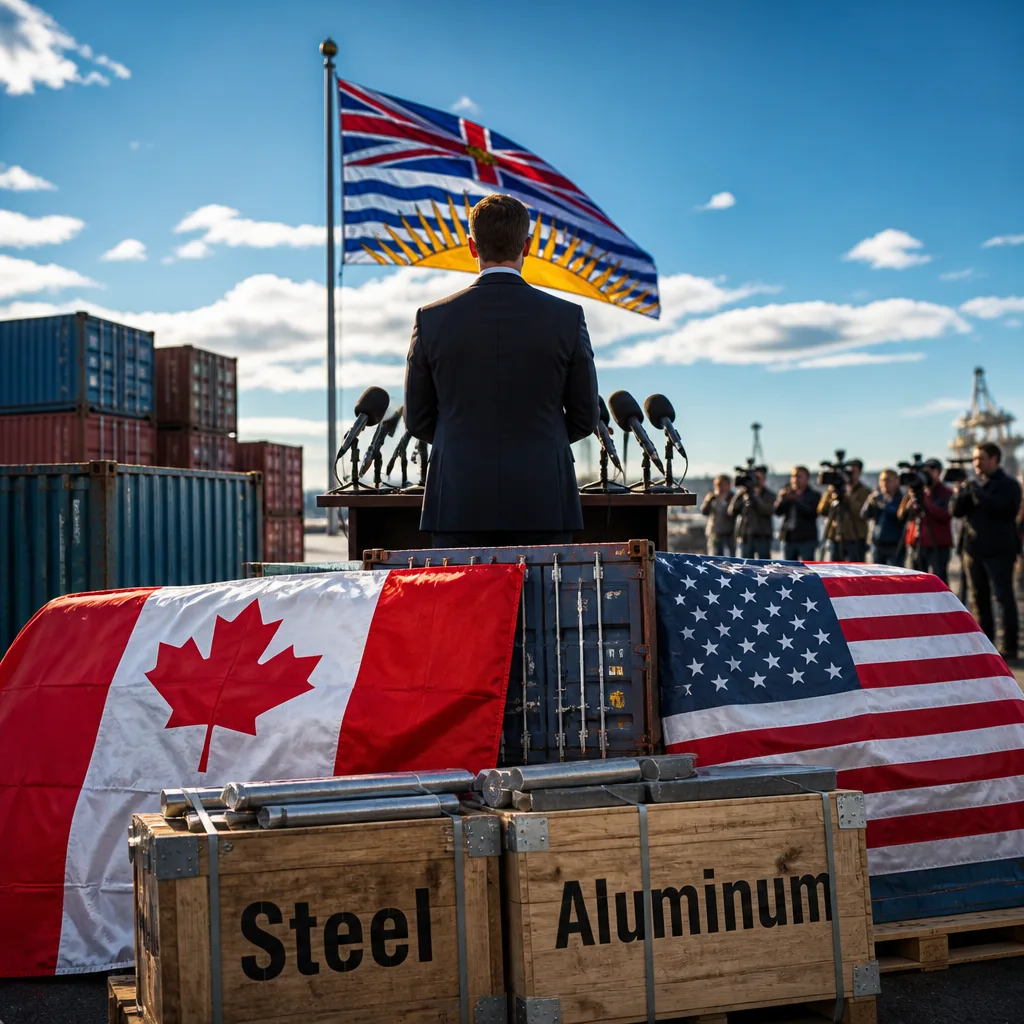
The call comes as Ottawa and Washington have imposed what each describes as retaliatory measures in a dispute that administration officials say covers a wide range of goods. The United States has levied import fees on about $28 billion worth of Canadian products, and Canada has announced counter-tariffs scheduled to take effect on Sept. 8. Ottawa’s list spans items from American steel and aluminium products to consumer items such as video game consoles and fishing rods.
Premier defends referendum plan
Ms. Smith has said the province will proceed with the referendum, citing widespread public interest captured by petitions. She told listeners on a radio talk show that thousands of petition signatures prompted the government to put the question to voters now, and that the ballot is intended to clarify what Albertans want the government to do.
The premier has also signalled her personal preference in public remarks: she said she will vote to remain in Canada. Her office referred questions about Mr. Nenshi’s remarks to the premier’s recent comments on the radio program.
National context and political ripple effects
Political leaders in other provinces have reacted to the wider geopolitical climate. Last week, Parti Québécois leader Paul St-Pierre Plamondon said he would delay a promised referendum on secession if his party wins the Quebec general election — citing the unpredictable nature of the Trump administration and the potential for external factors to affect the referendum process.
Mr. Nenshi framed his demand to cancel the Alberta vote as part of a broader appeal for national unity during a tense trade standoff. He argues that, with tariffs in place and countermeasures due soon, Canadian governments must avoid actions that could be interpreted as fracturing that unity.
- What’s at stake: the Oct. 19 referendum asks whether Alberta should begin the legal process toward a binding separation vote at some future date.
- Trade backdrop: U.S. tariffs on roughly $28 billion of Canadian goods; Canadian counter-tariffs set to start Sept. 8.
Observers say the intersection of provincial constitutional questions and international trade tensions raises novel political and legal pressures. Governments in Ottawa and in the provinces will be watching both public reaction to tariffs and how the Alberta question plays in the broader national conversation about economic resilience and federal-provincial relations.
| Measure | Details |
|---|---|
| U.S. tariffs | Applies to about $28 billion of Canadian imports |
| Canada counter-tariffs | Set to begin Sept. 8; includes steel, aluminium and a range of consumer goods |
For now, the referendum remains on the calendar, and the debate over whether to proceed exposes a fault line between premiers asserting provincial prerogatives and opposition leaders urging restraint at a moment of international economic friction. How Albertans respond on Oct. 19 — and how Ottawa navigates the ongoing trade dispute — could have consequences beyond the provincial border.