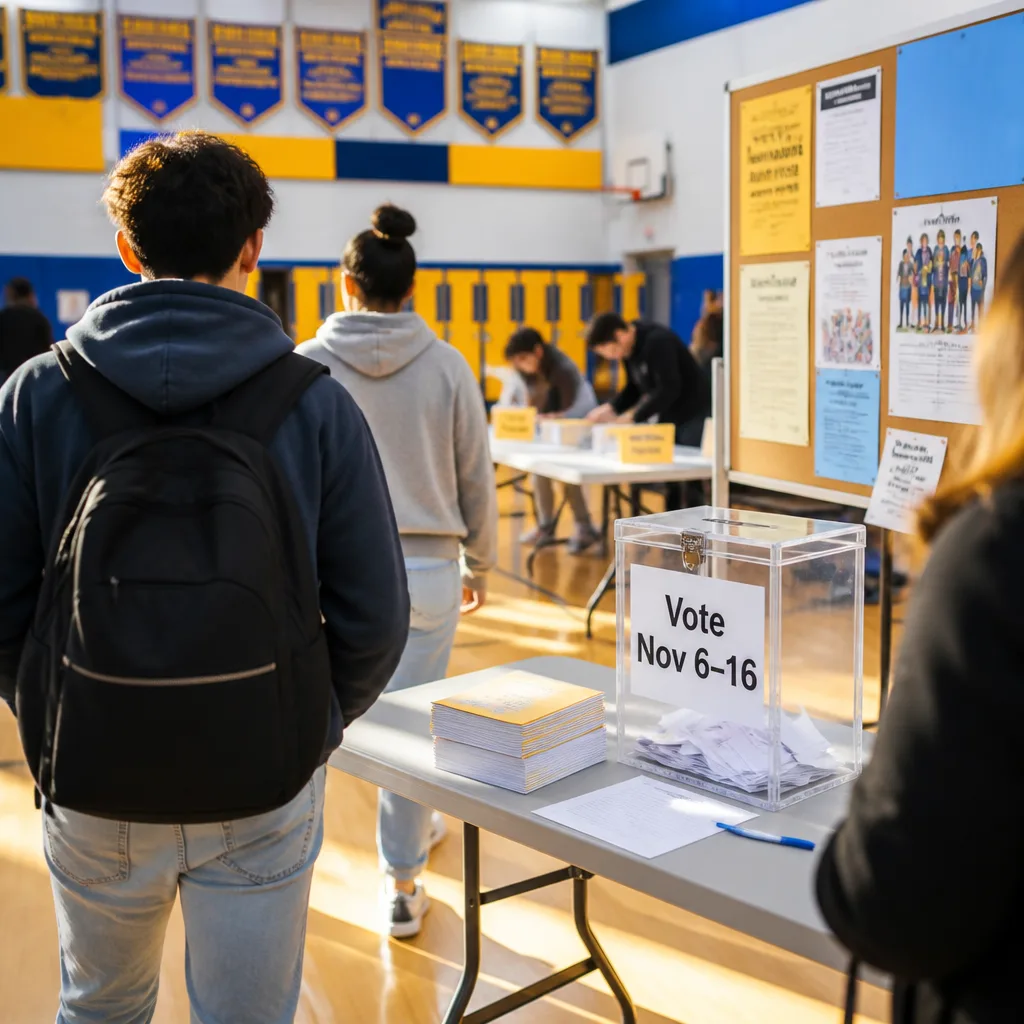
Ontario public high school teachers will vote from Nov. 6 to 16 on whether to authorize a strike, the Ontario Secondary School Teachers’ Federation announced Friday, joining other major education unions that have scheduled strike votes in November.
What unions say and why they’re voting
Unions representing elementary, secondary and Catholic teachers have arranged votes this fall as negotiations with the provincial government remain at an impasse. The moves come after current education contracts expired at the end of August and while the Ontario Labour Relations Board considers a dispute over which bargaining items should be handled centrally and which belong at the local level.
OSSTF president Martha Hradowy framed the coordinated votes as a demand for greater investment in public education.
“We are standing together for publicly funded education because regardless of which union you belong to, we are all facing the same pressures,”she said in an interview.
Hradowy said a strong strike mandate would bolster unions’ leverage at the bargaining table and communicate unity to the provincial government. A vote to authorize a strike does not automatically trigger job action; it gives unions legal authority to call a strike if local bargaining and provincial negotiations do not produce an agreement.
Government response and next steps
A spokesperson for Education Minister Paul Calandra urged patience while the labour board process unfolds. In a statement, Emma Testani said the government is prepared to negotiate when the board’s decisions are complete and cautioned against “premature strike threats” that she said create unnecessary alarm for parents.
With bargaining currently on hold pending the labour board ruling, both sides are limited in how directly they can advance collective talks. The board’s decision will determine which topics are negotiated across the province and which remain the responsibility of local unions and school boards — a choice that affects the structure and scope of any agreement.
Potential impact on classrooms
If unions secure strike mandates this fall, the possibility of coordinated or rolling job action increases. That could disrupt classroom instruction, extracurricular programs and assessment schedules if picket lines are called. Education stakeholders — including families, school boards and community groups — will be watching the labour board outcomes and subsequent bargaining closely.
- Dates: OSSTF members vote Nov. 6–16.
- Scope: All major provincial education unions have scheduled strike votes in November.
- Context: Current contracts expired end of August; bargaining paused while the Ontario Labour Relations Board rules on central versus local bargaining issues.
School boards must plan for multiple scenarios. Even if a strike mandate is approved, unions often use the leverage to press for further talks rather than immediately launching job action. Nonetheless, parents and guardians have begun seeking clarity from boards about contingency plans for supervision, learning continuity and the status of upcoming assessments.
| Union | Action | Known dates |
|---|---|---|
| Ontario Secondary School Teachers’ Federation (OSSTF) | Strike vote | Nov. 6–16 |
| Other major education unions (elementary, Catholic, etc.) | Strike votes scheduled | November (dates set by each union) |
Educators and union leaders say underlying pressures include rising class sizes, workload concerns and calls for more funding for supports that affect students with diverse learning needs. The unions have framed their demands as part of a broader effort to strengthen publicly funded education across the province.
The coming weeks will be shaped by the labour board’s rulings and whether both sides can return to the bargaining table with a path to a negotiated settlement. Until then, parents, students and school staff face uncertainty about the school year’s continuity.
The outcome of the votes — and any subsequent job action — will be closely scrutinized by education partners across Canada as an indicator of labour relations trends in public schooling.