The Massachusetts Institute of Technology has concluded a five-month examination of generative artificial intelligence that argues the technology is doing more than complicating academic integrity — it is altering the very purpose and experience of an MIT education.
Committee formed across campus raises alarm
Charged by Chancellor Melissa Nobles, Provost Anantha Chandrakasan and Faculty Chair Roger Levy, an ad hoc committee drew faculty, staff and students from every school, plus representatives from the Institute Libraries and the Teaching and Learning Lab, to assess AI’s effects. The group did not limit itself to policy recommendations, instead questioning what it means to be educated at MIT in an era when generative tools can produce plausible work on demand.
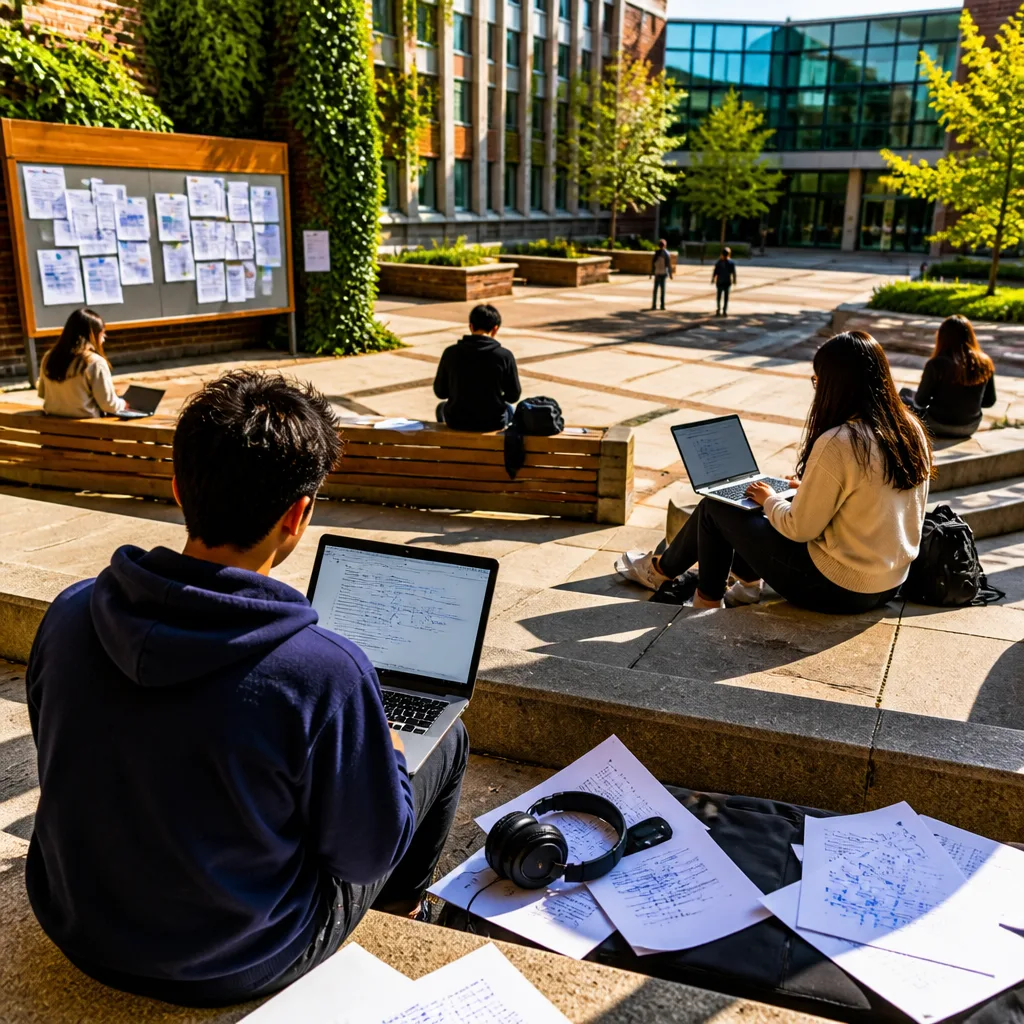
The report identifies several troubling trends on campus: a rise in student isolation, fraying lines of communication between instructors and learners, and instructor uncertainty about how to evaluate student mastery when AI can generate work that appears correct but may lack original thought. Students reported confusion about inconsistent approaches to AI across different courses, while instructors told the committee they were struggling to determine who had truly learned the material.
“This report is a call to action,” the committee writes, emphasising MIT’s responsibility to lead responses to an evolving landscape.
From efficiency to apprenticeship — a fundamental tension
Committee members framed the issue as a tension between immediate efficiency and the deeper educational purpose of the institution. Research and teaching at MIT, the report says, are not simply about producing outputs; they are an apprenticeship in thinking, critique and professional practice. That apprenticeship, the committee warns, is endangered if instructors and students default to tools that shortcut learning.
Students and faculty alike raised concerns about inconsistency: different subjects and instructors applied divergent policies and practices for AI use, leaving learners unsure of expectations and assessment standards. The committee calls for responses that go beyond ad hoc or short-term measures to address these systemic shifts.
Key findings and suggested direction
Although the public summary stops short of listing a full suite of policy prescriptions, it urges bold, strategic action rather than temporary fixes. The committee signals that MIT — given its stature and resources — must take a leadership role in shaping educational responses to generative AI.
- Increased isolation: Students report feeling more disconnected from peers and instructors as technology mediates or replaces direct interaction.
- Assessment challenges: Faculty struggle to determine whether student submissions reflect genuine learning or are heavily assisted by AI.
- Inconsistent practices: Varied course-level approaches create confusion and uneven expectations for students.
| Issue | Implication |
|---|---|
| Student isolation | Potential erosion of collaborative learning and mentorship |
| Assessment uncertainty | Risk of misjudging student competence and readiness |
| Inconsistent policies | Confusion and inequity across programmes |
What’s at stake for post-secondary education
The themes emerging from MIT’s review resonate with questions being discussed at universities worldwide: How should institutions balance innovation with the pedagogical need to develop independent critical thinkers? When and how should faculty permit or prohibit AI tools? How can assessment practices evolve to measure meaningful learning rather than the ability to prompt a machine?
Those questions have practical consequences for curriculum design, faculty development, student support services and the ethical frameworks that guide research and teaching. The committee emphasised that piecemeal or reactive measures will be inadequate, urging sustained institutional attention to the cultural and pedagogical disruptions AI is producing.
The report’s language underscores the scale of the challenge: it frames the moment as one that calls for ambition and leadership, not merely for policy updates. It presses institutions — especially those with MIT’s influence — to rethink educational priorities so that technology serves learning, rather than undermining its core purposes.
For students, instructors and families, the implications are immediate. Clearer, consistent expectations and assessment methods will be needed to restore confidence in what a degree represents. For university administrations and policy-makers, the MIT review offers both a warning and a model: rigorous, campus-wide inquiry that places students’ learning experience at the centre of any response.