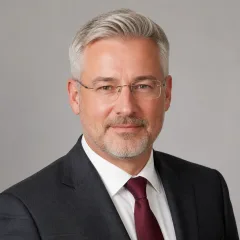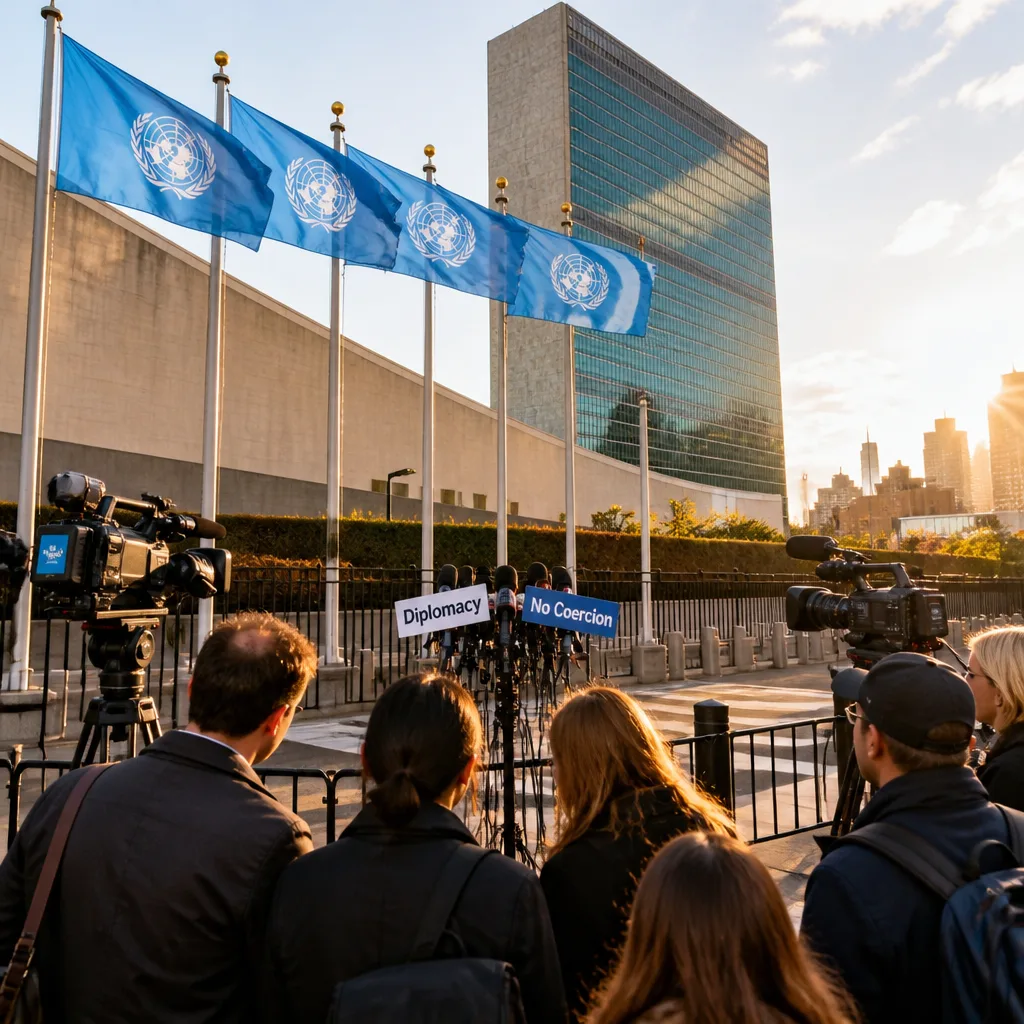
Speaking to reporters outside the United Nations Security Council, Iran’s foreign minister said Tehran continues to uphold the principles of international law and the UN Charter while rejecting what he characterised as coercion and threats from the United States and Israel.
Accusations of broad campaign against civilians
At a stakeout following meetings at the UN, the minister framed recent confrontations as an effort by Washington and the Israeli government to cast themselves as victims while obscuring what he described as a sustained pattern of aggressive acts. He argued that diplomacy remains Iran’s preferred path, citing earlier negotiations that produced the 2015 nuclear agreement and subsequent diplomatic activity.
But he offered a catalogue of alleged attacks on civilian targets, saying more than 5,000 people had been killed during what he termed US–Israeli aggression against Iran, including “hundreds of women and children.” He named several incidents he said demonstrated the toll on non-combatants, pointing to schools, hospitals, sports and cultural sites, energy facilities and residential neighbourhoods among the places struck.
“The United States and the Israeli regime cannot whitewash their actions against the Iranian people.”
Examples cited by Tehran
The minister identified specific episodes he said were evidence of civilian harm. Among them were:
- the documented deaths of more than 168 students and teachers in Minab;
- a cluster-bomb strike on a stadium in Lamerd;
- the bombing of residential homes on Qeshm using 2,000-pound bombs;
- a missile attack on a wedding ceremony in Sirik.
He described the assassination of Iran’s leader and several senior political and military officials as a “flagrant crime and an obvious violation of international law,” and accused Washington of employing a range of measures including assassinations, threats and what he called economic warfare.
Economic pressure and legal claims
The minister condemned the use of economic measures by the United States, saying they amounted to collective punishment that deliberately inflicts severe and foreseeable harm on ordinary Iranians. He argued these steps denied citizens fundamental rights such as access to health care, medicine and food, and characterised the policy as neither diplomacy nor legitimate coercion but “economic terrorism.”
In his remarks he also asserted that such policies violated binding temporary measures issued by international bodies, though he did not elaborate further in the stakeout about the specific legal instruments referenced.
What he said and what it means
The foreign minister’s statements seek to place Iran in a defensive posture at the UN, balancing a declared commitment to negotiation with sharp denunciations of US and Israeli behaviour. His remarks will feed into ongoing international debates over responsibility for civilian harm and the limits of state behaviour under the UN Charter.
For other governments and multilateral institutions, Tehran’s claims raise questions about verification of alleged incidents and about steps to protect civilians in areas affected by hostilities. The allegations, particularly those involving mass civilian casualties and use of heavy munitions in populated locations, are likely to prompt calls for independent investigations from countries and organisations concerned with humanitarian law.
| Alleged incident | Location | Detail |
|---|---|---|
| Student and teacher deaths | Minab | More than 168 reported killed |
| Stadium attack | Lamerd | Described as a cluster-bomb strike |
| Residential bombings | Qeshm | Use of 2,000-pound bombs |
| Missile strike | Sirik | Attack on a wedding ceremony |
Iran’s public reproach of the United States and Israel at the UN will be watched by nations balancing concerns about regional stability, nuclear non‑proliferation and humanitarian protection. The assertions lend urgency to diplomatic efforts to verify events on the ground and to examine claims of unlawful conduct amid high tensions.