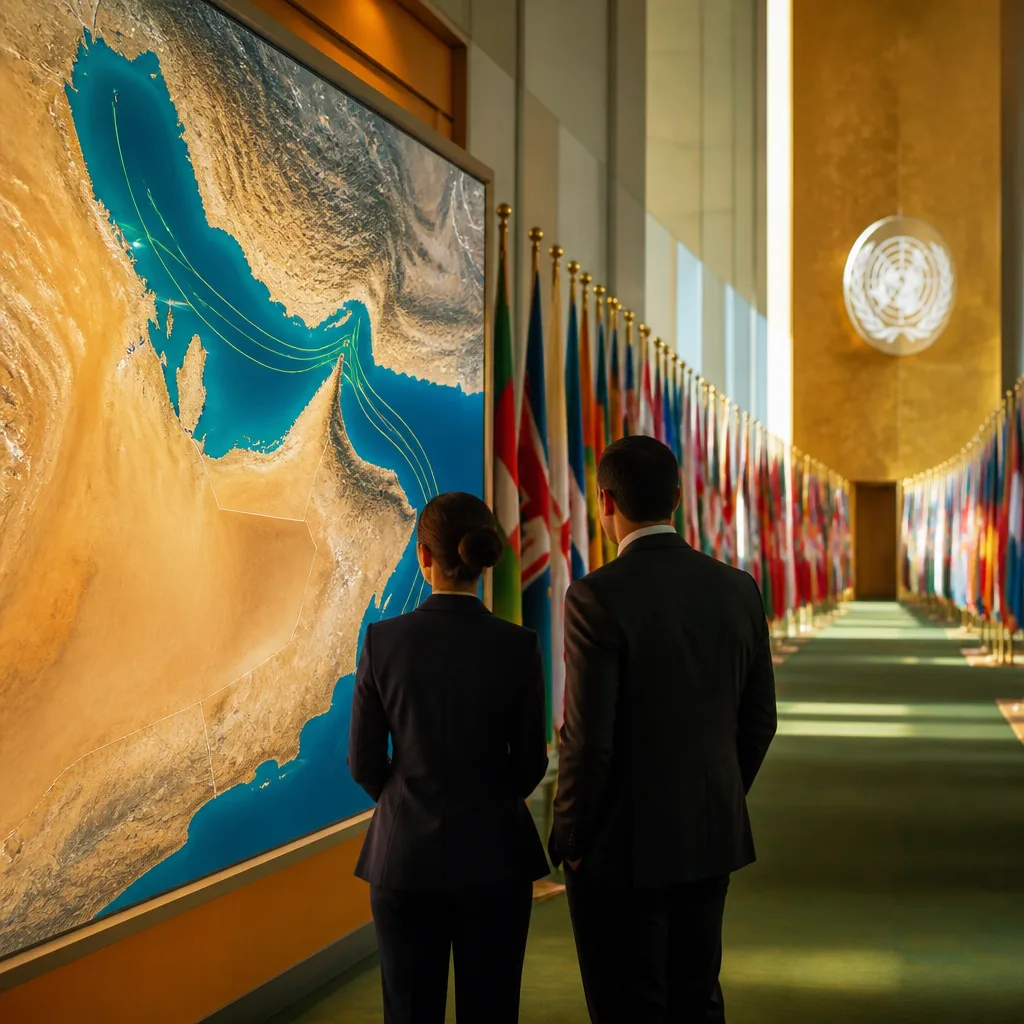
NEW YORK — Iran’s foreign minister on Friday assured his Saudi counterpart that Tehran intends to pursue stronger ties with regional partners to promote security and protect shipping lanes, including a recent understanding reached with Oman on safe maritime routes through the Strait of Hormuz.
Abbas Araqchi met Saudi Foreign Minister Faisal bin Farhan on the sidelines of the 81st session of the United Nations General Assembly to raise Tehran’s plans for confidence-building and cooperative security mechanisms among countries in the region.
Direct outreach amid regional tensions
Araqchi told bin Farhan that Iran is determined to deepen trust through interaction among neighbouring states and outlined Tehran’s hopes that influential regional actors will participate in such efforts. He emphasised the importance of collective measures to prevent further escalation after recent confrontations in the area.
"unfortunate experience"
In his account of regional developments, the Iranian foreign minister pointed to what he described as the past seven months’ difficult experiences and accused the United States and Israel of using the territory and facilities of some regional parties to plan and launch military actions against Iran. Araqchi framed those moves as a contributing factor to insecurity in the region.
Maritime safety and bilateral ties
During the discussion Araqchi updated bin Farhan on the outcome of talks between Iran and Oman concerning measures to ensure safe maritime transit through the Strait of Hormuz, a narrow but vital shipping chokepoint for global energy and cargo traffic.
Both ministers also reviewed broader Tehran–Riyadh relations and exchanged views on areas of mutual interest where cooperation could be expanded. The meeting did not yield a public joint statement or detailed timelines for next steps, but it underscored continued diplomatic engagement between two regional rivals.
- Participants: Iranian and Saudi foreign ministers met on the sidelines of the UN General Assembly.
- Main topics: regional security cooperation, trust-building, and safe shipping routes in the Strait of Hormuz.
- Context: Araqchi cited recent months of heightened tensions and alleged use of some states’ territories by outside powers to mount actions against Iran.
| Item | Description |
|---|---|
| Venue | 81st UN General Assembly, New York |
| Diplomats | Abbas Araqchi (Iran), Faisal bin Farhan (Saudi Arabia) |
| Key issue | Safe maritime routes through the Strait of Hormuz (Iran–Oman talks) |
Implications and next steps
The exchange signals Tehran’s preference for region-to-region frameworks to tackle security concerns, rather than relying solely on external actors. By highlighting an understanding with Oman on secure passage for shipping, Iran is presenting a practical confidence-building measure that could help reduce the likelihood of incidents in a strategically sensitive corridor.
For neighbouring states and global consumers of Gulf-produced commodities, any de-escalation around the Strait of Hormuz is significant. Safe transit arrangements could help stabilise shipping and lower the risk of supply disruptions. Yet the success of such measures depends on buy-in from other regional players and on preventing outside powers from using local territory to plan military operations, a concern Araqchi raised during the meeting.
While the meeting reflects ongoing diplomacy between Iran and Saudi Arabia, it does not imply immediate breakthroughs. Officials from both capitals will likely need further discussions to translate broad calls for cooperation into binding mechanisms, verification processes and sustained confidence-building actions.
As international attention remains fixed on the Gulf, the New York meeting demonstrates that Tehran and Riyadh continue to engage at senior levels — a prerequisite for any meaningful shift in regional security dynamics.