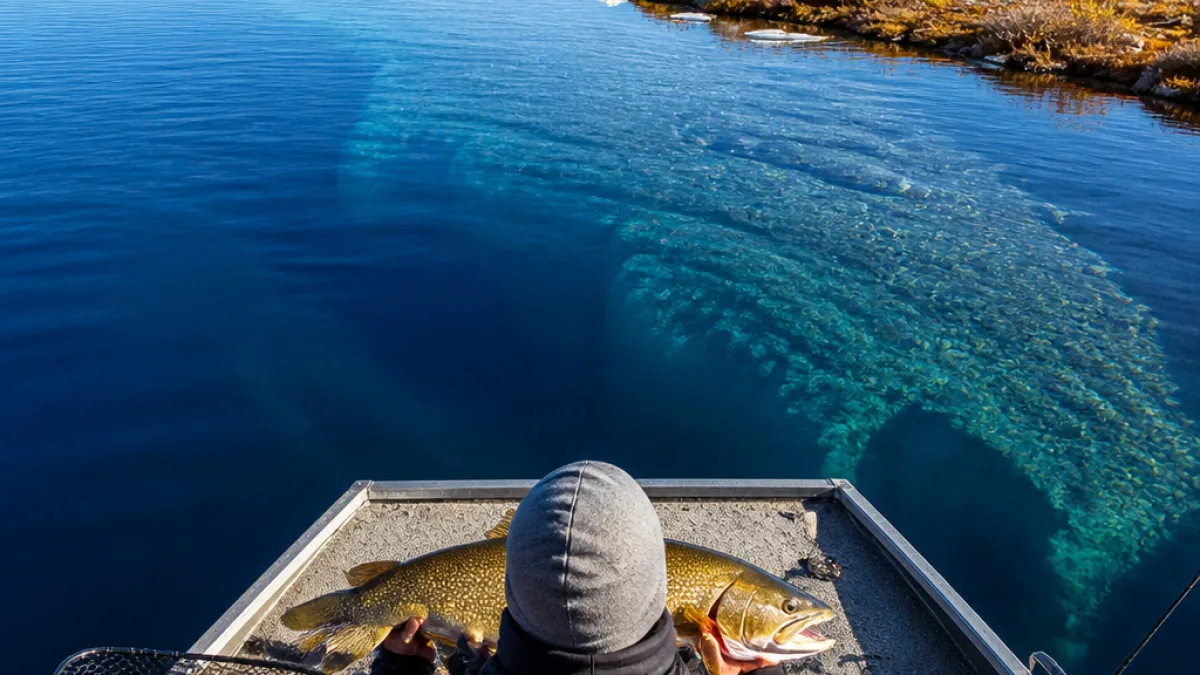
Great Bear Lake and Great Slave Lake in the Northwest Territories are among the few places on Earth where lake trout reach extraordinary sizes. The mix of extreme depth, frigid temperatures and a limited number of competing species has created conditions in which lake trout — known locally as togue, mackinaw or simply "lakers" — can live for decades and grow to weights anglers elsewhere only dream of.
Why northern lakes produce giants
Lake trout are slow‑growing, long‑lived predators that prefer cold, well‑oxygenated water. That combination is most reliably found in very deep, northern lakes. In these waters, the trout exploit food webs with little competition and abundant prey, and metabolic rates that favour longevity over rapid reproduction. In the Northwest Territories, those environmental conditions are at their most extreme.
The difference these lakes make is dramatic. Great Bear Lake, located above the Arctic Circle, is acknowledged as the global heavyweight for lake trout. In 1995 an angler landed a 72‑pound lake trout — a five‑foot animal that remains the all‑tackle world record registered by the International Game Fish Association. Great Bear also accounts for an astonishing number of IGFA records: 19 of 35 recognized world records in the species.
Great Slave Lake’s unique role
Great Slave Lake, the other northern giant, provides a complementary habitat. It is the deepest lake in North America, plunging to more than 2,000 feet in places. That depth creates the cold, dark refuges lake trout favour. In these waters, fish of 40 pounds are commonly reported — sizes that are exceptional elsewhere but appear routine here.
- Great Bear Lake: world record 72 lb laker (1995); 19 IGFA records linked to the lake.
- Great Slave Lake: deepest lake in North America (over 2,000 ft); frequent 40‑pound fish.
- Both lakes: among the largest on Earth (seventh and ninth largest globally).
What this means for anglers and communities
For sportfishers, these lakes represent the apex of lake trout angling — remote, technical and often accessible only by floatplane or an extended overland journey. The remoteness helps preserve populations that have seen limited exposure to heavy recreational pressure and invasive species, a factor that contributes to the unusually large sizes.
For northern communities the ecological importance of Great Bear and Great Slave extends beyond trophy catches. These lakes support subsistence harvests, local economies tied to guiding and tourism, and biological diversity unique to the subarctic region. Maintaining the health of these waters is therefore a matter of cultural, economic and ecological significance.
Table: Key facts at a glance
| Lake | Notable fact | Records / notes |
|---|---|---|
| Great Bear Lake | Above the Arctic Circle; extremely cold | 72‑lb IGFA all‑tackle world record (1995); 19 of 35 IGFA lake trout records |
| Great Slave Lake | Deepest lake in North America (over 2,000 ft) | Common reports of 40‑lb lake trout |
Conservation and practical considerations
Those who fish or travel on these lakes should be mindful of safety and conservation. Access is often by floatplane and involves exposure to remote‑area hazards: sudden weather changes, cold water, and limited emergency support. Recreational users are expected to follow local regulations and stewardship practices to avoid harming these fragile ecosystems.
Preserving habitat quality is critical. The factors that allow trout to grow so large — cold, oxygenated deep water and limited competition — are vulnerable to climate change and other disturbances. Warming waters, altered food webs and increased human activity could reduce the unique advantages these lakes currently offer lake trout.
Great Bear and Great Slave stand as outstanding examples of how geography and ecology combine to produce biological extremes. For anglers they are destinations; for scientists and northern residents they are living laboratories showing the links between environment, species lifecycles and community well‑being.
Fishing tip: the commitment these fisheries demand is substantial. Reaching trophy trout generally requires knowledge of deep‑water trolling and patience for long runs on remote waters. In return comes a glimpse of some of the largest freshwater predators on the planet — fish shaped by the cold basins of the Northwest Territories.