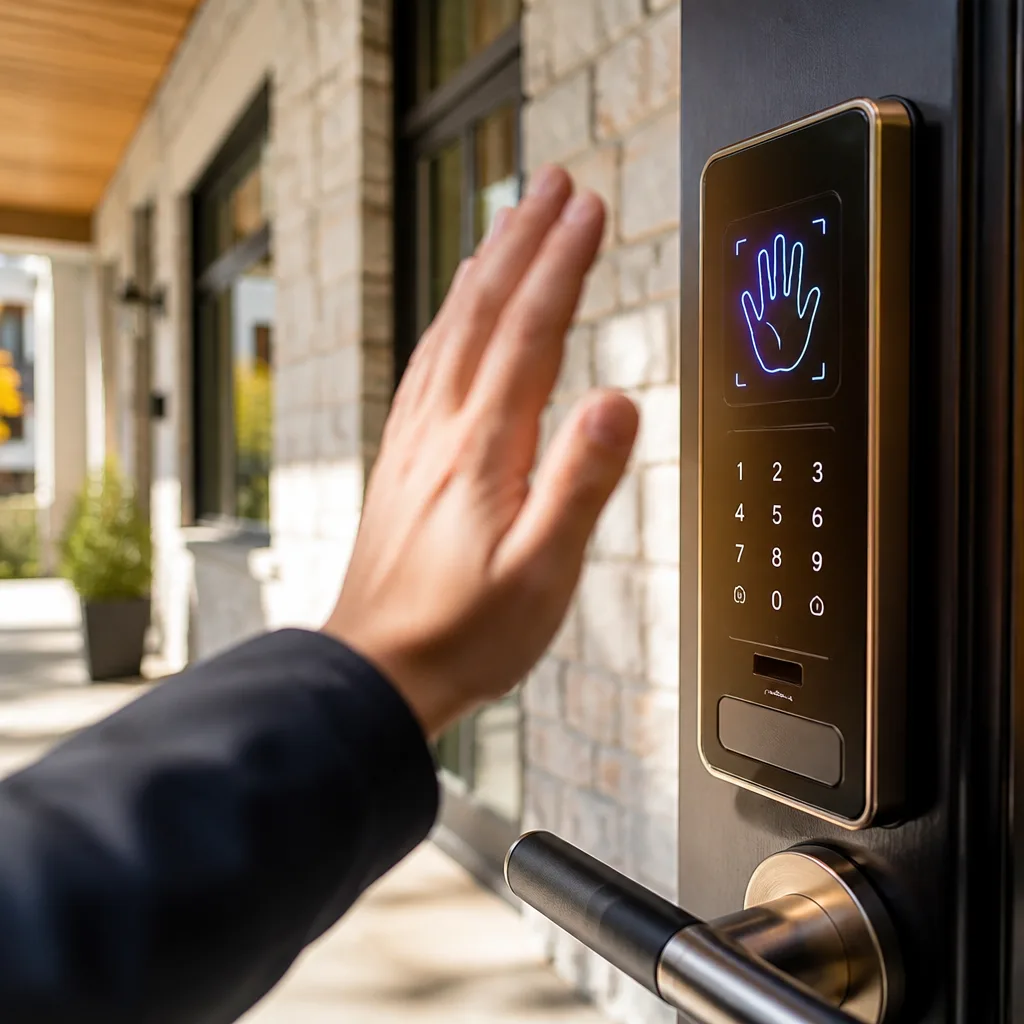
The Taiwan semiconductor supplier Himax Technologies and smart‑lock maker WAFERLOCK have launched a commercially available smart lock that uses palm vein patterns to authenticate users. The device, marketed as the L322, combines contactless biometric recognition with conventional access methods to target homes, residential communities and smart buildings.
How it works and where it fits
The L322 uses Himax’s WiseEye palm vein system to read vein patterns beneath the skin of a user’s palm. Manufacturers and security vendors are positioning vein recognition as an alternative to fingerprint sensors because it relies on internal biometric features rather than external skin characteristics, making it less sensitive to moisture, worn prints or minor skin damage.
WAFERLOCK says the L322 supports multiple ways to open a door — palm vein recognition, RFID cards, PIN codes, a mechanical key and an optional mobile app — and is compatible with common contactless card standards such as EasyCard, iPASS and MIFARE. The combination is meant to provide a familiar fallback when biometric authentication is impractical.
| Access method | Included on L322 |
|---|---|
| Palm vein recognition | Yes |
| RFID contactless cards (EasyCard, iPASS, MIFARE) | Yes |
| PIN code | Yes |
| Mechanical key | Yes |
| Mobile app | Optional |
Practical benefits and scenarios
WAFERLOCK and Himax highlight everyday situations where palm vein authentication may be preferable to fingerprint readers: for example, when hands are wet, gloved, carrying items such as groceries, or for assisting elderly relatives and children who may struggle with small or finicky sensors. Because the scanner reads subdermal vein patterns — a biometric trait less affected by external wear — the companies argue the system reduces spoofing risk and improves reliability over surface‑level fingerprints.
- Contactless operation reduces the need to touch shared surfaces.
- Multi-mode access offers fallbacks when biometrics are impractical.
- Card compatibility integrates the lock into existing residential and community infrastructures.
For consumers, the combination of biometric and legacy methods aims to strike a balance between new authentication approaches and the convenience of established credentials.
Security and privacy considerations
Palm vein biometrics are often promoted for privacy advantages because the pattern is internal and not readily captured from a distance. The announcement frames the technology as offering enhanced security and privacy protection, but it does not detail how biometric templates are stored, whether matching is local to the lock, or how template revocation and data breach remediation would be handled. These are the operational questions that will shape adoption among privacy‑conscious buyers and property managers.
Adoption decisions by Canadian consumers, building operators and security integrators typically weigh commercial claims against integration, lifecycle management and regulatory requirements. How the companies address template storage, encryption and the ability to replace compromised credentials will matter for institutional buyers designing access control systems at scale.
Market implications
The integration of a dedicated palm vein sensor into a consumer‑facing smart lock signals continued diversification of biometric modalities in the access market. Vendors are responding to limitations of fingerprint sensors and to demand for touchless interactions, particularly in shared or multi‑family residential environments.
For Canadians watching the smart‑home and building automation market, the L322’s combination of contactless biometric authentication and broad card compatibility illustrates a pragmatic path vendors are taking: pairing novel sensors with familiar credentials to lower deployment friction. The success of that strategy will depend on price, the robustness of privacy protections and how easily the lock fits into existing property management workflows.
Himax and WAFERLOCK’s announcement positions the L322 as a commercially available option for customers seeking contactless, biometric‑enabled access control. Industry buyers and consumers will now be able to evaluate whether palm vein recognition offers a meaningful improvement over current smart‑lock alternatives.