
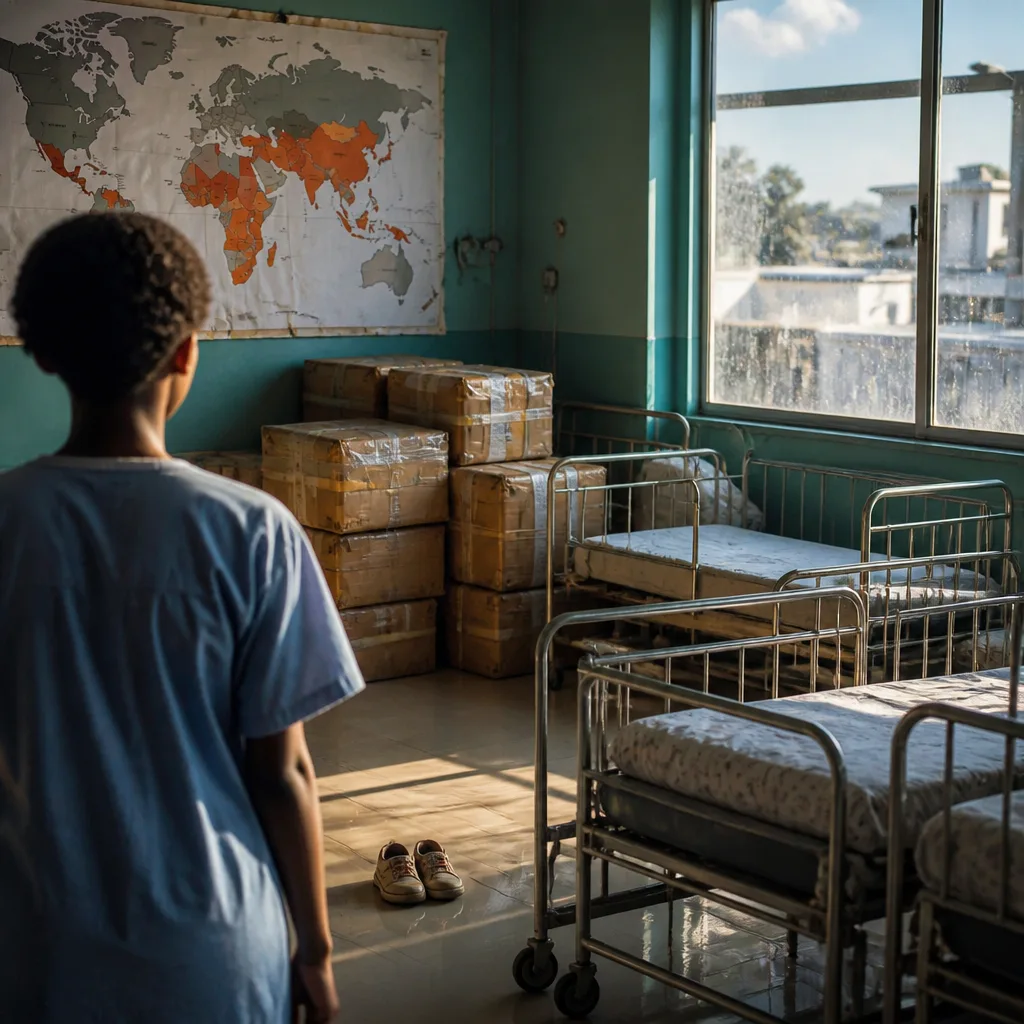
Roughly 60 fragile countries that have long relied on international assistance are confronting a sharper, more dangerous reality after a rapid contraction of foreign aid beginning in early 2025, analysts say. The reduction in support from major donor governments and multilateral bodies has not only weakened basic services in many of the world’s poorest states but, according to one academic estimate, has already contributed to the deaths of more than 500,000 children.
From dependence to a contested turning point
For decades, many weak states depended on a steady flow of funds from wealthy country governments and institutions such as the United Nations and the World Bank to deliver health care, food assistance and other essential public services. That pattern shifted abruptly after the U.S. return to office of President Donald Trump in January 2025, when Washington initiated deep cuts to development spending. Other donors and multilateral organisations followed suit, intensifying the squeeze on fragile governments.
Observers argue the consequences have been immediate and severe. While aid helped millions meet critical needs, it rarely created the domestic capacity required for sustained economic growth or robust state institutions. The withdrawal has exposed how dependent many countries had become on external funding, and how vulnerable populations are when those resources disappear.
Paths available to fragile states
Analysts writing about this shift emphasise that while the current contraction of aid poses an urgent humanitarian challenge, it also highlights an uncomfortable truth: the existing model of foreign assistance did not reliably produce stronger, self-sustaining states.
Instead, commentators say, fragile countries could pursue strategies that rely much more on internal and regional sources of revenue and on building state capacity. The analysis identifies several concrete avenues already present in many of these states:
- Natural resources: many fragile countries possess mineral, energy or agricultural assets that, if managed transparently and effectively, could generate substantial state revenue.
- Diaspora remittances: payments from citizens abroad are often steady and significant, and better channels for these flows could support domestic investment and social services.
- Regional cooperation and trade: stronger cross-border ties can stabilise neighbourhoods, expand markets and reduce the security spillovers that accompany state collapse.
Presenting these options is not the same as arguing they are easy to implement. The authors caution that weak governance, corruption, and entrenched political dynamics are real obstacles. Yet the point is that dependence on external donors alone is neither a durable nor reliable development strategy.
Human cost and the limits of aid
The human toll of the aid reductions has already been documented in stark terms. A Boston University estimate cited in the analysis attributes the deaths of over 500,000 children to the recent cuts — a number that underlines both the life-or-death role aid has played and the immediate consequences when it is withdrawn.
| Indicator | Reported figure |
|---|---|
| Fragile countries lacking basic state capacity | ~60 |
| Estimated child deaths tied to aid reductions | over 500,000 |
That grim tally reinforces a paradox: foreign aid has been essential for saving lives, yet it has not routinely delivered the institutions and growth necessary to end dependency. The policy debate now focuses on how fragile states — and their domestic and international partners — can pivot from emergency stabilization to strategies that create durable revenue bases and stronger governance.
The withdrawal of major donor support has also sharpened questions about global responsibility and the role of multilateral organisations. If wealthy states scale back development spending, the burden of creating resilience will fall increasingly on the countries themselves, their diasporas, and regional actors — a transition that will require technical support, political will, and time.
For Canadians and policymakers watching international stability, the stakes are clear: instability abroad can ripple into migration pressures, economic shocks and security challenges at home. How fragile states adapt to a world of diminished donor commitment will be a defining international-policy test of the coming decade.