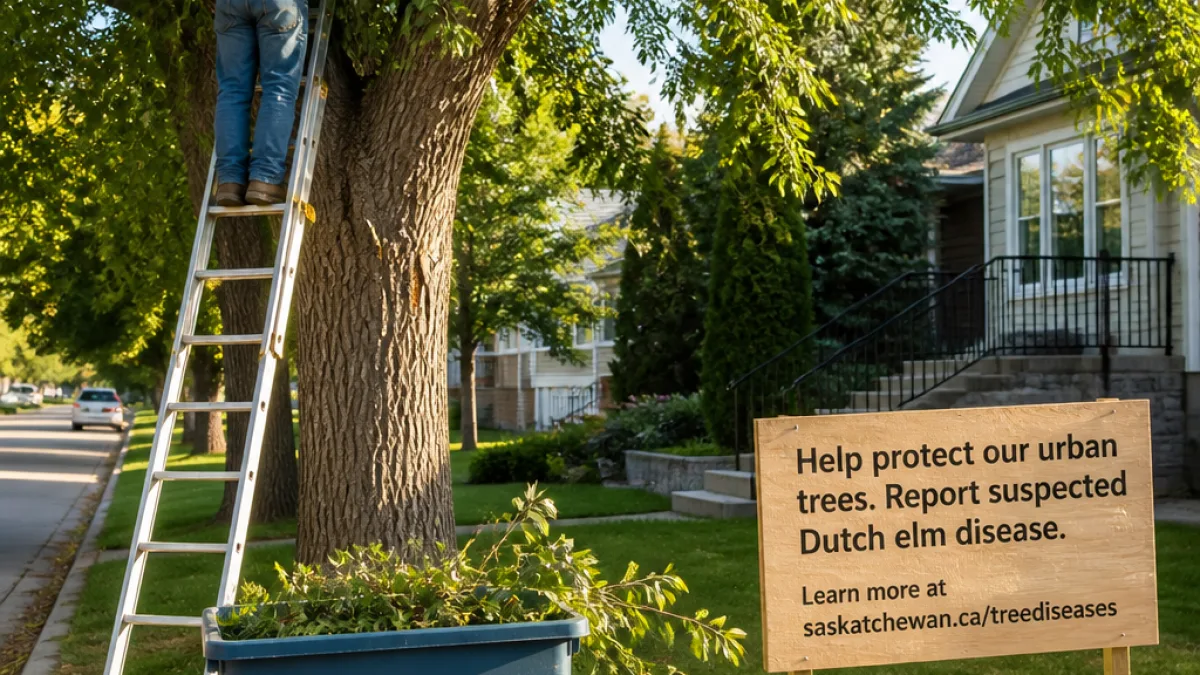
The provincial prohibition on pruning elm trees in Saskatchewan has formally ended, allowing residents to trim and maintain elms again beginning Sept. 1.
Why the restriction existed
The annual ban, in place from April 1 to Aug. 31, is intended to reduce the spread of Dutch elm disease (DED), a fungal pathogen that has devastated elm populations. The disease is primarily spread by elm bark beetles, which are most active through the spring and summer months. Fresh pruning cuts made while beetles are active can attract them and increase the likelihood of transferring the fungus from infected trees to healthy ones.
What residents need to know now
With beetle activity now declining, homeowners may safely prune elm trees. The province continues to emphasise proper pruning techniques to avoid unintentionally weakening trees or facilitating disease spread. That advice applies whether the work is done by a homeowner or a hired contractor.
- Permitted from Sept. 1: Routine trimming and pruning of elm trees.
- Commercial pruners: Anyone offering paid elm pruning services must have completed a provincially recognised training program or work under someone who has.
- Elm wood disposal: Elm lumber and firewood must be taken to municipal disposal sites promptly; storing, using or transporting elm firewood is illegal except when taking it for disposal.
- Report suspicions: If you suspect a tree is infected, contact the Ministry of Environment.
How to dispose of elm wood and where to get help
The province advises that elm wood can harbour the beetles that carry the DED fungus. Improper storage or movement of elm wood risks spreading the pest and the disease to new areas. Municipalities typically designate specific disposal locations for elm wood; residents should follow local instructions on where to take material for processing or destruction.
| Item | Detail |
|---|---|
| Ban period | April 1 – Aug. 31 |
| Pruning allowed from | Sept. 1 |
| Ministry contact | 1-800-567-4224 or centre.inquiry@gov.sk.ca |
Professional standards and public vigilance
The province requires that commercial elm pruners complete an approved training program or work under the supervision of someone who has. That requirement is intended to limit improper cuts that could leave trees vulnerable, and to make sure people handling elm wood understand legal disposal requirements.
Municipalities and owners are urged to remain vigilant for signs of disease. Early detection is important to limit outbreaks and protect remaining healthy elms in towns and cities across Saskatchewan.
Signs of Dutch elm disease and when to call
Homeowners who notice wilting, yellowing or browning foliage, or sudden dieback of branches, should consider the possibility of DED. The province asks anyone with concerns to contact its Inquiry Centre rather than moving potentially infected wood themselves.
Prompt reporting and responsible disposal are the two practical steps that can limit further spread: do not store elm firewood at home, do not transport it except to approved disposal sites, and avoid making major pruning cuts during the next beetle season.
For now, the reopening of pruning season gives property owners the chance to finish late-summer maintenance, shape trees for winter and remove hazardous limbs—so long as they follow the rules intended to protect Saskatchewan’s remaining elms.