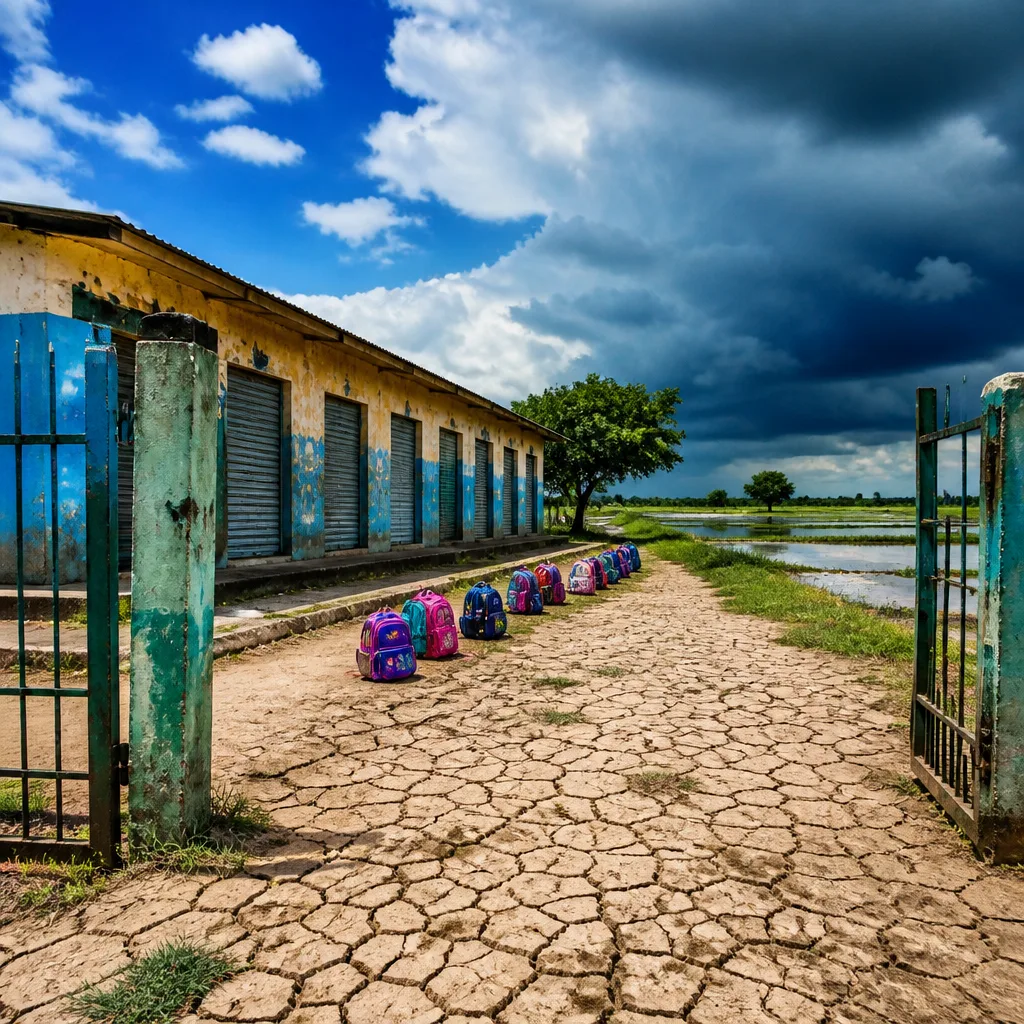
Mozambique faces a looming education crisis linked to a likely strong El Niño event between November 2026 and January 2027, with national and humanitarian education agencies urging immediate funding to trigger pre-planned responses.
Forecasts and stakes for classrooms
The national meteorological institute has confirmed that El Niño conditions are active and puts the chance of a very strong event at about 63% for the coming season. Agencies say that pattern raises the probability of severe drought in southern and central provinces while parts of the north could experience above-normal rainfall, flooding and storms.
Education authorities and humanitarian partners warn the sector is especially vulnerable because recent extreme weather already disrupted learning at scale. In 2026 alone, floods and cyclones affected more than 230,000 children, impacted 430 schools and led to the loss of over 840 classrooms, according to a joint statement from the Education Cluster and partner organisations.
Who could be affected
A preliminary assessment undertaken by the Ministry of Education and Culture identified roughly 2,250 schools at risk of damage or closure if El Niño-related hazards materialize. That assessment estimated potential impacts on about 1.5 million learners, including nearly 950,000 girls, along with more than 23,000 teachers in provinces such as Inhambane, Sofala, Tete, Gaza, Manica and Cabo Delgado.
| Indicator | Figure |
|---|---|
| Children affected by 2026 floods/cyclones | 230,000+ |
| Schools affected in 2026 | 430 |
| Classrooms destroyed in 2026 | 840+ |
| Schools at risk from El Niño | 2,250 |
| Potential learners affected | 1.5 million |
Concerns beyond damage to buildings
Agencies caution that the toll will extend beyond infrastructure. Without timely anticipatory measures, El Niño could trigger prolonged school closures, greater absenteeism and increased dropout rates. Humanitarian partners note elevated risks of child labour, early marriage, displacement and wider learning loss, particularly among the most vulnerable children.
- Risk of drought and crop failure in the south and centre, raising food insecurity and family economic strain.
- Heightened chance of floods and storms in the north, threatening school sites and access routes.
- Potential for cascading protection harms that interrupt education and heighten vulnerability for girls and younger children.
Preparedness is in place — funding is the bottleneck
Partners say contingency planning, rapid response arrangements and anticipatory action mechanisms are already established through the Education Cluster and the Ministry of Education and Culture, supported under an existing ECHO-funded Rapid Response Action. Frontline capacity and coordination systems are reported as ready to be activated.
The call from the cluster and coalition of agencies is focused and urgent: donors and education partners should provide immediate, flexible or earmarked funding before November 2026 so that pre-agreed contingency plans can be implemented in advance of the worst impacts.
They argue that anticipatory disbursements would allow for actions such as reinforcing school infrastructure, pre-positioning teaching and learning materials, supporting school re-opening plans and scaling child-protection measures to reduce the knock-on consequences of weather shocks on education access and learning.
Internationally, the use of anticipatory funding is gaining traction as a way to reduce the humanitarian and social costs of predictable disasters. In Mozambique’s case, agencies stress that rapid activation of agreed protocols could prevent the worst outcomes for learners already recovering from a traumatic 2026 season.
For students, families and teachers, the coming months are therefore critical: preparation now could mean the difference between temporary disruption and protracted educational losses that take years to reverse.