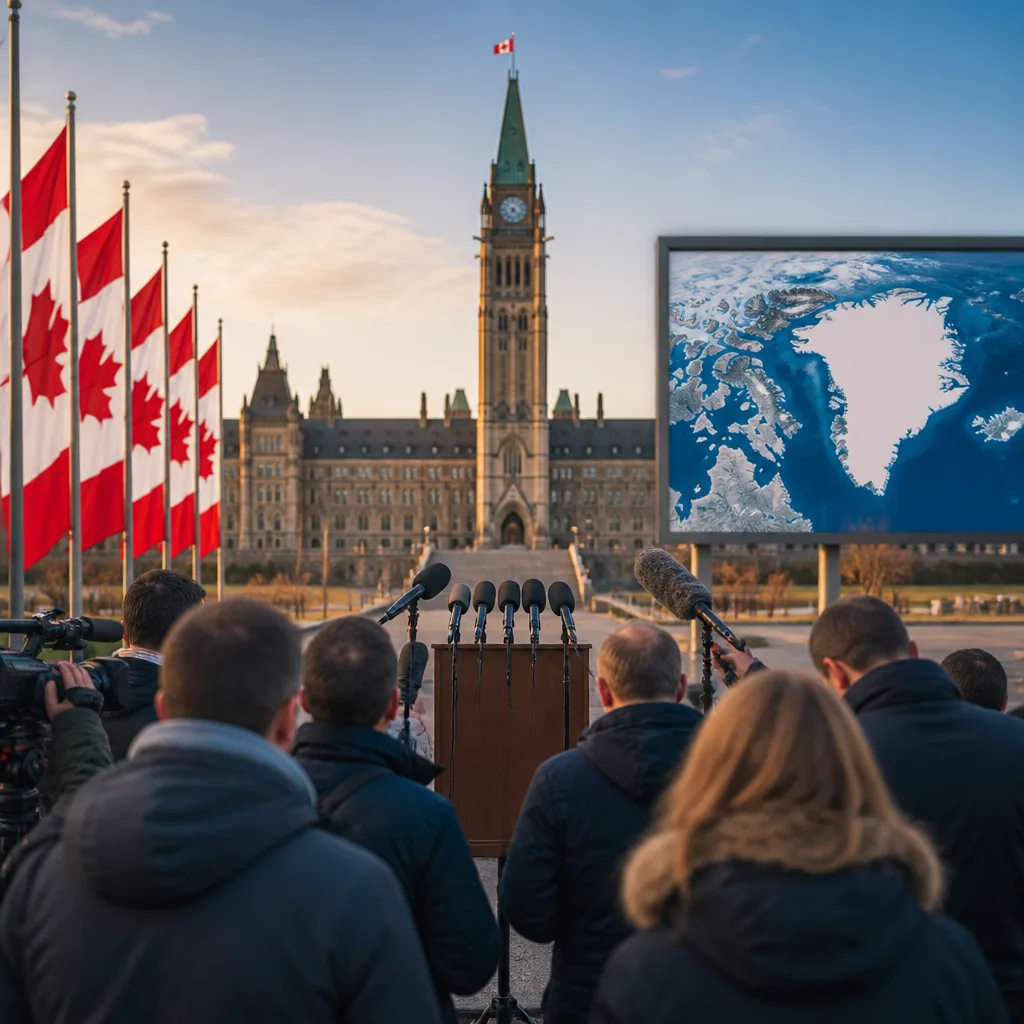
OTTAWA — Canada’s minister of national defence described an agreement that would expand the United States’ military presence in Greenland as “encouraging,” while underlining the importance of allied cooperation in the Arctic region.
National Defence Minister David McGuinty spoke to reporters on Parliament Hill after international announcements Friday that the United States, Denmark and Greenland have reached an arrangement to increase U.S. activity on the island while leaving it under Danish authority.
“It’s encouraging that the U.S. and Greenland have found a way to move forward together,” McGuinty said, adding that it was positive to see Arctic nations and NATO allies recognising the region as part of their responsibilities.
Agreement still requires parliamentary approvals
According to statements from the office of Danish Prime Minister Mette Frederiksen, the three governments plan to sign the framework next week during the United Nations General Assembly in New York. However, the Danish and Greenlandic parliaments must still take the necessary steps at home before the arrangement can be implemented.
The public description of the deal indicates it would allow a broader U.S. military presence on Greenland while sovereignty of the island would remain with Denmark. The announcement marks a de-escalation of the high-profile tensions earlier this year when former U.S. president Donald Trump proposed purchasing Greenland and floated the possibility of using force, an idea that drew sharp rebukes from Denmark and others.
Canada’s framing: cooperation and shared responsibility
McGuinty framed the agreement as evidence that Arctic states are seeking cooperative approaches to security challenges in the North. He pointed to growing recognition among NATO partners that the Arctic is an area of allied interest and responsibility.
He did not provide details on whether the federal government had been directly involved in negotiations. He emphasised, however, that the Canadian government welcomes moves that can stabilise and clarify security arrangements in the Arctic.
- Signatories: United States, Denmark and Greenland.
- Next step: Signature at the United Nations General Assembly; parliamentary approval required in Denmark and Greenland.
- Sovereignty: Greenland remains under Danish authority, per the announcement.
Context and consequences for the region
The Arctic has become an increasingly prominent arena for strategic competition, with NATO members and other states expanding military, scientific and economic activities in the region. For Canada, whose northern territory comprises a large portion of the Arctic, developments involving neighbouring Greenland are of interest for defence planners and diplomats alike.
Analysts have warned that any formalised increase in military activity — regardless of the nationality of forces deployed — can change regional dynamics, potentially prompting adjustments in surveillance, search and rescue and defence posture among Arctic neighbours. McGuinty’s remarks underscore Ottawa’s desire to see allied management of those risks rather than unilateral actions that could heighten tensions.
The deal also illustrates a diplomatic path that falls short of the extraordinary proposal floated earlier in the year by then-President Trump — namely, the purchase of Greenland — and instead relies on negotiated security arrangements that preserve existing sovereignty while enabling increased partnership.
How parliaments in Denmark and Greenland respond will determine whether the agreement moves from intent to implementation. If those approvals are granted, the practical details — such as the scale, duration and locations of expanded U.S. activities in Greenland — will become the subject of further diplomatic and technical discussion.
For now, Ottawa’s public posture is one of cautious encouragement: welcome the cooperative steps, monitor the parliamentary process in Europe, and stay engaged in broader Arctic security discussions with NATO and regional partners.
As events unfold at the United Nations next week and in the capitals of Copenhagen and Nuuk, Canadian officials will be watching closely for implications to northern defence planning, bilateral relations with Denmark and Greenland, and the wider NATO collective security approach to the Arctic.