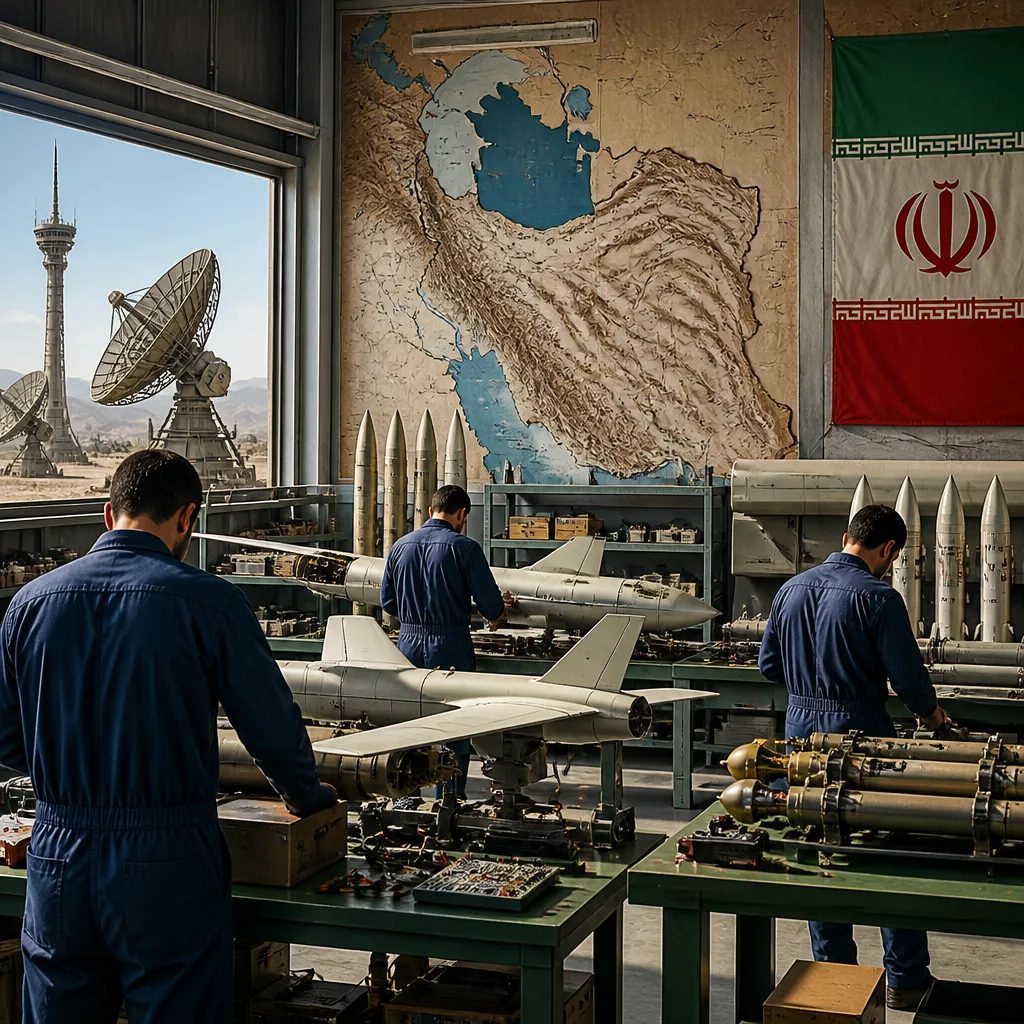
TEHRAN — Iran’s caretaker defence minister declared that the country is “fully prepared” to face any new war, saying Tehran’s military and industrial capabilities are now far more advanced than during earlier conflicts and suggesting public threats aimed at Iran are primarily political signalling rather than demonstrations of genuine force.
Minister frames threats as political messaging
Brigadier General Majid Ebn al-Reza, speaking on Sunday, said some United States officials had erred in believing that repeated threats would sway or intimidate Tehran. He said they were “seriously mistaken,” and warned that Iran cannot be compelled by threats alone.
“Iran has ‘full readiness’ to confront threats,”
According to the remarks reported by Tasnim News Agency, the caretaker minister characterised many external warnings as political messages rather than declarations supported by real military capability. He added that what Iran displays publicly represents only a fraction of its actual defence and industrial potential.
Emphasis on self-reliance and technology
Ebn al-Reza stressed that Iran’s preparedness rests on independent capabilities and strategies, and that the Islamic Republic relies primarily on domestic will and resources to guarantee its security and defend its interests. He said technological advances in Iran’s defence sector mean the country would enter any future conflict from a stronger position than in the past.
The minister also framed Iran’s posture as defensive toward its neighbours, saying Tehran has neither been nor will be a threat to regional states. He insisted the country seeks to distinguish friends from foes using what he called wisdom and prudence.
What was said, and what it suggests
The comments accomplish several purposes simultaneously: they communicate firmness to a domestic and regional audience, serve as a deterrent to potential adversaries, and signal to international observers that Iran intends to project capability and independence. They also reinforce a familiar theme in Iranian official rhetoric — that public displays do not fully convey the extent of the country’s military-industrial base.
Those assertions carry diplomatic and strategic consequences. For regional partners and NATO-aligned countries, statements about increased readiness and technological progress are likely to be parsed for indications of evolving capabilities or shifts in posture. For diplomacy, emphatic claims of self-reliance reduce incentives for Tehran to seek or accept international constraints unless matched by credible dialogue and verification mechanisms.
- Key claim: Iran is in a position of greater military-technological strength than in past conflicts.
- Defensive framing: Tehran maintains it is not a threat to neighbours and separates friends from foes through prudence.
- Signal to rivals: Public threats are characterised as political messaging rather than proofs of military intent.
| Statement | Implication |
|---|---|
| “Full readiness” | Deterrence signalling; emphasis on preparedness |
| Technological advance since prior conflicts | Potential change in regional military balance; increased need for monitoring |
Analysts and policymakers will look for corroborating evidence of the minister’s claims — from procurement and development trends to observed capabilities — while diplomats decide whether softer measures, including renewed dialogue or intensified pressure, are the appropriate response.
For Canada, which participates in NATO consultations and diplomatic efforts related to Middle East stability, such statements by Iranian officials are part of the information environment that shapes alliance assessments and responses. Governments weighing sanctions, arms controls or confidence-building measures will factor in assertions of enhanced domestic capacity and a refusal to be cowed by external threats.
While the minister asserted Iran’s intentions to act with prudence towards neighbouring states, the statement underscores the continuing volatility of a region in which rhetoric and demonstrations of capability can affect calculations about crisis escalation and diplomatic openings alike.
This report is based on remarks published by the Tasnim News Agency.