City discloses details of Alto non-disclosure agreement
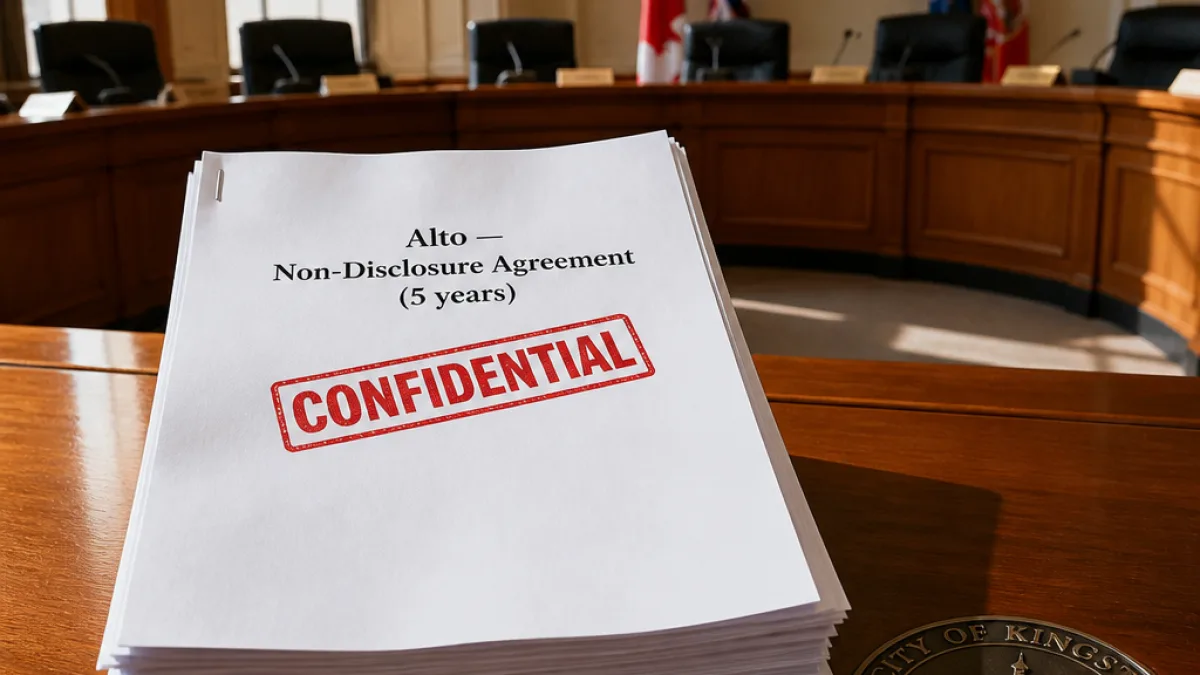
The City of Kingston has made public the text of a six-page non-disclosure agreement it signed with Crown corporation Alto, the provincial agency exploring high-speed rail options. The document, produced in response to a freedom-of-information request by The Whig-Standard, was provided to the news outlet late on Friday.
The agreement, signed on July 10, places a broad confidentiality obligation on information shared between the city and Alto and explicitly applies to material shared before the document was signed. The term of the agreement is set at five years from the signing date and the confidentiality obligations include elected members of Kingston city council.
“The agreement makes confidential all information shared between the city and the Crown corporation including what was shared prior to the document’s signing.”
The move to release the agreement comes amid public interest in whether Kingston will be included in Alto's high-speed rail proposals. The city has previously said it is being considered for inclusion on the Alto project; the public release of the non-disclosure agreement provides residents and watchdogs with the concrete terms governing what information can be disclosed about local engagement with the provincial agency.
What the agreement covers and what it means locally
From the text released by the city, the key operational points of the non-disclosure agreement are clear: it is limited in length but broad in scope, applies retroactively to prior communications, and binds municipal officials. The specifics in the document inform how much material the city may legally share about Alto’s deliberations, studies, or proposals during the five-year period.
- Parties: City of Kingston and Alto (a Crown corporation)
- Length: Six pages
- Term: Five years from July 10 signing
- Scope: All information shared between the parties, including information shared prior to signing
- Coverage: Includes elected city councillors
| Item | Detail |
|---|---|
| Document length | Six pages |
| Effective date | July 10 (signing date) |
| Duration | Five years |
| Parties | City of Kingston and Alto (Crown corporation) |
| Applies to | All shared information, including pre-signing material; councillors included |
Kingston residents will likely scrutinize how the confidentiality clause is applied, especially given the public interest in routing, station locations, property impacts and economic opportunities associated with a potential high-speed rail link. Municipal officials will be constrained in what they can disclose about technical studies, negotiations and background correspondence that Alto or the city deem confidential under the agreement.
Transparency, council roles and next steps
Because the agreement explicitly names elected councillors within its scope, councillors will be legally bound not to reveal protected information, even if they receive such materials in their official capacities. That raises questions about how council will balance legal confidentiality obligations with the public's right to know, a tension often present in municipal dealings with provincial agencies and private partners.
The city has not appended additional commentary to the released document. The Whig-Standard obtained the agreement through a freedom-of-information request; the release of the text provides a clearer baseline for any requests, motions or debates at council that might follow. Meanwhile, discussions about Alto’s project membership and planning processes were publicly announced earlier this year, when federal and provincial attention on high-speed rail proposals intensified.
For Kingston residents, the document clarifies the legal parameters that will govern information flow about Alto’s engagement with the city. It also signals that for the next five years, much of the detailed back-and-forth between the municipality and the Crown corporation could remain outside the purview of routine public reporting, unless parties agree otherwise or the information is publicly released by Alto or the city under different terms.
As more documentation becomes available through public records processes or council discussion, Kingston will face the familiar municipal challenge of balancing confidentiality in commercial and intergovernmental talks with the transparency expectations of its citizens.