MONTREAL — As Quebec’s campaign heads into its third week, party leaders spent Saturday pressing competing visions for health care, public transit and safety ahead of the first of three televised leaders’ debates next Tuesday. Their pitches underscored a shared emphasis on prevention, but diverged sharply on how the province should organise and pay for services.
Prevention takes centre stage
At separate events in Montreal and Trois‑Rivières, leaders framed prevention as a route to easing pressure on emergency departments and the broader health network. Parti Québécois leader Paul St‑Pierre Plamondon said his party would invest $550 million over four years in prevention measures, including initiatives to encourage physical activity and bolster mental‑health care.
“We’re shifting our approach and saying, if we invest money and time in preventing these problems, there will be less people in emergency rooms and less people throughout the system,”
The comment was made at a Montreal press conference and encapsulates the PQ’s argument that upstream investment can reduce downstream costs and congestion in hospitals. St‑Pierre Plamondon also reiterated his party’s intention to abolish Santé Québec, the province’s public‑health agency created in 2024 and since designated the sole employer in the health and social services network. He said not all agency employees would be laid off, but did not specify numbers.
In Trois‑Rivières, Liberal leader Charles Milliard offered a parallel prevention pledge, proposing that his party devote five per cent of the province’s health budget within 10 years to prevention services such as vaccination, cancer screening and chronic disease prevention.
Transit and youth policy
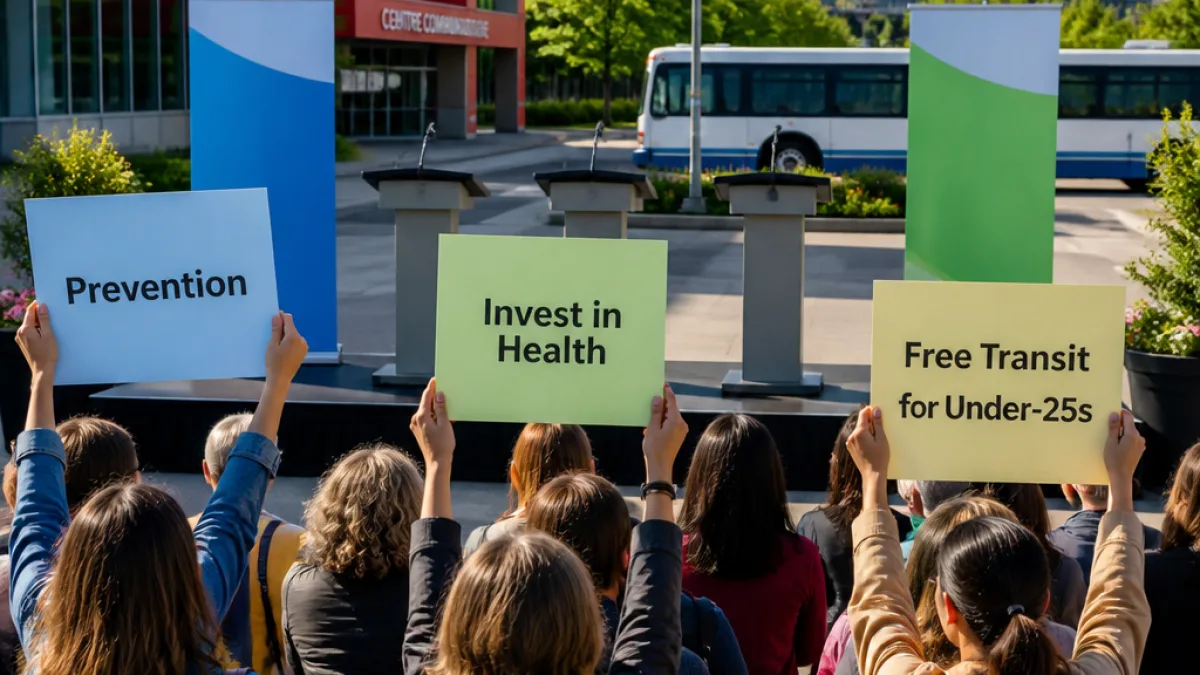
Québec Solidaire spokesperson Ruba Ghazal used a campaign appearance at a back‑to‑school festival in Montreal to highlight a youth‑focused transit proposal: making public transit free for those under 25 years of age if her party were elected. The event — which included a lighter moment as Ghazal made a giant bubble — underlined a political focus on younger voters and on measures aimed at long‑term patterns of ridership and climate outcomes.
Public safety and federal relations
Public safety and questions about Quebec’s relationship with Ottawa also threaded through weekend stops. Milliard sought to present himself as best placed to negotiate with the federal government on files such as immigration, while criticising Coalition Avenir Québec leader Christine Fréchette for what he called an unwillingness to work with the rest of Canada.
The debate over sovereignty returned to the centre stage earlier in the weekend after the Parti Québécois disclosed an estimate that a planned referendum would cost at least $130 million. While the PQ defended the potential expense, three of the five party leaders argued those funds could be better spent elsewhere.
Debates loom large
Party leaders will take part in three debates before the Oct. 5 election; the first is scheduled for Tuesday. With public attention focused on those broadcasts, Saturday’s events offered voters a preview of the style and substance each leader plans to bring to the national platforms: concrete dollar figures from the PQ and Liberals on prevention, a targeted youth transit policy from Québec Solidaire, and an emphasis on negotiation and identity from other parties.
- $550 million over four years — Parti Québécois prevention investment.
- Five per cent of health budget in 10 years — Liberal prevention target.
- Free transit for under‑25s — Québec Solidaire proposal.
- $130 million — estimated referendum cost disclosed by Parti Québécois.
| Party | Notable pledge |
|---|---|
| Parti Québécois | $550M over four years for prevention; abolish Santé Québec |
| Liberals | Allocate 5% of health budget to prevention within 10 years |
| Québec Solidaire | Free public transit for people under 25 |
As the campaign accelerates toward televised exchanges, voters will be watching not only the competing policy details but also how leaders respond under pressure on fiscal trade‑offs and the practicalities of implementation. Questions remain about how proposals would be paid for, and how changes such as dismantling a recently created agency would affect staffing and day‑to‑day services — details that parties have so far declined to fully spell out.
For now, prevention has become a shared rhetorical anchor across the political spectrum in Quebec, even as the parties disagree on priorities and process. The coming debates are likely to force those differences into sharper relief, giving voters a clearer sense of which plans could be implemented should any party form government on Oct. 5.