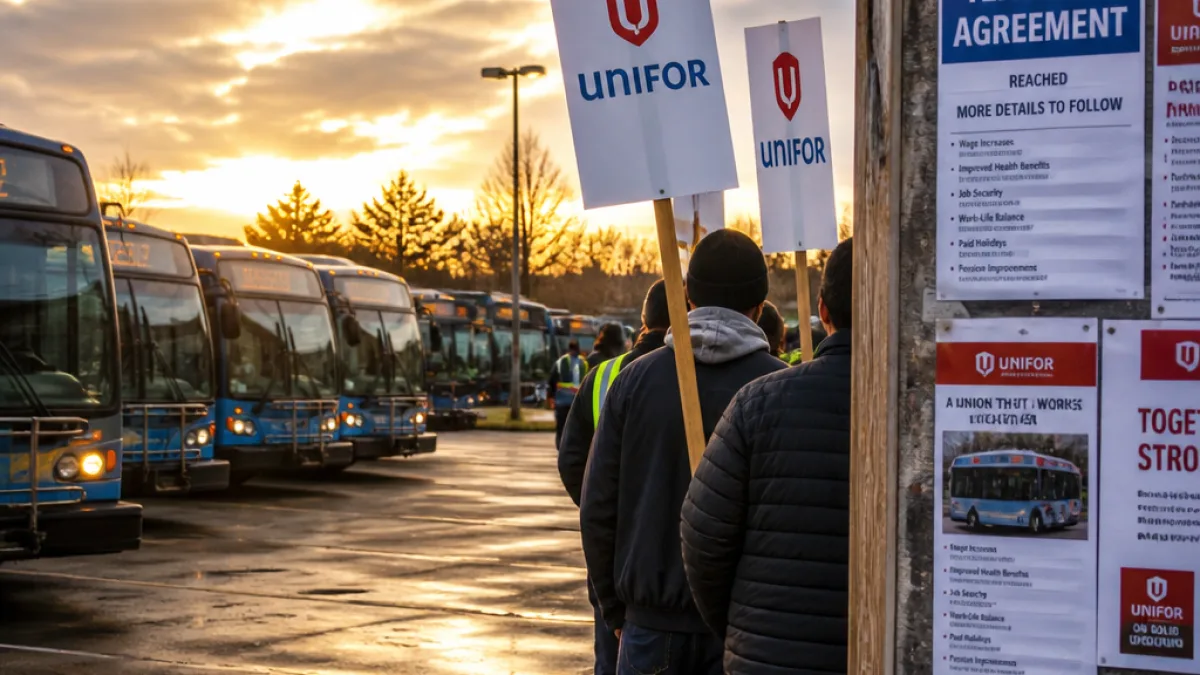
Coast Mountain Bus Company announced on Saturday that it has reached a tentative contract agreement with Metro Vancouver transit operators represented by Unifor Locals 111 and 2200 after months of bargaining and intermittent job action.
What the company said
In a statement, the company confirmed a mediated settlement with the union locals that represent bus drivers, SeaBus workers and other skilled tradespeople. The statement said the deal "provides additional detail around recovery and running time" and that it is consistent with frameworks established with other public sector unions.
"provides additional detail around recovery and running time"
The firm said the agreement will move forward to a ratification vote before it becomes final. It did not release further details of the tentative settlement.
Background and recent labour actions
Negotiations between Coast Mountain and the union locals began in February and progressed unevenly in the months that followed. Workers undertook a variety of job actions when bargaining stalled, including a ban on wearing uniforms and refusing requests to give up break times when routes fall behind schedule.
In May, union members voted overwhelmingly to authorize strike action, with more than 99 per cent of members supporting the move. Despite that mandate for stronger measures, both sides agreed to return to the bargaining table on a Saturday in September, culminating in the announcement of a mediated tentative deal.
- Negotiations began: February
- Strike authorization vote: May — more than 99% support
- Tentative agreement announced: September 12, 2026
- Next step: ratification vote
Local consequences and context
Public transit in Vancouver is a daily lifeline for many residents, and uncertainty around labour disputes can ripple through commute patterns, business operations and access to services. While the company has framed the deal as aligning with broader public sector frameworks, commuters and municipal stakeholders will want clarity on what changes — if any — may affect service levels, schedules or running time allowances.
Coast Mountain's reference to "recovery and running time" touches on a longstanding operational pressure for transit systems: balancing scheduled service with the realities of traffic, weather and other delays that can force drivers into difficult decisions about breaks and timelines. The job actions earlier in the year — particularly the refusal to forgo breaks when routes are behind — underscored that tension between front-line staff and management over safety, fatigue and work conditions.
What comes next
Details of the tentative agreement were not released with the announcement. The union and company will now proceed to a ratification process; only upon a positive vote by union members will the deal be final.
For Vancouver residents who rely on buses and the SeaBus, the ratification timeline and any ensuing operational changes will be critical to watch. Until the union publishes the full terms or members vote to accept the deal, the status of negotiations remains in transition.
| Milestone | Date |
|---|---|
| Bargaining began | February 2026 |
| Union strike authorization | May 2026 — >99% support |
| Tentative deal announced | September 12, 2026 |
As the ratification process unfolds, commuters and civic officials will be watching for disclosures on scheduling, service recovery measures and any language that could affect daily operations. The negotiated outcome, once ratified, will set precedents for how Metro Vancouver manages running time and recovery allowances across its transit workforce.
This development arrives after months of visible strain between management and operators; the tentative agreement offers the possibility of stability, but the details that will determine its impact on Vancouver's transit network remain to be seen.