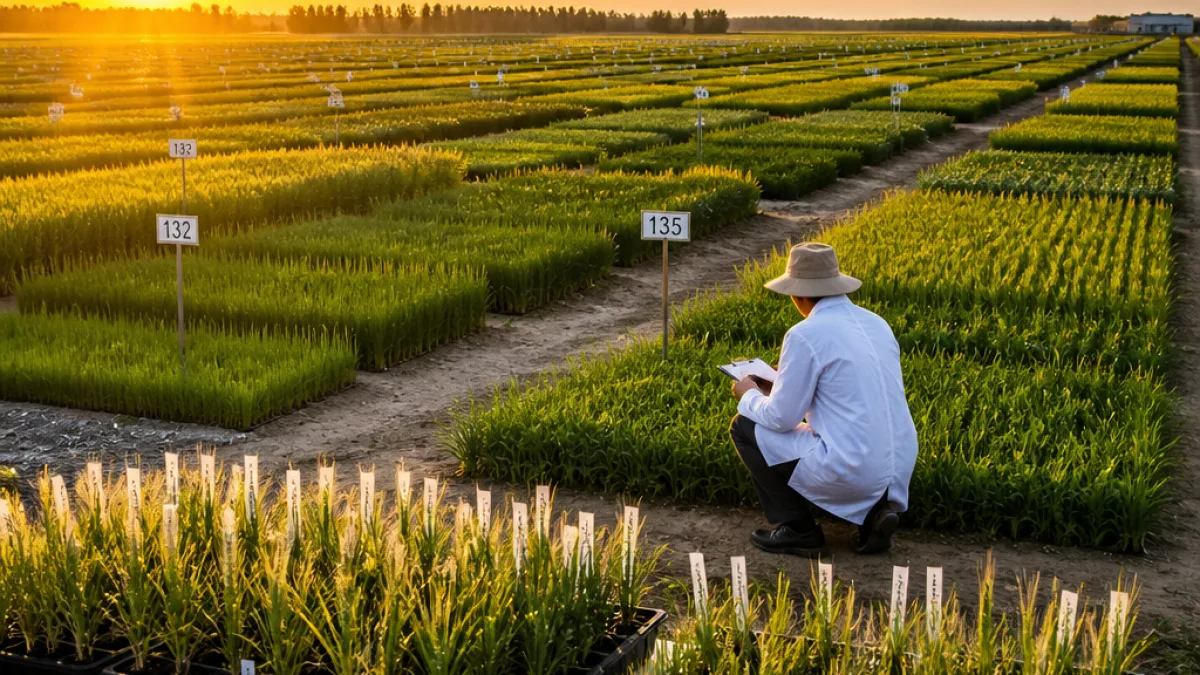
Surrounded by hundreds of acres of test plots, researchers at the Agriculture and Agri‑Food Canada research and development centre in Brandon are intensifying efforts to develop crop varieties that can withstand faster, sharper changes in climate and disease pressure.
Work that stretches across seasons — and years
The research site on the southwestern edge of Manitoba is one of nearly two dozen federal stations across Canada working to select plants suited to an evolving Prairie climate. Breeders and physiologists at the Brandon facility say the work requires long timelines, painstaking selection and a focus on traits that will help growers maintain profitable yields amid more frequent extreme events.
Wheat breeder Santosh Kumar describes the process as a gradual narrowing of possibilities. He begins a growing season with about 300,000 candidate plants and applies a series of tests over multiple seasons to find a handful of varieties capable of coping with drought, heat, disease and other stresses.
“We can't control the weather. The only thing we can control is what we do about the weather.”
That approach includes prioritizing early‑maturing varieties that can be harvested before late‑season heat or moisture stress, and breeding for traits that reduce susceptibility to pathogens. Michael Gebre, a physiologist at the centre, focuses on the biological reasons some plants survive stresses better than others, information that can speed up selection and breeding.
From plot to prairie: the long road to seed availability
After a candidate variety shows promise in experimental plots, researchers undertake genetic mapping and further testing before it enters scale‑up. The time from initial idea to a variety ready for market can be roughly eight years or longer, according to the centre's process. Once a line is approved, production of base seed begins — moving from just over 550 pounds of seed to thousands of pounds of certified seed that farmers can purchase and sow.
This staged scale‑up is crucial to ensure a new variety performs reliably across the varied conditions of the Prairies, where Manitoba producers already face a range of growing‑season challenges.
- Initial candidates: about 300,000 plants per season
- Base seed: roughly 550 pounds produced before scaling
- Time to market: about eight years or more from concept to certified seed
| Stage | Description |
|---|---|
| Selection | Large numbers of candidates screened in field plots |
| Testing & mapping | Genetic and physiological analysis across seasons |
| Scaling | Base seed production, then certified seed for growers |
Brandon's research efforts occur in real time with observable changes in local weather patterns and disease dynamics. The site’s work aims not only to protect yields but also to give farm operators more reliable choices when planning rotations and marketing strategies.
Local consequences and broader reach
For producers in the Wheat City and across Manitoba, the outcome of this research has practical consequences: seed choices made on the recommendation of federal research can influence planting decisions on thousands of hectares, affect input use and alter harvest timelines. Resilient varieties that mature earlier can reduce exposure to end‑season heat or drought, while disease‑tolerant lines can cut the need for chemical controls.
While the research is technical and slow by necessity, the stakes are immediate for farmers watching weather reports and weighing input costs. The Brandon station’s multi‑year trials and the eventual availability of certified seed are intended to give producers tools to adapt to unpredictable seasons rather than simply react to them.
As climate variability intensifies across the Prairies, Brandon’s researchers say their work will remain focused on the traits that make crops more dependable under stress. The centre’s multi‑disciplinary teams and extensive field plots make the facility a central node in national efforts to keep Canadian grain production resilient for years to come.