
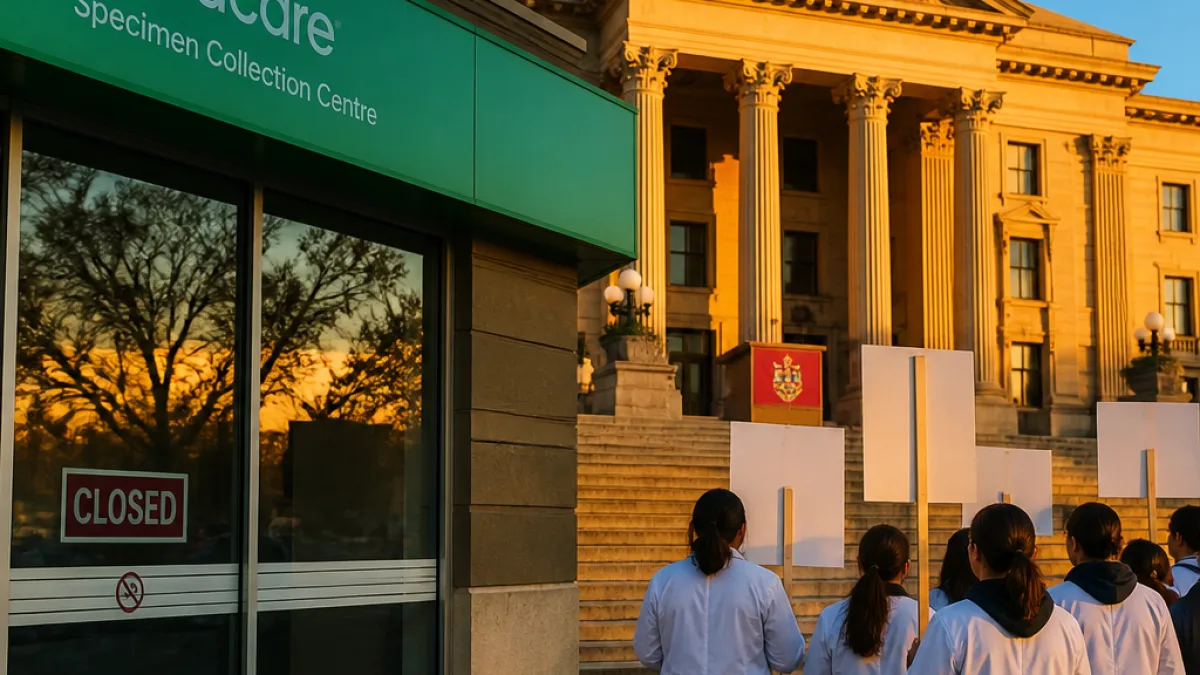
WINNIPEG — Manitoba Premier Wab Kinew sharply rebuked Dynacare on Wednesday after his government successfully moved to halt a one-day strike by private laboratory staff that shut down dozens of collection sites and delayed thousands of tests.
Government steps in, orders staff back
The walkout by about 350 Dynacare lab technicians and technologists closed 22 Dynacare locations across the province on Tuesday and interrupted the collection of blood work, urinalysis, prenatal testing and other routine services. Hours after the action began, the province argued before the Manitoba Labour Board that the work being done by Dynacare employees was vital to the health system, and the board ordered the staff to return to work.
The Manitoba Association of Health Care Professionals (MAHCP), which represents the workers, complied with the order and employees were back on the job the following morning.
Premier's public rebuke
Asked about the strike, Kinew delivered an unusually blunt public criticism of the private lab company.
"Dynacare sucks. Dynacare sucks,"the premier said repeatedly to reporters, later adding that the workers were "frustrated" and "rightfully so." He urged the company to return to bargaining and to give employees higher pay.
Kinew said his government had little choice but to seek the Labour Board's intervention because it has a duty to keep the health system functioning. "Nobody should be using the results of a cancer test as leverage in a negotiation," he said, calling Dynacare's handling of the situation "a mess."
Dispute centres on wages
The union states its members earn significantly less than comparable positions in the public health system, saying wages are often between 20 and 50 per cent lower. The wage gap formed the central dispute in talks that led to the brief work stoppage.
Dynacare issued a statement saying the company shares the premier's desire to maintain reliable lab services and that it is pushing for a "sustainable" collective agreement. The company also said it "acknowledge[s] that this has been a difficult situation for patients and for the province," and noted it has offered a substantial pay increase.
Impact on patients and services
Officials and the company have acknowledged the disruption affected thousands of tests and caused concern for Manitobans awaiting results for a range of clinical needs, including prenatal care and cancer screening. The government framed its intervention as necessary to prevent further harm to patient care while the labour dispute is addressed.
Public reaction was mixed: union representatives cautioned that ordering workers back risks undermining bargaining leverage, while provincial officials emphasised continuity of care.
What remains unresolved
While the immediate shutdown was averted, key issues remain on the bargaining table. The union says pay disparities persist compared with public-sector peers; Dynacare says it is negotiating toward a lasting deal. The absence of an essential-workers agreement between the employer and the union complicated the situation, leaving the Labour Board to determine the company's services were critical.
The premier also suggested broader policy options could be considered if private lab providers cannot meet provincial expectations, saying his government might examine the structure of lab testing delivery in the future. He did not provide a timeline or specific steps for any such review.
| Fact | Detail |
|---|---|
| Number of workers involved | Approximately 350 |
| Dynacare locations closed | 22 |
| Types of services affected | Blood work, urinalysis, prenatal tests and other collections |
Next steps for Manitobans
- Patients with outstanding tests should contact Dynacare or their health-care providers for updates.
- The union and employer will continue bargaining; any further job action could prompt renewed government involvement.
- The province may consider policy reviews of lab service delivery if private providers cannot resolve disputes while safeguarding patient care.
The standoff highlights tensions between the public interest in uninterrupted diagnostic services and private employers' relations with their workforce. For now, services have resumed under the labour board's order and all parties say they favour a negotiated resolution.
Reporting for WE NEWS.