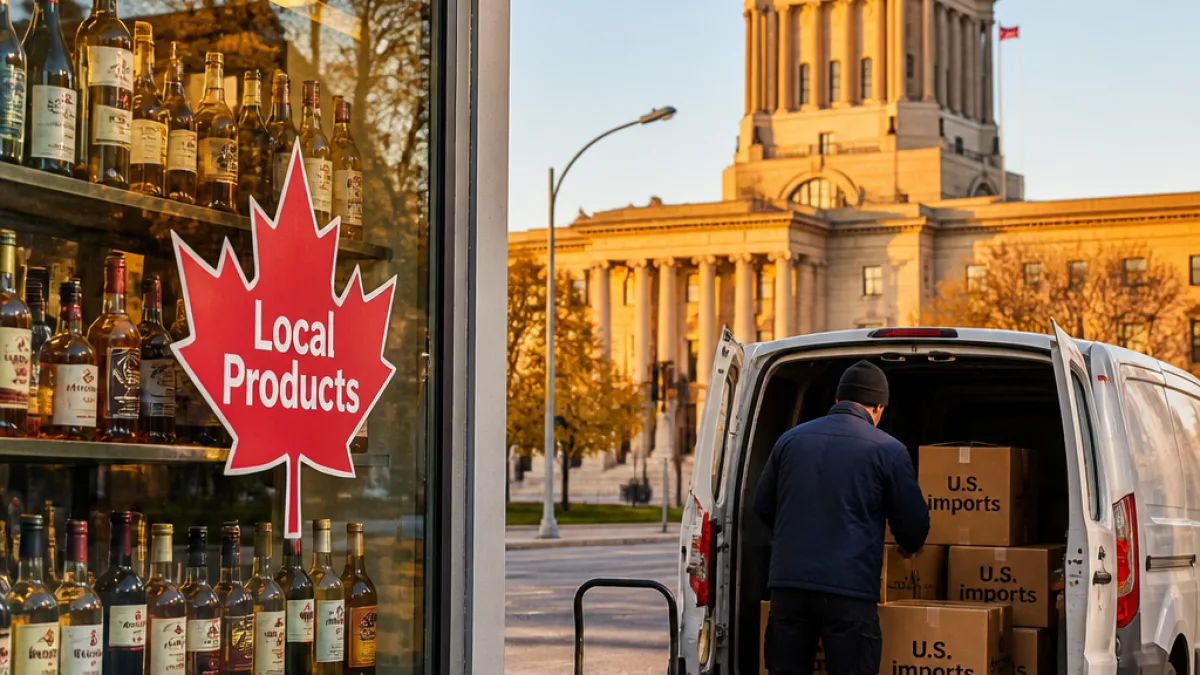
WINNIPEG — Manitoba Premier Wab Kinew said Thursday he is prepared, with reluctance, to permit American alcoholic beverages back onto provincial shelves if that is a condition of a broader trade arrangement meant to avert sweeping U.S. tariffs on Canadian products.
Waiting for tariff details before committing
Kinew told reporters he is still seeking crucial information — most notably the final tariff levels — before making any firm commitments on the provincial policy changes the federal government is seeking.
He said Prime Minister Mark Carney has been pressing provinces to agree to remove restrictions that favour non-U.S. suppliers in government tenders as Ottawa and Washington work toward finalizing a deal designed to avoid steep retaliatory duties.
The premier framed his position as pragmatic but cautious, signalling a willingness to cooperate to protect broader economic interests while emphasising local choice and the importance of supporting Manitoba producers.
"If we put the booze back on the shelves, don't buy it,"
The comment underlined his hope that, even if provincial policy changes allow U.S. alcohol into stores, Manitobans will continue to favour domestic brands.
Procurement language and spending impact
Kinew said the federal ask would require Manitoba to remove a clause currently included in government tenders that expresses a preference for Canadian or non-U.S. contracts. He noted that the clause has had a measurable effect on provincial spending patterns.
According to the premier’s office, the preference language contributed to a 82 per cent year-over-year decline in Manitoba government spending on American firms. Kinew indicated he would rather press for a deal that reduced tariffs further than accept weaker concessions.
Broader trade backdrop
The negotiations come after U.S. President Donald Trump announced proposed retaliatory tariffs — described in reports as a 50 per cent levy on a wide range of Canadian goods amounting to roughly $28 billion in value — in response to Canada's liquor restrictions, auto tariffs and dairy access rules. The reported deadline for those tariffs was delayed to allow negotiators time to codify any agreement.
Multiple news outlets have reported the emerging deal would see the U.S. lower sectoral tariffs on Canadian steel and aluminium, though Kinew said he needs the final terms, including tariff schedules, before endorsing provincial changes.
Local implications and consumer choice
For Manitobans, the immediate impact would be primarily at the point of sale. If provinces lift restrictions on U.S. alcohol, shoppers could see a broader range of American products in retail outlets. Kinew stressed the importance of consumer agency in shaping market outcomes.
He suggested the province could consent to a change in procurement rules in exchange for improved tariff treatment for Canadian exporters, but reiterated his preference for a stronger outcome that would further lower duties on affected sectors.
- What’s at stake: provincial procurement policy, retail availability of U.S. alcohol and potential tariff relief for Canadian exporters
- Key figures cited: 82% decline in Manitoba’s government spending on U.S. firms; a reported 50% U.S. tariff threat affecting about $28 billion in Canadian goods
- Next step: Kinew awaits final tariff numbers and the precise terms from the federal government before deciding
| Item | Figure |
|---|---|
| Reported U.S. tariff threat | 50% |
| Value of goods affected (reported) | $28 billion |
| Manitoba year-over-year decline in spending on U.S. firms | 82% |
As discussions continue in Ottawa and Washington, Manitoba faces a trade-off familiar to other provinces — balancing immediate protective measures for local industry and procurement with broader national efforts to shield exporters from devastating retaliatory tariffs. The premier’s comments make clear the province is open to compromise but wants clearer commitments and better outcomes before altering policies that have demonstrably shifted government spending away from U.S. suppliers.
For now, the province has not agreed to any specific change, and the premier urged residents to consider local producers in their purchasing choices should U.S. products return to shelves.
Further details on any final trade agreement, including tariff schedules and provincially relevant obligations, are expected as federal negotiators seek to formalize an accord.