WINNIPEG — Manitoba’s premier has unveiled a provincewide fitness challenge aimed at getting students to be more active by year’s end and rewarding schools that show measurable improvement.
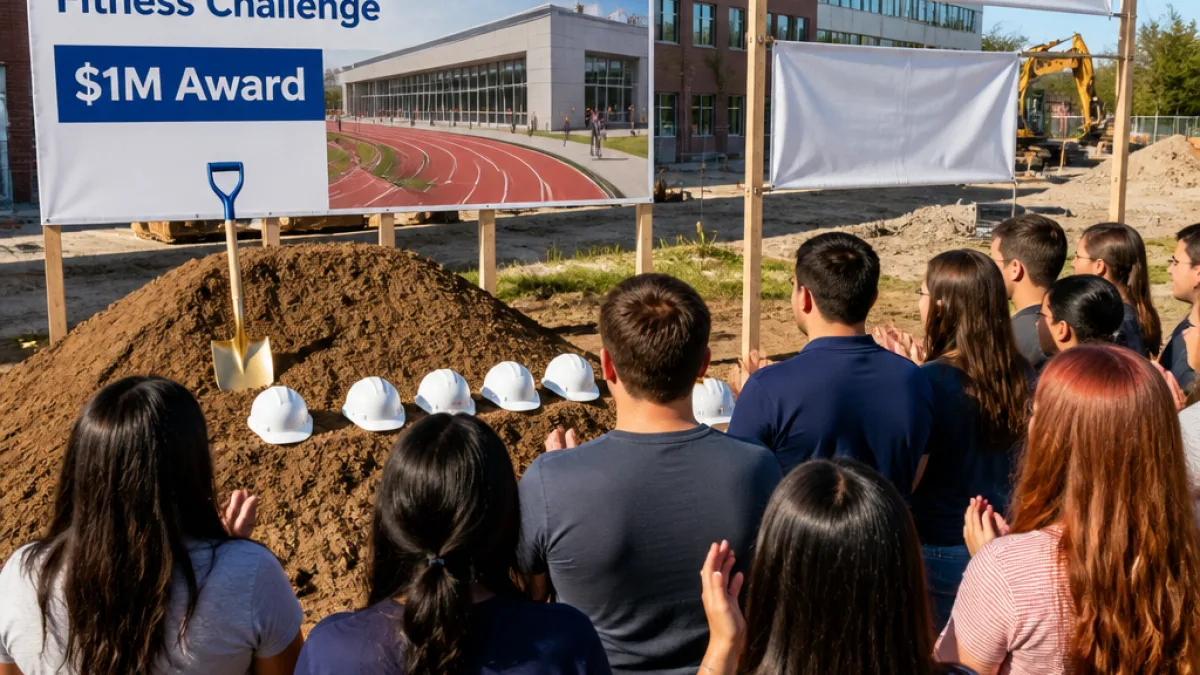
Premier Wab Kinew announced the initiative Tuesday during the groundbreaking for a $10-million gym and track at École Secondaire Kelvin High School in Winnipeg. The program, officials say, asks students to set personal activity goals — from trying a new sport to increasing daily step totals — and to track progress across the school year.
What the challenge asks of students and schools
The challenge is pitched as inclusive: students can focus on becoming faster, stronger or even simply walking more. According to the provincial announcement, participating schools will track gains by students and those that manage to improve will receive recognition in the form of a gym banner and a significant funding award.
"about encouraging all students to end the year more active than they started as part of building a healthier future."
The premier framed the initiative as part of a larger push to improve physical activity among young people across Manitoba. The announcement came shortly after the government launched a pilot program to make in-person physical education mandatory for all students from kindergarten through Grade 12, a policy move intended to ensure consistent access to supervised, curriculum-based activity time.
Funding and infrastructure
At Kelvin High School’s site event, the premier highlighted a planned $10-million gym and track — one of the local infrastructure investments that accompanies the broader policy direction. The province has linked the fitness challenge to additional school support by promising a $1-million funding award to schools that show improvement in students’ activity levels.
School administrators have said public recognition — such as a banner displayed in a gym — can boost school pride and visibility for physical-education efforts. The combination of visible recognition and the funding incentive is designed to motivate schools to increase participation and monitor outcomes.
How the program will operate
Officials have described the program as flexible. Examples of goals students might set include:
- Trying a new sport or activity during the school year
- Gradually increasing daily steps or active minutes
- Improving performance in fitness tests or sport-specific skills
Schools will be expected to track those goals and report progress, though the province has not released detailed public-facing guidelines on metrics, evaluation timelines or application processes for the funding award. The announcement emphasised encouragement and measurable improvement rather than strict performance thresholds.
Local context and potential impact
Manitoba’s move comes amid growing attention to children’s health and physical activity in Canada. Making in-person physical education mandatory from kindergarten through Grade 12 is a notable policy shift, and pairing that with a public challenge introduces an incentive structure for schools.
For students at Kelvin High and other schools around the province, the combined investments in facilities and programming could increase opportunities for daily activity and sport participation. How quickly benefits are realised will depend on school capacity to implement tracking, coach and teacher support, and community participation.
Questions remaining
Several practical details remain to be clarified by the province, including the exact criteria for awarding the $1-million funding, the number of schools that will be selected for the prize, and whether the funding is one-time or recurring. School divisions will also need time to align staff, schedules and reporting mechanisms with the new expectations.
| Program element | Known detail |
|---|---|
| Prize for improving schools | $1-million and a gym banner |
| Infrastructure announcement | $10-million gym and track at Kelvin High School |
| Related policy | Pilot to make in-person phys-ed mandatory K–12 |
For parents and school communities, the initiative could mean new expectations around tracking and reporting student activity. School leaders will likely seek further guidance from the province on implementation, and education stakeholders will be watching to see how the funding is distributed and whether the program boosts activity levels across Manitoba.
This article will be updated as the provincial government releases more detailed program guidance and timelines.