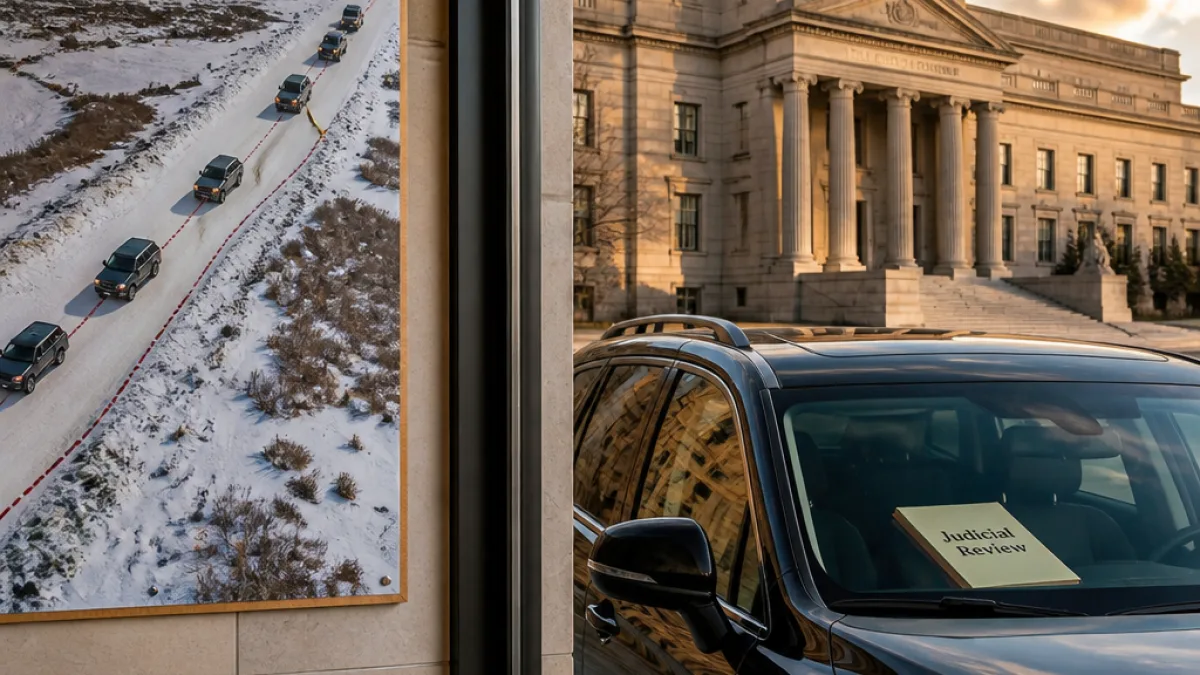
WINNIPEG — Lawyers for the owner of a Churchill tourism business told Manitoba Court of King’s Bench on Friday that the provincial NDP government’s decision last year to stop issuing off‑road vehicle permits to the company was part of a deliberate attempt to "target and destroy" the lodge’s operations.
Background of the dispute
The litigation centres on permits that allow tundra vehicles to travel on roads in the Churchill Wildlife Management Area, a key access route for polar‑bear viewing and other northern tourism activity. Between 1984 and 2019 the province issued 18 such permits. In 2020, the former Progressive Conservative government issued two additional permits to Lazy Bear Expeditions, bringing the total number to 20.
| Year range | Number of permits issued |
|---|---|
| 1984–2019 | 18 |
| 2020 | 2 (issued to Lazy Bear) |
| Total before 2025 decision | 20 |
On Feb. 27, 2025, the NDP government informed Lazy Bear Expeditions that it would not receive permits for the 2025–26 polar‑bear viewing season. The remaining 18 permits continue to be held by rival ecotourism companies.
Legal challenge and arguments
Wally Daudrich, owner of Lazy Bear Lodge and Expeditions, has launched two judicial‑review applications and a motion for injunctive relief seeking to have his tundra vehicles allowed back on and off the roads in the wildlife management area. The matters were argued during a full day of hearings before Justice Ami Kotler.
Daudrich’s lawyers say the government’s stated reason — a decline in polar‑bear numbers in the western Hudson Bay region — was merely a pretext and that the decision was instead aimed at removing Lazy Bear from the market, creating what his counsel described as a permanent duopoly for two rival operators.
"This has created a permanent duopoly," said Rod Roy, Daudrich’s lawyer, in court.
Provincial lawyers counter that Lazy Bear has no legal right to operate tundra vehicles on those roads and that the government acted within its regulatory authority. The court heard competing submissions on whether the permit rescission was lawful and whether interim relief is warranted while judicial reviews proceed.
Potential local and economic impacts
Tourism in Churchill relies on seasonal access to remote areas for polar‑bear viewing, an important draw for the town and northern businesses. The dispute touches on several broader concerns:
- The economic viability of small, northern tourism operators reliant on access to protected areas.
- How provincial decisions about wildlife management and conservation intersect with local livelihoods.
- Precedent for how permits are issued and revoked for activity within wildlife management areas.
While the court proceedings will determine immediate legal outcomes for Lazy Bear Expeditions, the case also raises questions about how the province balances conservation concerns with economic interests in remote communities.
What happens next
Justice Kotler will consider the written and oral arguments before issuing decisions on the motion for interim injunctive relief and the applications for judicial review. The timing for those decisions was not announced in court on Friday.
The case will be followed closely in Churchill and across the province because of its implications for access to the Churchill Wildlife Management Area and the governance of northern tourism permits.
Neither the province nor representatives for Lazy Bear Expeditions provided additional comment in the courtroom beyond the arguments submitted by counsel. The court record will form the basis for any further reporting as judgments are released.
This report draws on submissions heard in Manitoba Court of King’s Bench and public statements filed in the proceeding.