The company that owns the Port of Churchill and the Hudson Bay Railway says it would take a small fraction of the amount Premier Wab Kinew put forward this summer to make the northern port a commercially robust gateway — reigniting debate over scale, cost and ambition for Manitoba’s Arctic access.
Disparate cost estimates
Arctic Gateway Group, which is owned by 29 First Nations and 12 northern communities, told media this week that improving port facilities and upgrading the connecting railway could be accomplished for about $2 billion to $3 billion. That contrasts sharply with the figure Premier Kinew mentioned when promoting a proposal that included an offshore liquefied natural gas platform in August, which he put in the range of $70 billion to $80 billion.
Arctic Gateway chief executive Chris Avery characterised the port owner’s price tag as “a fraction” of the premier’s number, describing it as “less than four per cent” of the $70–$80‑billion estimate.
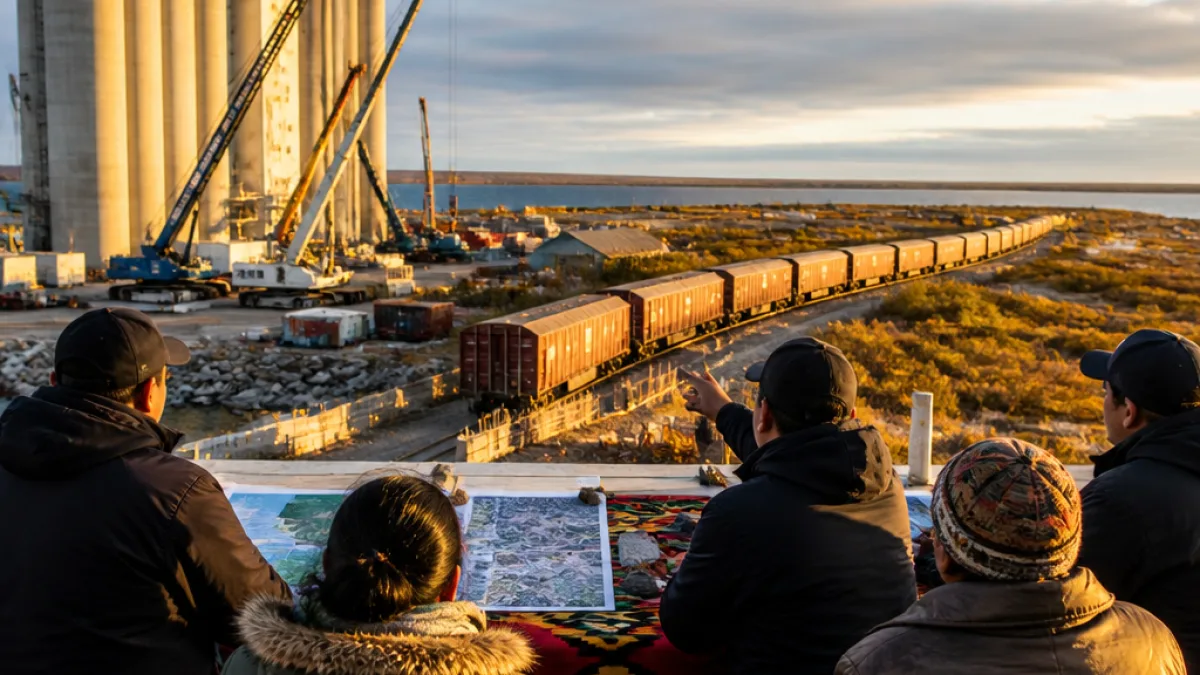
“It’s a fraction of those numbers,” Avery said, adding that about $2 billion to $3 billion would be needed to build new facilities at the port, upgrade the 1,300‑kilometre Hudson Bay Railway to handle heavier loads and rebuild railway service facilities at The Pas.
What Arctic Gateway says it would fund
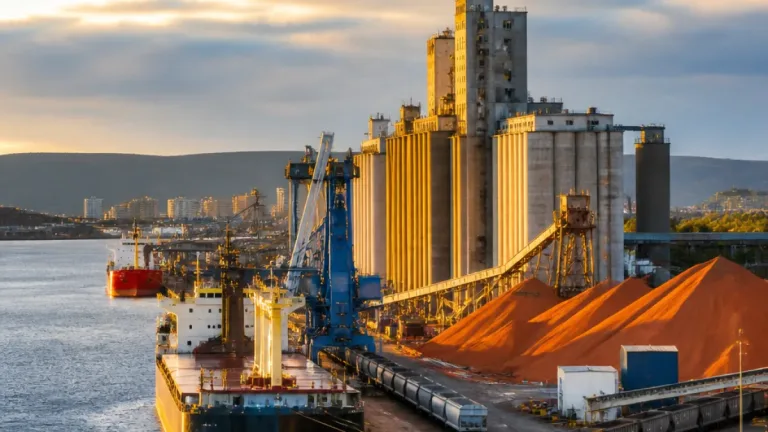
Avery framed the company’s plan as focused on practical upgrades that would allow Churchill to handle a broader range of commodities without pursuing a much larger, riskier LNG plan. He listed potential cargoes such as critical minerals, potash, agricultural products and energy products as candidate exports that could travel through a revitalized Churchill.
- New port facilities at Churchill
- Upgrades to the Hudson Bay Railway to support heavier freight
- Rebuilding railway service infrastructure at The Pas
Different visions for Churchill
The divergence in figures underscores two distinct visions circulating in Manitoba political and business circles. The premier’s proposal, presented to investors at the Canada Investment Summit in Toronto, included a more ambitious approach involving a floating offshore liquefied natural gas (LNG) platform — an element that significantly raises projected costs. By contrast, Arctic Gateway emphasises incremental infrastructure investment to expand existing commercial capability.
Arctic Gateway also noted it is not pursuing an LNG terminal or pipeline to Churchill. Avery said the company’s priority is to develop the port to support a range of goods, while also advancing national goals that include diversifying markets, strengthening sovereign presence in the North and promoting Indigenous economic participation.
Local and regional implications
Any move to increase the port’s throughput would affect northern Manitoba communities and industries that depend on global markets for grain, potash and minerals. Arctic Gateway’s ownership structure — with dozens of First Nations and northern communities as stakeholders — anchors the debate in questions of local control and economic reconciliation.
For residents, the differences between a multi‑billion dollar staged upgrade and a multi‑decade mega‑project with an LNG focus matter not only for public finances but for local employment patterns, environmental risk and long‑term market access.
Cost comparison at a glance
| Proposal | Estimated cost |
|---|---|
| Arctic Gateway upgrades (port, railway, The Pas facilities) | $2–3 billion |
| Premier’s expansion with offshore LNG platform | $70–80 billion |
Next steps and questions
Arctic Gateway presented its lower estimate as the amount it believes is required to make Churchill a meaningful national port. The company has argued those investments would support several federal and provincial policy objectives.
Key questions remain unanswered publicly: which elements of the premier’s vision would be pursued by government versus private partners, what federal involvement and approvals would be required for either approach, and how Indigenous owners and northern communities will be engaged in a final decision. The premier’s office said the government is continuing to solicit investor interest at national and international forums.
For Manitobans watching the debate, the core issue will be the balance between ambition and realism: whether to pursue a sweeping, high‑cost transformation centred on new energy infrastructure, or to focus on concentrated upgrades that could reopen northern shipping lanes and expand export options on a more modest budget.
This story will be updated as governments and Arctic Gateway provide further details.