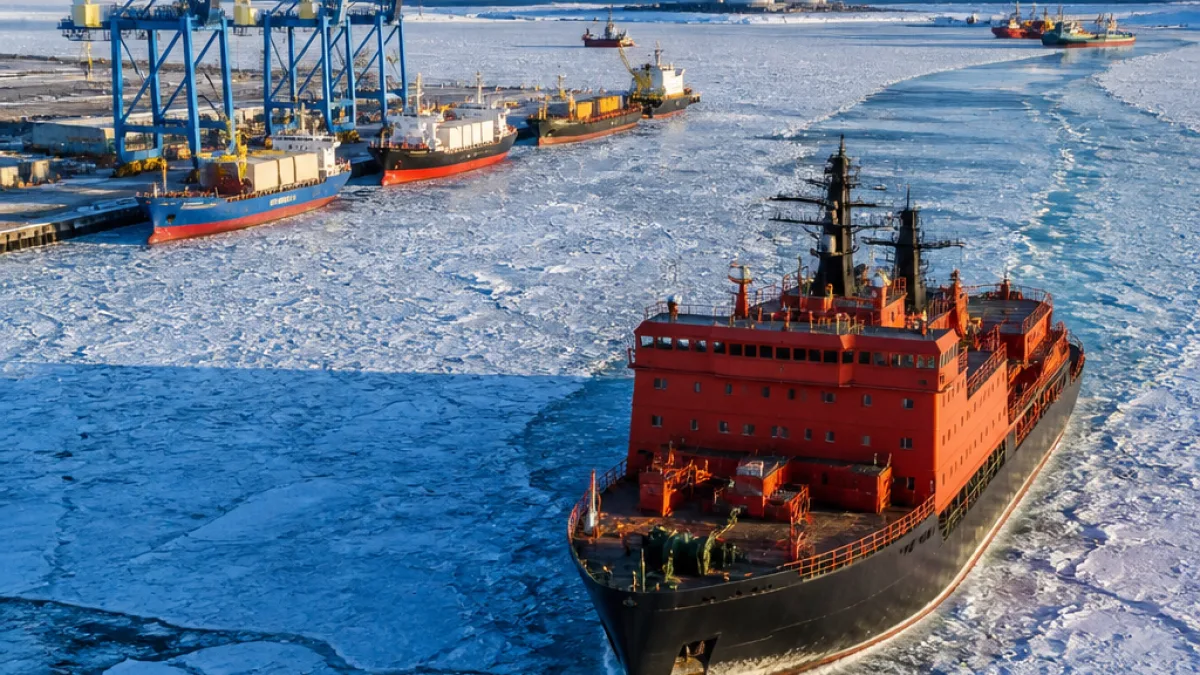
New research commissioned by provincial, federal and Indigenous interests indicates the Port of Churchill could support far greater shipping activity for much of the year, a finding Manitoba’s premier says strengthens the case for expanding the Arctic deep‑sea port.
Studies point to longer season with lighter‑duty vessels
The reports, prepared by the University of Manitoba, Fednav Ltd. and the Arctic Research Foundation, conclude that a combination of modern marine technology and reductions in sea ice are making navigation in Hudson Bay more feasible outside the traditional four‑month season.
At a news conference on Friday, Premier Wab Kinew said the findings show Churchill has the potential to operate as a year‑round facility "with current technology" by relying on icebreakers and smaller, more affordable ships.
“Churchill could be a year‑round port right now, with current technology and using icebreakers and ships that are a lot cheaper, a lot more affordable than we previously thought,” said Kinew.
Costs and equipment highlighted in the reports
The studies present a range of vessel and icebreaker options rather than a single prescription. Among the figures released:
- Icebreakers estimated at between $100 million and $410 million each, depending on capability.
- Bulk carriers designed for lighter ice conditions priced at roughly $60 million to $70 million could operate for nine to 10 months per year in most conditions.
- A full‑scale liquefied natural gas (LNG) export terminal would carry a vastly higher price tag — the premier cited a range of $70 billion to $80 billion to make Churchill capable of moving energy products at scale.
| Asset | Estimated cost | Operational season |
|---|---|---|
| Medium‑duty icebreaker | $100M–$410M | Year‑round escort possible |
| Properly designed bulk carrier | $60M–$70M | 9–10 months most years |
| LNG export terminal (scale enabling energy exports) | $70B–$80B | N/A (major construction) |
Climate trends widen navigable window
The authors link expanded shipping potential to measurable declines in Hudson Bay ice. The reports say the ice‑free window has lengthened by roughly a month since the 1980s. They also cite modelling that implies each additional half‑degree of warming could add about two weeks to that window.
That trend, combined with advances in ship design and ice‑management, is presented as the principal driver enabling more regular use of lighter‑duty vessels rather than relying solely on costly, heavy‑icebreakers or re‑engineering a port for continuous heavy industrial use.
Who funded the work and why it matters
Funding for the studies came from the Manitoba and federal governments and the Indigenous‑owned Arctic Gateway Group, which owns the Port of Churchill. Fednav Ltd. and the Arctic Research Foundation conducted portions of the work alongside the University of Manitoba.
Policy makers and industry are watching because changes at Churchill would have wide economic and logistical implications for the province's bulk exports and potential energy projects, shifting east‑west transportation dynamics in northern Canada.
Practical implications and outstanding questions
While the studies suggest increased navigability is achievable with smaller, less expensive vessels and icebreakers, they also underline the gulf between incremental expansion and large energy export ambitions. Converting Churchill into a major LNG export hub would still require investment on a vastly larger scale.
- Short‑term: More months of shipping could lower costs for some bulk commodities and improve supply chains for northern communities and industries.
- Medium‑term: Operators could invest in a fleet mix focused on lighter ice capability rather than extreme‑ice specifications.
- Long‑term: Any move toward large‑scale fossil fuel exports would depend on multibillion‑dollar construction and market considerations, not just navigability.
Those trade‑offs will be central to upcoming provincial and federal decisions. The studies provide technical and economic detail that provincial officials say strengthens the argument for investment; the next steps will involve weighing environmental, Indigenous, fiscal and market factors that go beyond navigation alone.
As Manitoba debates the future of its Arctic gateway, the new reports aim to inform that conversation by replacing assumptions about perpetual heavy‑ice barriers with a more nuanced picture of changing ice conditions and evolving ship technology.