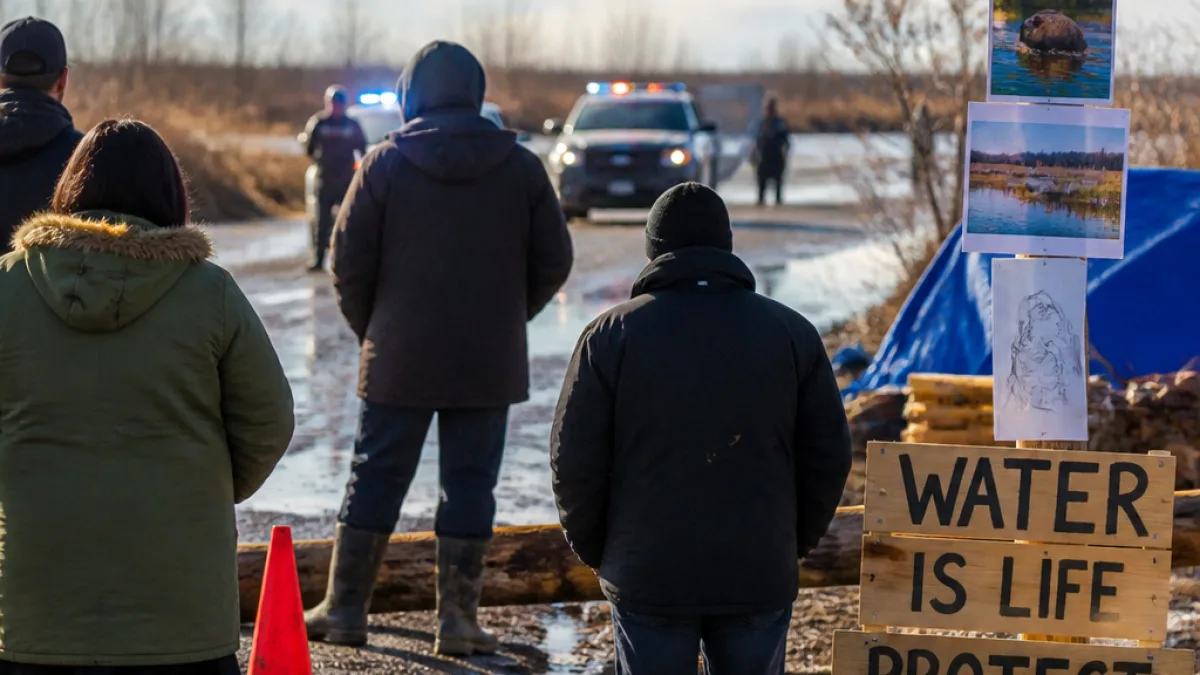
TREATY ONE TERRITORY — The Assembly of Manitoba Chiefs (AMC) is pressing Premier Wab Kinew to prioritise reliable policing and direct engagement with First Nations after public calls for RCMP intervention in response to a checkpoint established by Bloodvein River First Nation.
AMC says protections, not selective enforcement, must come first
In a statement released Sept. 27, AMC Grand Chief Kyra Wilson said the situation highlights a long‑running problem: when policing fails to protect Indigenous communities, their leaders feel compelled to take measures to safeguard people and resources. That, she argued, should prompt government action to support community safety — not immediate demands for enforcement against the Nation.
“First Nations have long called for effective policing and support for enforcing the laws that protect our citizens,” Grand Chief Wilson said. “When that protection falls short, Chiefs and Councils are left to find ways to keep their people safe.”
The statement responded to comments from Premier Kinew that Manitoba had issued a cease‑and‑desist letter to Bloodvein on Sept. 19 and subsequently shared it with the RCMP on Sept. 21. The Manitoba Wildlife Federation has also publicly urged RCMP action.
Bloodvein’s reasons: conservation, food security and safety
According to the AMC, Bloodvein cited concerns about moose conservation, food security and community safety as the driving factors behind the checkpoint. Grand Chief Wilson said those issues call for respectful, direct engagement with the Nation’s leadership rather than swift calls for external enforcement.
Her comments also criticised what she described as an attempt to shift responsibility for potential racist reactions away from those who might commit them. She urged the premier to condemn any hatred and to ensure First Nations receive protection, not blame, when actions they take provoke negative responses.
“If the Premier is concerned that First Nations people could face hatred or violence, his response should be to condemn that hatred and insist on their protection,” she said.
Questions about whose safety gets priority
The AMC’s release framed the controversy as a deeper question of which communities receive attention and enforcement when safety issues arise. It argued that First Nations should be able to rely on police support when their citizens are at risk and should not be forced to take protective measures themselves only to face enforcement demands afterward.
The situation underscores tensions that can arise when Indigenous nations exercise community protection measures in response to local concerns—especially around natural resources and food sources that are central to livelihoods and cultural practices.
Key dates and developments
| Date | Action |
|---|---|
| Sept. 19 | Province issued a cease‑and‑desist letter to Bloodvein (as stated by the premier) |
| Sept. 21 | Manitoba shared the letter with the RCMP (as stated by the premier) |
| Sept. 27 | Assembly of Manitoba Chiefs publicly responded, urging policing supports and direct engagement |
What the AMC is asking for
The AMC’s release laid out a clear set of demands and concerns for provincial and federal authorities to consider. While it did not list specific operational requests, the broad points included:
- Immediate, reliable policing support for First Nations facing safety risks;
- Direct engagement with Bloodvein River First Nation leadership about conservation and food security issues;
- Condemnation of any hate or violence targeted at First Nations and assurance of protection if threats materialize.
The organisation stressed that responsibility for racist actions lies with those who commit them and should not be shifted onto First Nations leaders exercising measures to protect their people.
Local impact and the road ahead
The dispute illuminates the fraught intersection of Indigenous governance, resource concerns and provincial law enforcement. Bloodvein’s stated worries — moose conservation and food security — speak to ongoing pressures on northern and remote communities where hunting and harvesting remain essential to local diets and culture.
How provincial authorities, the RCMP and Bloodvein leadership choose to proceed will be watched closely by other Manitoba First Nations, which have often voiced frustration over inconsistent access to policing and protective services. The AMC’s statement signals that any resolution will likely require more than legal notices — it will need dialogue that recognises Indigenous laws, leadership and the practical realities facing remote communities.
Further comment from the provincial government, the RCMP and Bloodvein River First Nation was not included in the AMC release.
— Reporting for WE NEWS