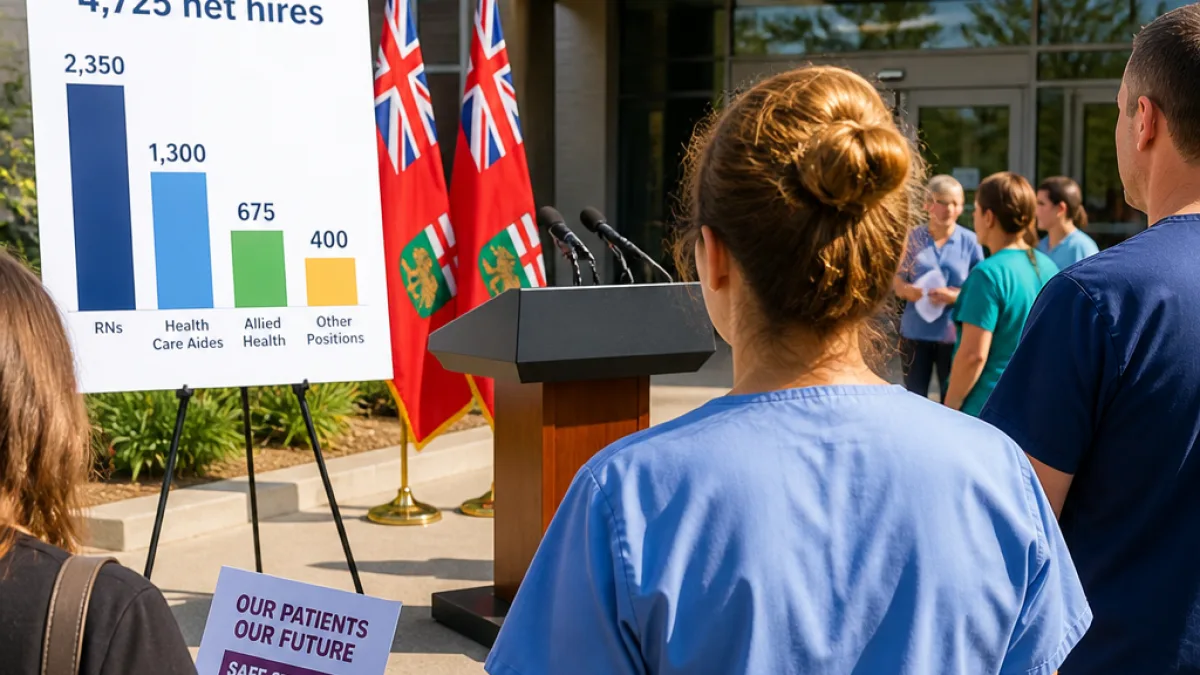
WINNIPEG — Manitoba’s NDP government says the province has a net increase of 4,725 health‑care workers since it took office nearly three years ago, a figure Premier Wab Kinew unveiled at Seven Oaks Hospital as part of a summary of recent steps taken to bolster the health system.
Breakdown of the announced hires
The government’s tally includes a range of clinical and support staff. Officials cited specific categories that contribute to the overall number.
| Occupation | Net increase |
|---|---|
| Health‑care aides | 2,152 |
| Nurses | 1,464 |
| Doctors | 370 |
| Residents | 59 |
Government paints staffing gains as first step
At the Winnipeg hospital, the premier framed those hires as central to tackling long emergency‑department waits and backlogs for diagnostics and procedures. He said improving staffing levels is a starting point for broader service improvements.
“What has changed over the past few years is that the volumes at the emergency rooms and the urgent cares are much greater today — and the acuity. People are sicker today.”
The province described the increase as a net figure, covering both full‑time and part‑time positions. The announcement was part of a wider news conference in which the government highlighted several measures it has implemented to address health‑care challenges since taking office in October 2023.
Medical groups acknowledge gains but warn of ongoing pressures
Doctors Manitoba responded to the physician numbers with cautious approval. In a statement, the medical association’s president welcomed the net increase in doctors but said the province must pursue further changes to keep practitioners in Manitoba.
“Manitoba loses more physicians to other provinces than it gains, and too many of our own medical graduates move away,”
The president also urged the province to reduce administrative burdens and expand team‑based care as part of retention strategies. Those requests mirror long‑standing calls from health‑sector unions and professional bodies who have repeatedly pointed to persistent vacancies, heavy workloads and lengthy patient waits despite any hiring gains.
Unions and front‑line voices remain concerned
Union representatives and some front‑line staff have flagged that net hiring figures do not always reflect local realities. Staffing shortfalls in rural areas, burn‑out among emergency and intensive‑care teams, and backlogs for elective procedures continue to be cited as ongoing problems by health‑care workers and advocacy groups.
Several stakeholder groups have said that while overall headcount is a meaningful metric, it must be paired with measures that address retention, distribution of staff across the province and workload supports to translate hiring into improved patient access and shorter waits.
- Net hires: 4,725 health‑care workers (mix of full‑ and part‑time)
- Largest categories: health‑care aides and nurses
- Concerns raised: physician retention, paperwork, team‑based care, and regional staffing imbalances
What’s next
The provincial government presents the staffing figures as evidence of progress on a core campaign pledge to address health‑care problems. Community leaders and medical associations say the focus now must shift to turning those staffing numbers into measurable improvements in wait times and service availability across Manitoba.
Officials and health‑sector organizations face the immediate task of closing gaps between headline recruitment numbers and conditions on the ground — particularly in emergency departments, rural hospitals and outpatient services where patients report the longest waits.
As the province monitors the impacts of new hires, Manitobans will be watching for concrete signs that staffing gains reduce delays for diagnostics, procedures and primary‑care access, and for signals on how retention and regional distribution of staff will be addressed.
This report is based on the province’s announcement and statements from provincial leaders and Doctors Manitoba made at the time of the news conference in Winnipeg.