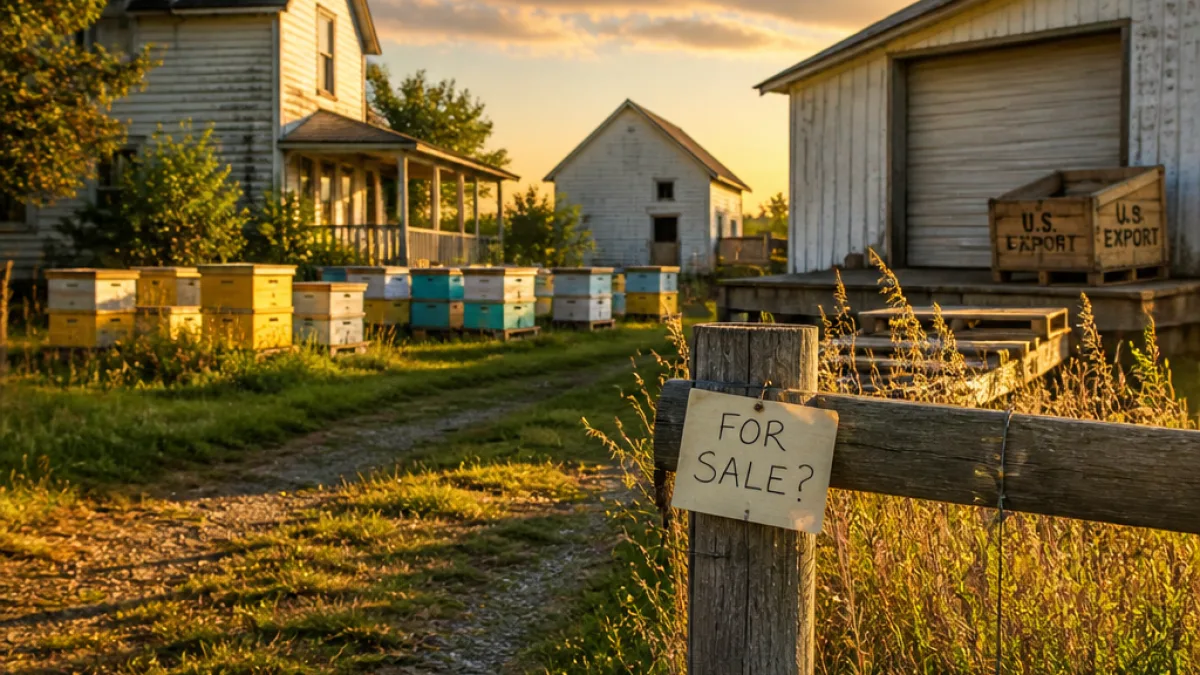
ETHELBERT, Man. — A three-generation honey business in rural Manitoba says new U.S. tariffs have effectively severed access to most of its customers and left the operation scrambling to find buyers at home.
Tariff shock for a small prairie exporter
Podolski Honey Farms, based near Ethelbert, ships roughly 90 per cent of its product to buyers in the United States, according to general manager Osee Podolsky. He said the farm is already feeling the effects after Washington imposed a new 50-per-cent tariff on categories of Canadian goods — part of measures covering about $28 billion worth of products that include natural honey — that took effect just after midnight on Saturday.
"Effectively, we're out of business," Podolsky said, describing his concern that the farm his grandfather started more than seven decades ago could be pushed toward bankruptcy. "It's non-viable for us to ship to our usual customers that buy honey from us. We can try to find more Canadian market share, but if many other beekeepers are trying to do the same, it may be a race to the bottom."
Negotiations collapse
The tariffs followed days of talks between Canadian and American negotiators that did not produce an agreement. At a Saturday morning news conference, Prime Minister Mark Carney said negotiators had been moving toward a "mutually beneficial agreement" until the U.S. proposed new terms that he characterised as "uneconomic, unfair, and undermined the net benefits to Canada."
Podolski Honey Farms' experience illustrates how a single tariff decision can ripple through rural communities that rely on cross-border trade. For a product with a largely export-oriented market, the sudden imposition of a steep duty threatens immediate cash flow and long-term contracts.
Local ripple effects and challenges
Beekeeping in Manitoba supports a range of activities beyond honey production, including pollination services for crops and local food systems. While Podolsky focused on the immediate commercial impact, the disruption could also complicate supply chains and relationships with long-standing American customers.
- Loss of U.S. market: Podolski Honey Farms sells about 90 per cent of its honey to U.S. buyers.
- Tariff rate: The new U.S. duty on affected Canadian goods is 50 per cent.
- Scope of measures: The tariffs cover approximately $28 billion in Canadian exports, including natural honey.
Podolsky said shifting to more domestic sales is an option but warned that many producers from across the Prairies could pursue the same route, intensifying competition within the Canadian market. That prospect raises concerns about price pressure and inventory backlogs for processors and retailers in Manitoba.
Numbers at a glance
| Measure | Figure |
|---|---|
| Portion of Podolski Honey Farms' sales to U.S. | 90% |
| Tariff imposed by U.S. | 50% |
| Value of Canadian goods targeted | $28 billion |
What producers can expect next
Producers such as Podolsky now face several immediate tasks: communicating with U.S. customers, assessing contract obligations, exploring alternative domestic buyers and considering inventory and pricing strategies. The farm's future depends in part on how quickly trade talks might resume and whether exemptions, adjustments or retaliatory measures arise.
For small and medium-sized agricultural exporters, the timeline between policy announcement and financial consequence can be short. The steepness of the duty — 50 per cent — narrows margins and may render existing export arrangements unsustainable overnight.
Community concern
Rural communities across Manitoba rely on diversified farm income, and small food processors and packers tend to operate on thin margins. A sharp contraction in export outlets can therefore have effects beyond an individual operation: seasonal employment, local suppliers and related service businesses may all feel the strain.
Podolsky's depiction of the situation as a near-term existential threat underlines the urgency many producers in the province now face. How federal and provincial governments, trade negotiators and industry groups respond — and whether new markets can be developed — will be central to determining whether businesses like Podolski Honey Farms can weather the shock.
This report will be updated as more details become available and as local producers and officials respond to the tariff announcement.