WINNIPEG — New provincial figures show the central Winnipeg protective care centre, set up to detain people who are dangerously intoxicated, has been used overwhelmingly for people under the influence of alcohol rather than other drugs.
Numbers from the centre
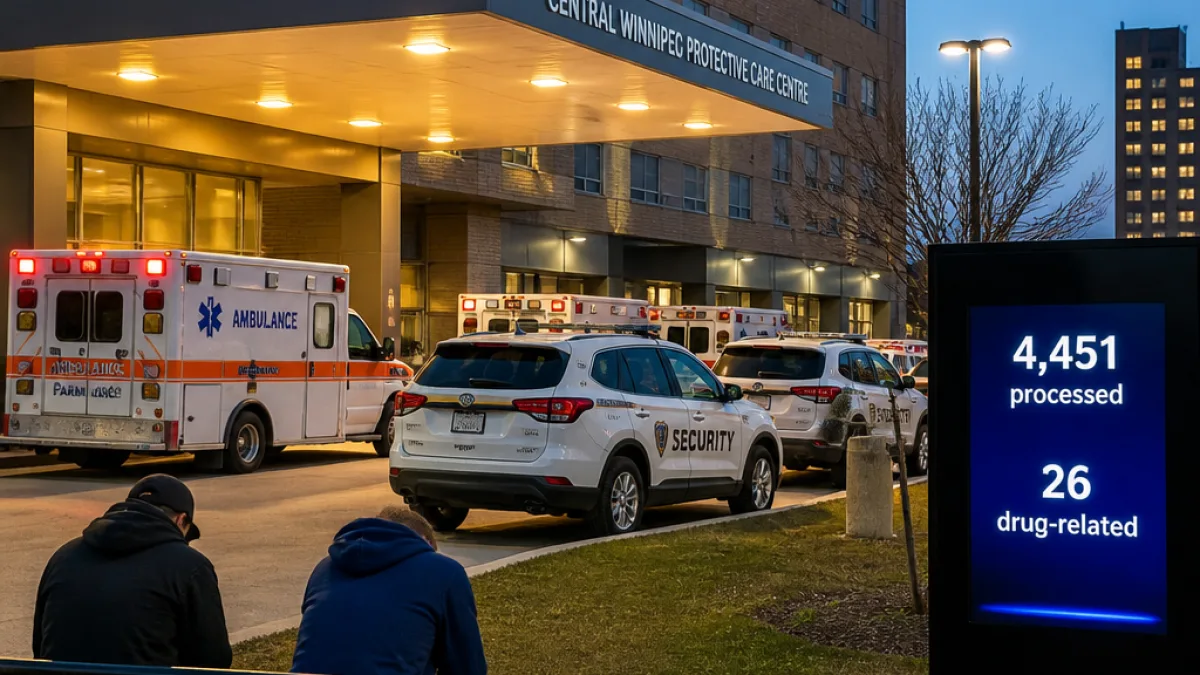
As of the end of June, the Manitoba government says 4,451 people had been processed through the facility. Of that total, only 26 were identified as being under the influence of drugs such as methamphetamine.
| Metric | Figure |
|---|---|
| People processed (to end of June) | 4,451 |
| People under influence of drugs | 26 |
| Facility opened for alcohol detentions | December (previous year) |
| Facility began accepting people intoxicated by drugs | March (current year) |
| Longest documented stay (drug intoxication) | 45½ hours |
Background and legal changes
The centre was opened by the provincial government to provide a monitored setting where people who are dangerously intoxicated can be assessed and cared for by health and social services staff. The program followed a change in the law that allowed authorities to detain some people for longer than the traditional 24-hour window — in certain circumstances extending to 72 hours — when they present a risk to themselves or others.
Initially the building began accepting people detained for alcohol-related intoxication in December, with the capacity to detain those under the influence of drugs added in March. The government described the site as having small, cell-like rooms where clients are monitored while professionals determine their needs.
What the figures suggest
The disparity between the number of alcohol-related admissions and drug-related admissions raises questions about how the centre is being used and whether its original purpose aligns with the population currently accessing it.
- Alcohol-related detentions account for the vast majority of the facility's caseload.
- Very few people have been admitted primarily for drug intoxication despite provincial concerns about substances such as methamphetamine.
- The longest recorded stay for someone under the influence of drugs was just under two days.
Local impact and community considerations
For neighbourhoods near the facility, the centre is meant to be an alternative to police detention or emergency-room stays, aiming to provide a calmer, monitored environment with access to health and social supports. Community feedback has been mixed elsewhere in the country when similar sites open; residents often welcome reduced street-level harms but question staffing, transparency and long-term supports for clients.
Advocates for people who use substances say facilities must be paired with outreach, treatment pathways and housing supports. Health-service providers note that while safer clinical monitoring can reduce immediate risks, it does not by itself address underlying addiction or social determinants such as unstable housing.
Operational questions remain
The provincial numbers do not detail demographics, repeat admissions, or clinical outcomes, leaving gaps in public understanding of who is being detained and what follow-up care is provided. The government has said staff include both health and social services professionals who assess and monitor individuals while in the facility.
As usage continues to be tracked, critics and some health experts are likely to press for more granular reporting on client needs, pathways to treatment, and whether the centre is meeting its intended role in the broader spectrum of provincial responses to substance use and intoxication.
For now, the data point to a facility primarily serving people intoxicated by alcohol, not the drug-related caseload many Manitobans expected when the centre was framed as part of an effort to respond to stimulants and other substances on the streets of Winnipeg.