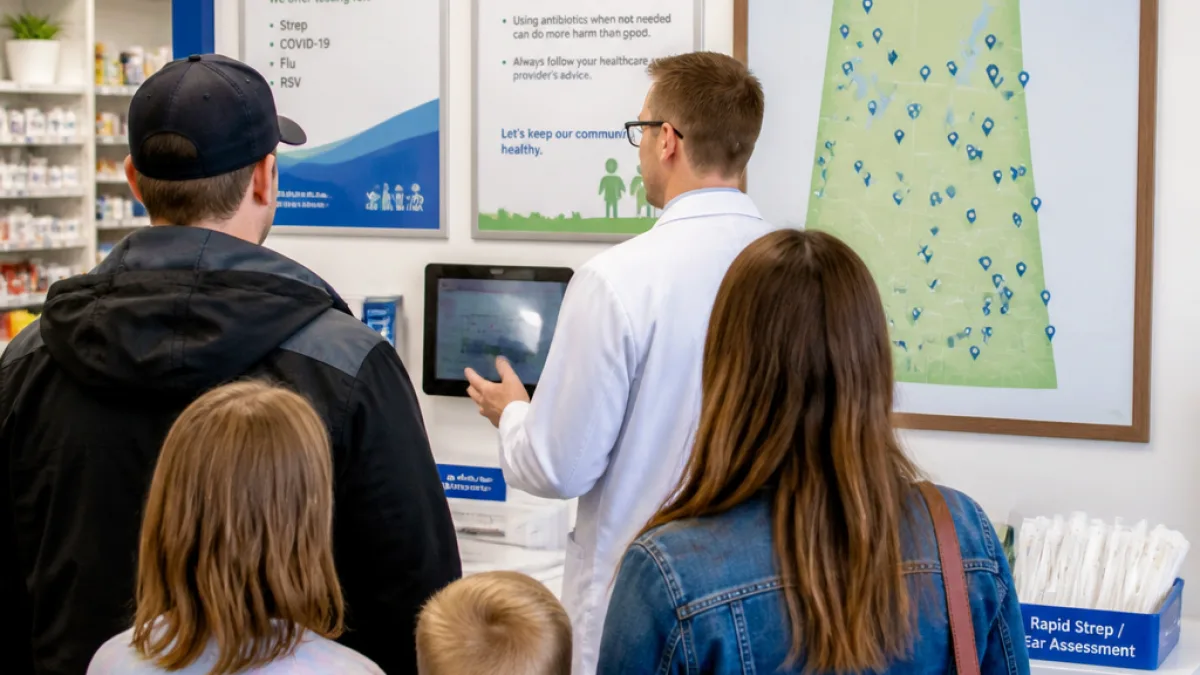
More than 100 pharmacies across Saskatchewan will be authorised to test for and treat strep throat and ear infections, the provincial government announced Friday, expanding an initiative first tried as a pilot in early 2025.
What was announced
Saskatchewan’s Rural and Remote Health Minister, Lori Carr, said all eligible pharmacies that applied to offer the diagnostic and prescribing service have been approved, bringing the total number of participating pharmacies to 102. Of those, 71 will offer both strep throat and ear infection services and 31 will provide ear services only.
“Families really liked this convenient access,” Carr told reporters at a news conference inside a pharmacy on Friday, adding that her daughter in Estevan has used the service for her children.
The program began as a pilot in January 2025 and was made permanent last May. The province says once pharmacists complete required training, services will be available in 34 communities as of January 2027. Carr noted some communities will have more than one pharmacy offering the service.
Why it matters locally
For many Saskatchewan families — particularly in smaller towns and rural areas — easier local access to assessment and treatment for common infections could reduce travel time, clinic waits and demand on emergency departments. The service lets trained pharmacists perform rapid testing and, where appropriate, write prescriptions for antibiotics for confirmed bacterial strep throat or manage ear infections according to the program’s clinical protocols.
Pharmacist-delivered care has become a recurring solution in jurisdictions facing primary-care gaps. By expanding who can do an assessment and start treatment, the government aims to relieve pressure on family physicians and walk-in clinics, and to provide timely care for children and adults with acute symptoms.
Who will be able to access the service
- Residents living in communities with participating pharmacies once local pharmacists complete training.
- Families seeking timely assessment for common infections without a physician appointment or a lengthy trip to a health centre.
- Patients who meet the clinical criteria set out in the program protocols (pharmacies will apply screening tools before testing and treatment).
Numbers at a glance
| Measure | Figure |
|---|---|
| Total approved pharmacies | 102 |
| Pharmacies offering both strep throat and ear services | 71 |
| Pharmacies offering ear services only | 31 |
| Communities to be equipped by Jan. 2027 | 34 |
| Pilot launched | January 2025 |
| Program made permanent | May (last May) |
Practical details and next steps
The province says pharmacists must complete a required training program before offering diagnostic testing or prescribing treatment under the initiative. That training is intended to ensure consistent application of clinical screening tools, proper use of rapid tests and safe prescribing practices.
Officials did not provide a list of the approved pharmacies at the announcement. People seeking the service should contact their local pharmacy to confirm whether the location offers the strep/ear program and whether a pharmacist there has completed the necessary training.
Context and community impact
Across Saskatchewan, access to timely primary care remains a challenge in many rural and remote communities. Programs that allow pharmacists to deliver targeted, protocol-driven services are one of several approaches provincial governments have used to increase capacity. The government framed the expansion as a response to family feedback during the pilot, and emphasised convenience and quicker treatment as benefits.
How the program will affect antibiotic stewardship, clinic workloads and patient outcomes will depend on implementation details, including pharmacists’ training, adherence to clinical protocols and how community health partners coordinate care. The government cites convenience and demand from families as key reasons for making the service widely available.
Residents interested in the expanded service should keep in touch with their local pharmacies for availability and scheduling. As the rollout progresses into January 2027, more communities are expected to have trained pharmacists ready to provide the diagnostic and prescribing option.
This report is based on a provincial announcement issued Sept. 11, 2026.