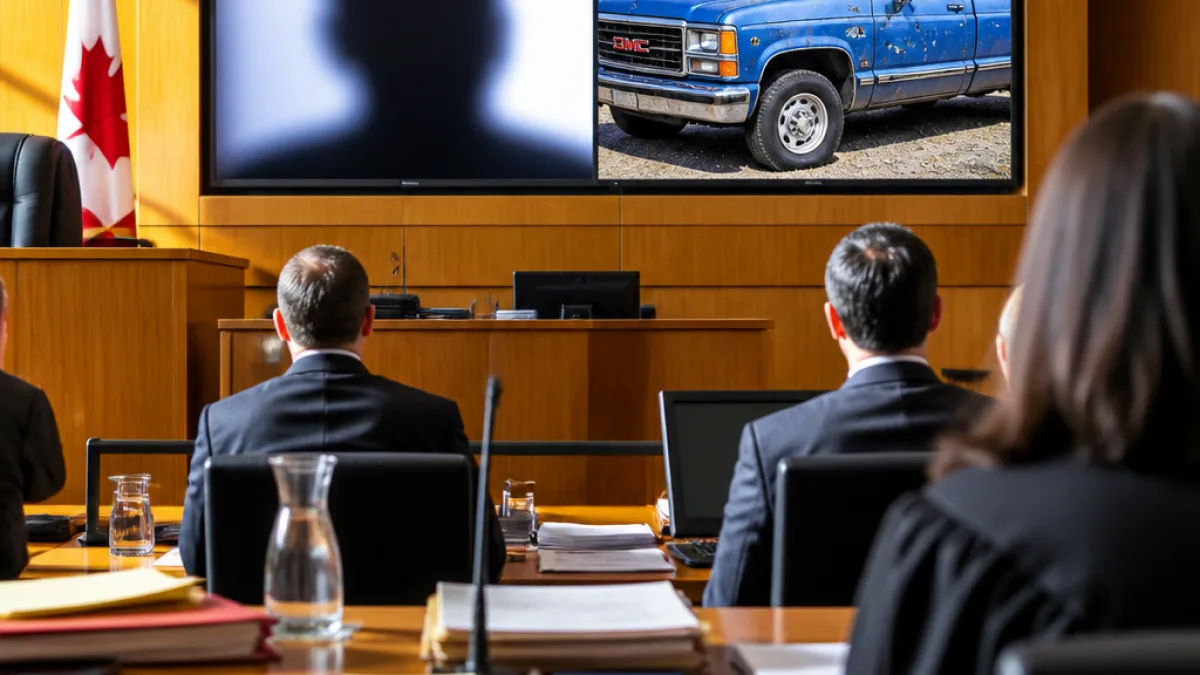
SASKATOON — Curtis Dagenais, the man convicted in the deaths of two Royal Canadian Mounted Police officers, appeared by video in Saskatoon court on Monday seeking the return of a blue 1986 GMC 1500 pickup that figured centrally in the 2006 confrontation.
What the Crown says about the truck
Prosecutor Scott Bartlett told Justice Daryl Labach the pickup has been stored at RCMP headquarters in Regina for about two decades and that it is heavily damaged — with broken windows, dented doors and numerous bullet marks. Bartlett argued the vehicle is essentially useless and should be forfeited under a provision of the Criminal Code dealing with forfeiture of offence‑related property.
"I can't imagine (Saskatchewan Government Insurance) would ever allow it to be registered. It could never pass an inspection," Bartlett told the court.
Dagenais, 61, told the court it is unreasonable for the Crown to keep the truck and said the vehicle retains value for parts. The defence argued he remains the owner and should not be deprived of property that still has worth.
Background of the case
According to court records and reporting, a jury found Dagenais guilty of first‑degree murder in the deaths of Constables Robin Cameron and Marc Bourdages after a 2006 police attempt to arrest him in Spiritwood, northwest of Saskatoon. He was also convicted of attempted murder in the wounding of Const. Michelle Knopp. Court previously heard Dagenais sped away when police approached following a domestic dispute report. The ensuing chase on rural roads ended when an RCMP vehicle struck Dagenais’s pickup; a shootout followed.
At trial the Crown said Dagenais surprised the officers by firing first. Dagenais's account was that officers shot at him first, and that he retrieved a rifle from beneath the truck seat and fired back in what he said was self‑defence. The Crown rejected that defence and the jury convicted. Dagenais received three life sentences with no parole eligibility for 25 years.
Legal and practical questions about the vehicle
The hearing explored both legal authority and the practical condition of the truck. Prosecutors told the court they do not control what would become of the pickup if the Crown were ordered to surrender it. Bartlett said the vehicle has been stored long enough, signalling the Crown's view that ongoing retention served little purpose.
The defence stressed the truck’s potential parts value. Dagenais said the pickup still “holds value,” and sought its return on that basis.
- Vehicle: 1986 GMC 1500, blue
- Current storage: RCMP headquarters, Regina
- Legal issue: Forfeiture under Criminal Code “offence‑related property” provisions
Timeline and sentencing
The trial and convictions stem from events in 2006. Reporting in court on Monday noted, in connection with the conviction, that it had been 17 years since a jury returned guilty verdicts. Dagenais has served the majority of his sentence while the pickup remained in police custody.
| Year | Event |
|---|---|
| 2006 | Shootout that led to the deaths of two RCMP constables |
| Conviction | Jury found Dagenais guilty of first‑degree murder and attempted murder |
| Present | Vehicle stored at Regina RCMP; Crown seeking forfeiture |
Community and court context
The killings in 2006 remain a painful chapter for Saskatchewan policing and small‑town communities. The case has been litigated and retried in various ways over the years, and the fate of the truck has moved from a piece of evidence to contested property.
Under the Criminal Code, property that is related to an offence can be seized and disposed of. Courts weigh ownership claims against public interest, evidentiary value and statutory authority when deciding whether to return items to convicted persons. In this hearing the Crown told the court the pickup’s condition makes it unfit for road use and that continued storage is unnecessary.
Justice Labach heard arguments on Monday and will determine whether the truck should remain in Crown hands or be returned to Dagenais. No immediate ruling was issued from the bench at the time of the hearing.
The case underscores how items involved in serious crimes can remain the subject of legal disputes for years after convictions, particularly when they are still claimed by those who committed the offences. The court’s decision will set the next chapter for a truck that has been a visible reminder of a tragic, long‑standing case in Saskatchewan.