
VANCOUVER — British Columbia’s government announced Friday it is pausing a planned expansion of the provincial sales tax and launching a targeted support program totalling $90 million for businesses and communities affected by recent U.S. tariffs.
Immediate relief and a procurement shift
Premier David Eby told delegates at the Union of British Columbia Municipalities convention that the province will redirect funds across several streams aimed at manufacturing, technology, rural infrastructure and BuyBC promotion. The package includes $30 million for a renewed BC Manufacturing Jobs Fund, $30 million for technology companies, and two allocations of $15 million — one for rural infrastructure and one for BuyBC programming.
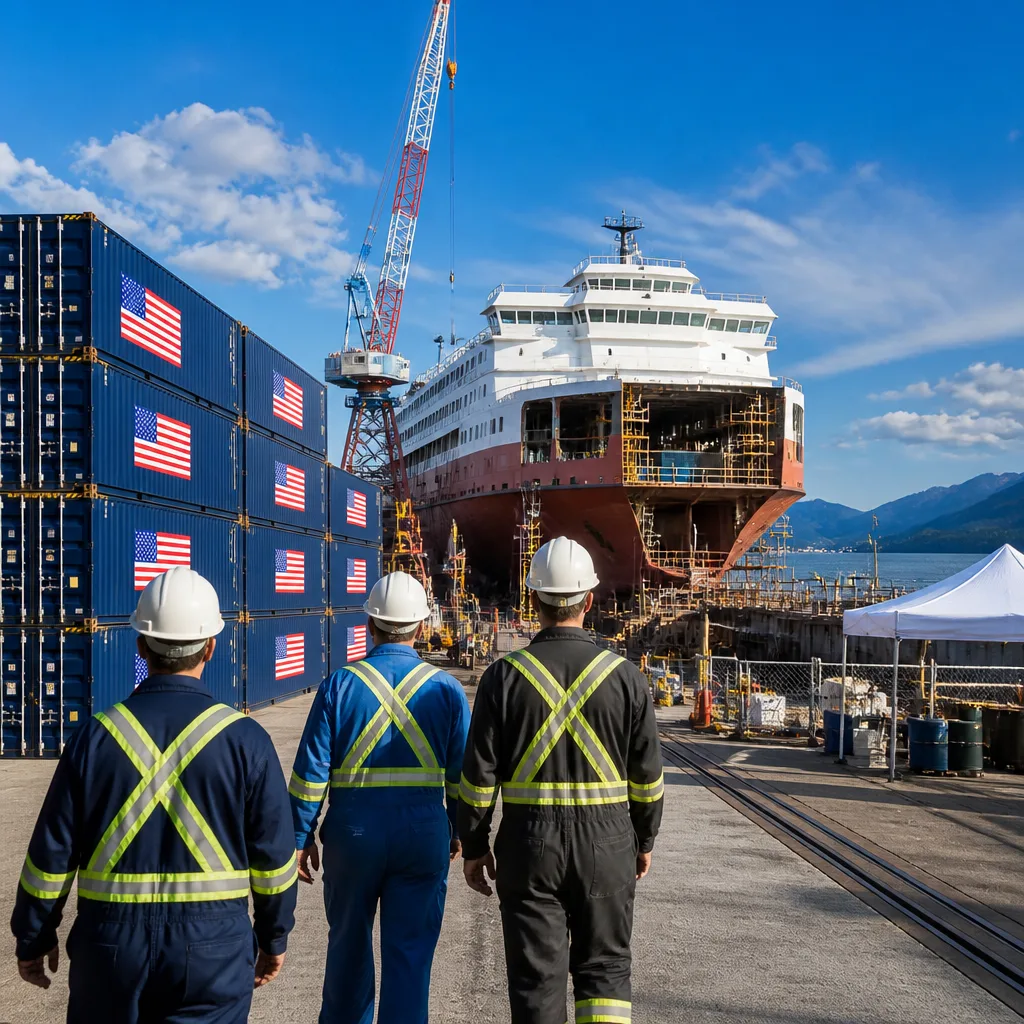
In another move tied to the dispute with the United States, the provincial government instructed BC Ferries to construct future vessels within the province.
Pause on PST expansion
The announcement also included a reversal — at least temporarily — of a planned extension of the provincial sales tax to certain professional services that had been scheduled to take effect Oct. 1. The government said the expansion will be paused after businesses raised concerns about the financial strain posed by U.S. tariffs.
The exemption now confirmed will cover services such as accounting, bookkeeping, architectural and engineering work.
“I reconsidered after hearing from businesses facing tariff challenges,”
The premier’s remarks came as he addressed ongoing economic harm in sectors exposed to new U.S. trade measures and amid speculation about provincial political timing.
Who gets what — the $90-million breakdown
| Program | Allocation |
|---|---|
| BC Manufacturing Jobs Fund | $30 million |
| Technology companies support | $30 million |
| Rural infrastructure | $15 million |
| BuyBC programs | $15 million |
Context and consequences
The measures are a direct response to mounting economic pressure from tariffs imposed by the United States that have hit B.C. exporters and suppliers. The government framed the support as targeted mitigation — aiming to shore up production capacity, back tech firms and sustain smaller communities that are vulnerable to cross‑border disruptions.
Pausing the sales-tax expansion reduces immediate cost pressure on affected professional service providers whose clients include companies navigating the tariff environment. It is also a political concession: the move acknowledged widespread opposition among business groups to the PST extension, which the government had previously defended despite its unpopularity.
Directing BC Ferries to build future vessels in province signals a broader industrial strategy: protect and stimulate local shipbuilding jobs and associated supply chains while reducing reliance on foreign yards during a period of cross-border friction.
Political backdrop
The premier delivered the remarks during his annual address to municipal officials and delegates. They occurred against a backdrop of political speculation: the premier had warned his party and election officials to be prepared for possible disruption tied to the trade dispute. The convention also featured calls from local officials to avoid calling a provincial election while communities manage trade-related impacts.
- $90 million in total business and community support announced.
- PST expansion to professional services paused; exemptions include accounting and engineering.
- BC Ferries instructed to build future vessels in the province.
The package indicates the provincial government is taking a nimble approach to a fast-moving trade spat, using both fiscal support and procurement to protect jobs and economic activity. How effective the measures will be in offsetting tariff-related losses for exporters and suppliers remains to be seen, and further details on program delivery and eligibility are expected from government officials in the coming days.