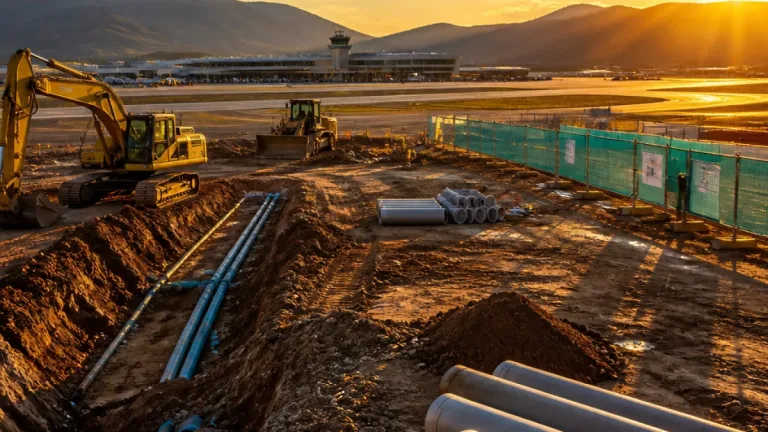

ATHA Energy has begun its largest exploration campaign to date at the Angilak uranium project in southern Nunavut, mobilizing three diamond drill rigs for a roughly 20,000‑metre program running from 1 May to 30 September 2026. The work is funded by a financing of about C$63 million closed early this year, the company said.
What ATHA’s program entails
The 2026 campaign targets multiple corridors across the Angikuni Basin — including the Lac 50, RIB and KU‑Nine Iron corridors — and will be supported by airborne geophysical surveys. Angikak (sometimes rendered Angilak in company materials) sits within what ATHA describes as a district of more than seven million acres under its control in Nunavut.
The surge in activity follows a noteworthy discovery announced on Aug. 8, 2026. ATHA reported that hole L50W‑DD‑002 in the Lac 50 Northwest area intersected 11.5 metres of composite uranium mineralization across five zones, roughly four kilometres along strike from the established Lac 50 deposit. The intercept included a seven‑metre continuous section averaging 7,974 counts per second (cps) on a downhole gamma probe, and a higher‑grade 1.6‑metre interval peaking at 40,162 cps. Laboratory assays are still pending.
Why this matters for Nunavut
For a junior exploration company, extending mineralization several kilometres from a known deposit can materially change the geological picture for a district. The scale of ATHA’s 2026 program — three rigs operating through the Arctic field season — represents a step change in intensity from the company’s 2024 maiden campaign and signals a focused push to convert geophysical and downhole signals into drill‑defined mineral resources.
While the technical results remain preliminary until laboratory assays are released, the downhole gamma counts reported by ATHA are the kind of early indicator that prompts expanded follow‑up drilling. If assays confirm significant uranium grades and widths, the discoveries could influence exploration plans, contractor activity, and logistical operations across the Angikuni Basin this season.
Program timeline and priorities
Key operational facts ATHA has disclosed include:
- Three diamond drill rigs in the field for a program from May 1 to Sept. 30, 2026.
- Planned drilling across Lac 50, RIB and KU‑Nine Iron corridors.
- Airborne geophysical surveys over the Angikuni Basin to support targeting.
- Program fully funded by a roughly C$63‑million financing completed on Feb. 5, 2026.
| Item | Detail |
|---|---|
| Drill metres | ~20,000 m |
| Rigs | 3 diamond drill rigs |
| Campaign dates | 1 May – 30 Sept 2026 |
| Financing | ~C$63 million (closed 5 Feb 2026) |
| Notable intercept | Hole L50W‑DD‑002: 11.5 m composite; 7 m @ 7,974 cps; 1.6 m peak 40,162 cps |
Next steps and outstanding information
ATHA has indicated laboratory assay results remain pending for the July intercepts. Those assay results will be required to convert downhole gamma probe counts into formal grade and thickness estimates that can be compared with industry benchmarks and used to define a resource.
The company’s statements so far are strictly exploration‑stage: the work aims to expand known mineralization and refine targeting rather than define a mine plan. As with all early‑stage uranium exploration, additional drilling, metallurgical testing and environmental baseline studies would be needed before any production‑related decisions.
Local implications and context
Exploration seasons of this size bring increased activity to remote fly‑in camps and support chains, from helicopter and fixed‑wing logistics to drilling contractors and airborne survey crews. Those services can create short‑term employment and contracting opportunities in the North, and they require coordination with regulators and communities for land access, environmental monitoring, and safety.
For residents and stakeholders in Nunavut, the immediate practical takeaway is the timeline: drilling is under way and assay results will follow. Those results will determine whether ATHA’s early gamma‑probe indications translate into significant, assay‑verified uranium zones that reshape the Angikuni Basin’s prospectivity.
Coverage of future assay releases, additional intercepts and any statements from company or territorial regulators will be essential to track how this campaign evolves through the rest of the summer field season.