
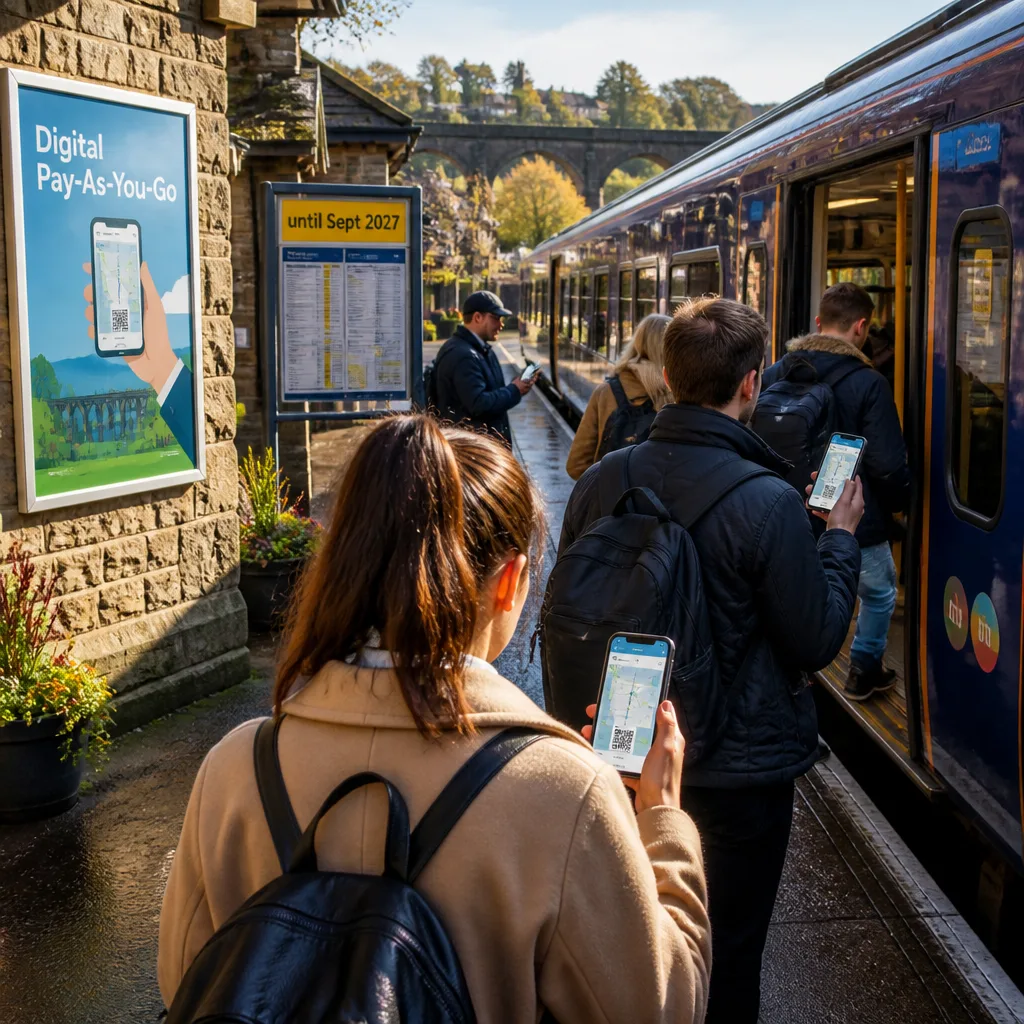
The Department for Transport has extended a trial that allows passengers to travel on certain Northern rail services without buying paper or digital tickets in advance. The app-based system, known as Digital Pay As You Go, uses phone GPS to log journeys and automatically charges the cheapest eligible fare once a trip ends. The cap on participants — originally set at 2,000 people — has been lifted until September 2027.
How the system works
The trial initially ran on two local routes and has been expanded so that anyone travelling on those services may take part by downloading the app and linking a bank card. Key features include:
- Journey tracking via mobile phone GPS rather than manual check-ins
- Automatic calculation and charging of the best-value fare at journey end
- integration for railcard holders and a QR code for inspections or barrier access
So far, the Department for Transport reports that the pilot has supported about 30,000 journeys on the participating routes. A separate pilot has also begun in the East Midlands, covering services between Leicester and Nottingham via Derby.
| Route | Status |
|---|---|
| Leeds – Harrogate | Available for trial participants |
| Doncaster – Sheffield | Available for trial participants |
| Leicester – Nottingham (via Derby) | New East Midlands trial |
Supporters and concerns
Campaigners for simpler, more accessible public transport welcomed the expansion. Silviya Barrett of Campaign for Better Transport said the scheme could persuade more people to choose trains by removing friction around buying the right ticket.
“Making public transport easier to use is one of the most effective ways to attract more people on board,” said Silviya Barrett, adding that a seamless system helps passengers secure the best fare without navigating a complex ticketing structure.
Not all reaction has been positive. Rail commentator Sim Harris, writing for Railnews, warned the move could create a two-tier experience, with those who have smartphones and bank cards enjoying a smoother journey while others could be left out.
What this means for passengers
Passengers who join the trial receive a unique QR code for inspections and access through ticket barriers. Participants were also offered an initial free travel credit — the trial has been reported to have included a £15 credit for new users — and railcards can be added to the service to ensure concessionary fares are applied.
Looking ahead, the Department for Transport expects to roll the scheme out to more than 100 additional stations across Greater Manchester, the Midlands and the South East by 2027, signalling a move towards wider adoption of mobile-first ticketing on parts of the network.
Wider implications for South African readers
Although this trial is in the UK, the issues it raises — digital inclusion, fare transparency and integrating concessions into automated systems — are globally relevant. South African transport authorities and operators planning upgrades should note both the potential benefits of reducing ticketing friction and the importance of ensuring equitable access for travellers who may not carry smartphones or bank cards.
Transport planners and community groups might use the trial as a case study when considering how to modernise fare collection without excluding passengers who rely on cash or offline solutions.
As the trial progresses, observers will be looking for independent evaluations on fare accuracy, passenger satisfaction and whether the rollout actually attracts more people to rail travel — or simply reshuffles who finds the system easiest to use.











