
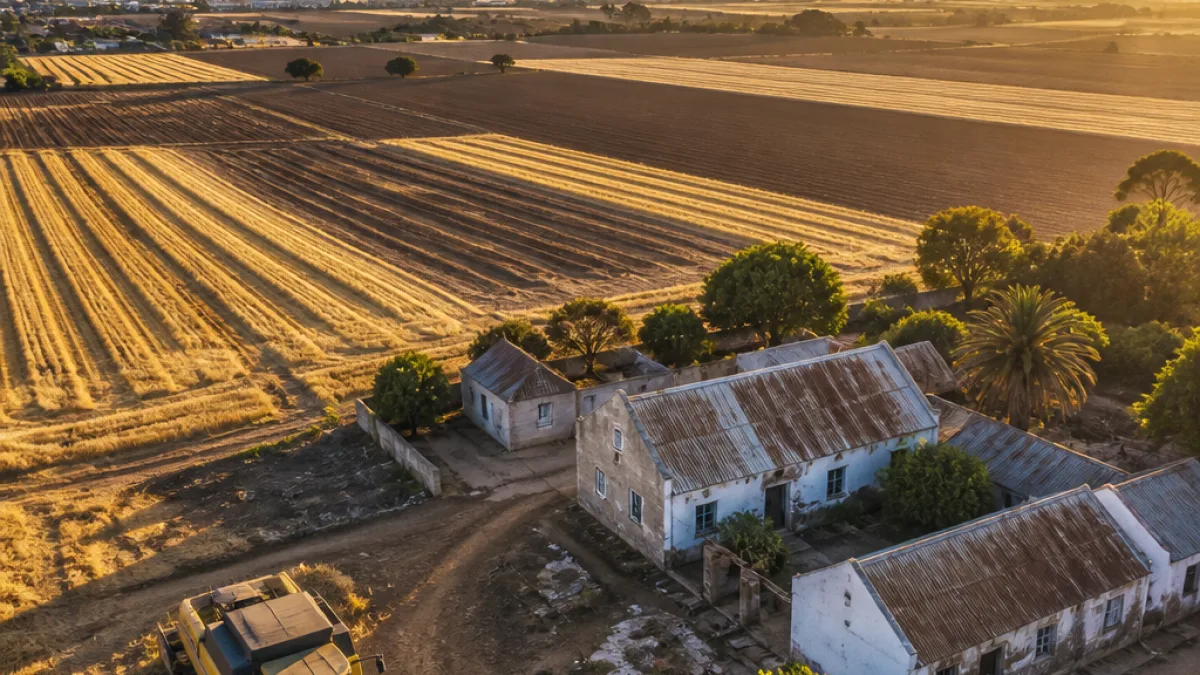
South African winter wheat sowings for 2026–27 have shrunk to 473 900 hectares, a fall of about 8% from the previous season, official Crop Estimates Committee data show. That contraction marks the smallest planted area in nearly a century and places the Western Cape at the epicentre of the decline, accounting for roughly 69% of the national total.
Why plantings fell
The reduction reflects a mix of forces. Globally available wheat supplies and intermittent lower prices have undercut incentives for local producers. At the same time, higher input costs — partly attributed to broader geopolitical tensions in the Middle East — and patchy weather in key producing areas discouraged some farmers from planting as much as in previous seasons.
Against that backdrop, representatives of the wheat sector have already sought an increase in the import tariff. They argue such a move would shield domestic producers from cheaper, and in some cases subsidised, foreign wheat. Any change in tariff policy will need to weigh farmers’ livelihoods against consumers’ interests, analysts say.
Western Cape dominance and regional shifts
The Western Cape remains by far the largest wheat-producing province. Following it are the Free State at about 11%, the Northern Cape at 8% and Limpopo at 5%. Smaller plantings occur in KwaZulu‑Natal, North West, the Eastern Cape, Mpumalanga and Gauteng.
| Province | Share of winter wheat plantings (%) |
|---|---|
| Western Cape | 69 |
| Free State | 11 |
| Northern Cape | 8 |
| Limpopo | 5 |
Production outlook and uncertainty
The first official estimate for total winter wheat production will be published on 26 August. Using the five‑year average yield of 3.88 tonnes per hectare, a rough calculation on current planted area points to a crop of about 1.8 million tonnes. However, that projection rests on several assumptions and does not account for yield variation driven by weather or late season pest and disease pressures.
Crop economists caution that a smaller planted area does not automatically translate into a proportionate fall in output if yields hold up. Conversely, any adverse weather events this winter could reduce harvested volumes further.
What this means for farmers and consumers
For Western Cape farmers, reduced plantings are likely to squeeze incomes, especially for smaller commercial and emerging producers who operate on tighter margins. The wheat industry’s call for trade protection signals concern about long‑term competitiveness if global prices remain depressed.
For consumers, the critical question is whether reduced domestic supply will push up prices for wheat‑based staples such as bread. Government and industry will need to monitor markets closely before adjusting tariffs, to avoid unintended consequences for food affordability.
- Immediate data point: 473 900ha planted for 2026–27 winter wheat (down 8%).
- Regional concentration: Western Cape accounts for roughly 69% of area planted.
- Next milestone: First official winter wheat estimate on 26 August.
Policy trade‑offs and the coming weeks
Trade policy will be central to the debate. Raising import tariffs could aid local producers, but policymakers must balance that against potential price impacts for consumers and obligations under trade agreements. The timing of any intervention is sensitive: tariffs introduced in response to transient international price falls risk distorting markets if global conditions reverse.
Provincial agriculture departments, national policymakers and industry bodies will be watching the Crop Estimates Committee’s official numbers closely. Those figures will inform discussions about whether temporary relief measures, longer‑term support for productivity improvements, or trade adjustments are appropriate.
The Western Cape’s outsized share of plantings underscores the province’s exposure to wheat market swings. As the official estimate approaches, farmers and millers alike face a period of uncertainty. Early indications suggest 2026 will be a pivotal year for South Africa’s wheat sector.
Riaan Bester is the Western Cape correspondent (Cape Town).













