The Western Cape government has warned residents to prepare for a longer and more dangerous fire season as rising temperatures and extreme heat events increase the risk of devastating wildfires across the province.
Officials announce earlier mobilisation and extra funding
On Thursday Premier Alan Winde, Local Government, Environmental Affairs and Development Planning MEC Anton Bredell and provincial disaster management head Colin Deiner outlined steps the province is taking to strengthen preparedness and response ahead of summer.
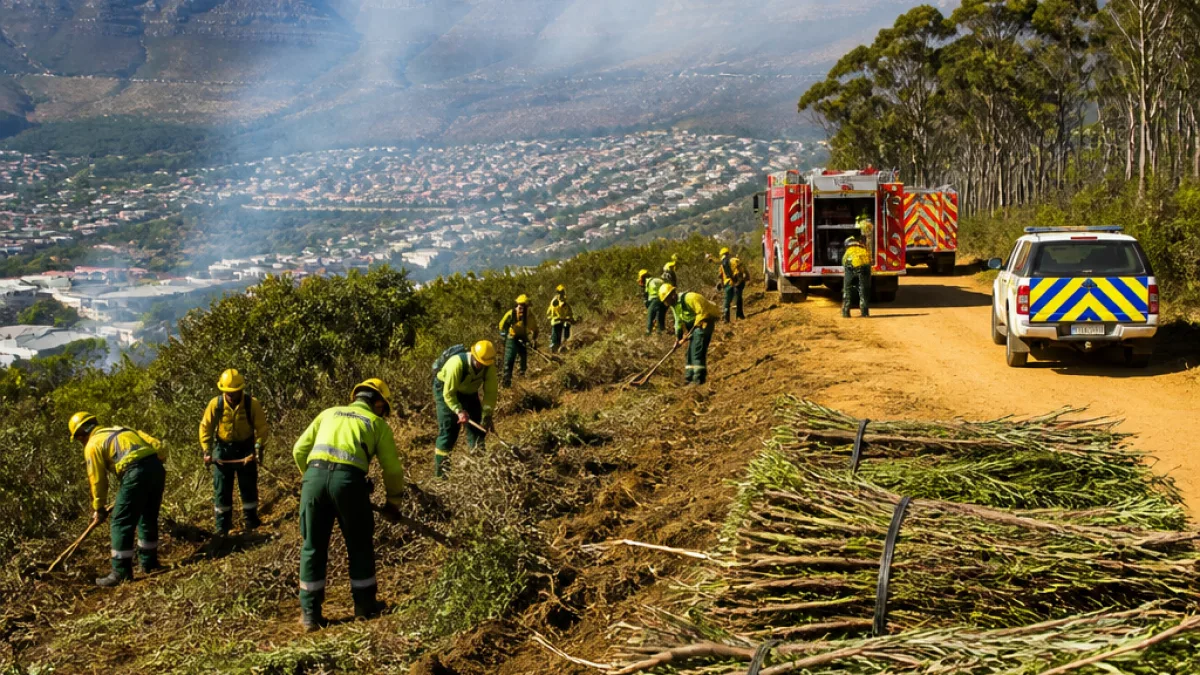
Scientific projections indicate the traditional four‑month fire season, from November to March, could stretch as temperatures rise and conditions become drier. The province said it has already battled 23 wildfires since the start of the season and is bringing in additional firefighting resources two months earlier than usual.
The provincial government has allocated R12 million to fight fires across the Western Cape this season, part of a broader push to reduce risk, bolster aerial and ground capacity and support vulnerable communities.
Who faces the greatest risk?
Officials singled out groups particularly vulnerable to the combined threats of extreme heat and wildfire:
- residents of informal settlements, where building density and limited access routes increase fire risk;
- the elderly and pregnant women, who are more susceptible to heat stress;
- farming communities dependent on natural veld for grazing and crops, and on limited water resources.
Premier Winde said preparation now could prevent small fires from becoming disasters, and he urged households and agricultural producers to reduce fuel loads where possible.
“In the agricultural sector, now is the time to cut those firebreaks. In our communities that are perhaps surrounded by alien vegetation, now is the time to be trimming, cutting, and making sure we are mitigating that risk,” he said.
Context: global heatwaves and local patterns
Winde referenced recent extreme heat globally, noting that at least 30,000 people reportedly died across Europe since May amid record‑breaking heatwaves. Provincial officials said the Western Cape has seen a pattern over the past five years of fires starting earlier than historically expected.
MEC Bredell said the early onset is consistent with patterns observed in recent seasons and informed the decision to accelerate resource deployment.
Practical steps urged of communities and landowners
Beyond additional personnel and funding, provincial officials implored residents and landowners to act. Key actions recommended include:
- clearing vegetation around homes and buildings, especially where alien invasive species create continuous fuel;
- establishing and maintaining firebreaks on agricultural land;
- keeping escape routes and access roads clear to allow emergency services to reach affected areas;
- being vigilant with open flames, barbecues and veld‑burning during hot, dry and windy conditions.
Data at a glance
| Item | Figure |
|---|---|
| Wildfires recorded since season start | 23 |
| Provincial firefighting allocation | R12 million |
| Traditional fire season | November–March |
| Reported European heatwave deaths since May | 30,000 |
What this means for the Western Cape
The message from provincial leadership was twofold: the hazard window is widening, and response must be both government‑led and community‑driven. Bringing resources forward aims to close the gap between an earlier fire onset and official readiness, but officials stressed that capacity alone will not eliminate risk.
For communities, the advice is practical and immediate: trim vegetation, create defensible space around properties, and for farmers to prepare firebreaks now rather than waiting for the height of summer. For municipal and emergency planners, the imperative is to coordinate early, align aerial and ground assets, and prioritise access and evacuation planning in densely populated or high‑risk areas.
Residents with concerns or who need guidance on reducing local fire risk can expect further public communications from the provincial disaster management office and local municipalities as the season progresses.
As climate change shifts historical weather patterns, officials warned that what was once a predictable seasonal risk is becoming more variable — and more dangerous — unless communities and authorities act now.