
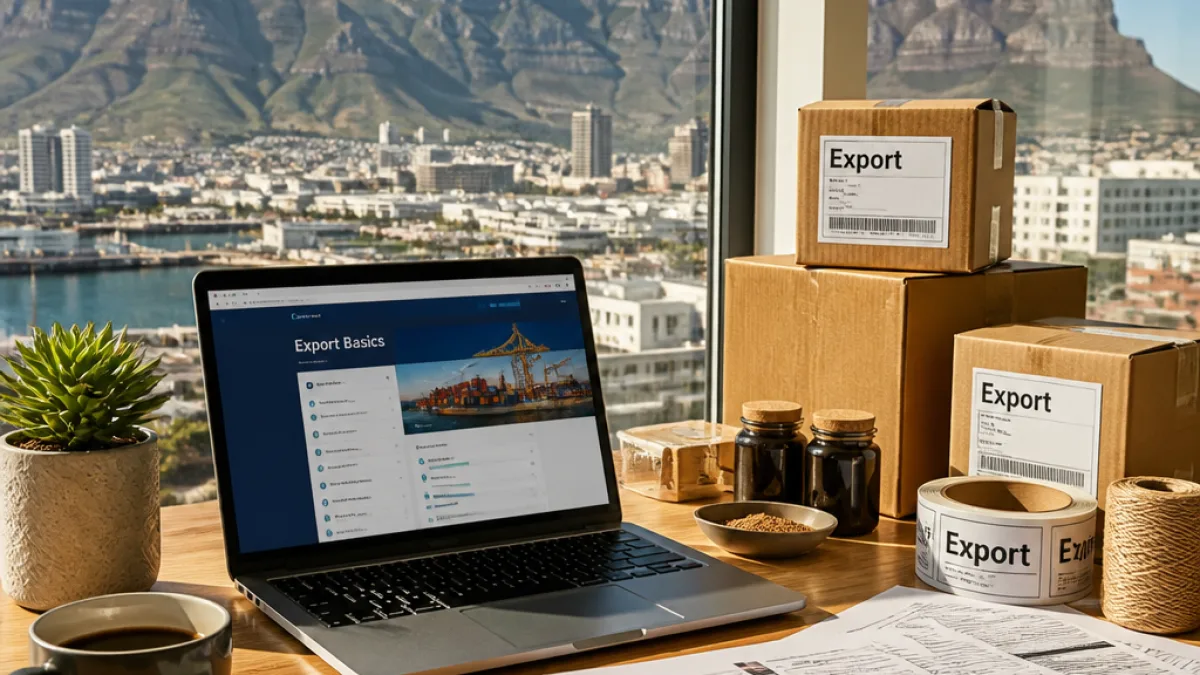
The Western Cape has launched a targeted push to lift the export readiness of local businesses, with 518 participants registered for a newly introduced free online course designed to help firms enter and grow in overseas markets.
Practical training aimed at jobs and growth
The course, offered by the provincial Department of Economic Development and Tourism (DEDAT) in partnership with the International Trade Institute of Southern Africa (ITISA), forms part of the province’s Growth for Jobs Strategy. It is self‑paced and intended for a wide range of learners including emerging exporters, SMMEs, export managers and trade facilitators.
To date more than 70 participants have completed the programme, which is structured into nine modules covering the export cycle from assessing market readiness and international marketing strategies to customs procedures and cargo insurance.
“Export growth is one of the most effective ways to create jobs and stimulate economic development. Through this free Online Export Course, we are equipping entrepreneurs and businesses with the practical skills they need to access new markets, grow their customer base, and contribute to the Western Cape's export‑led growth agenda,” said Ivan Meyer, Western Cape Minister of Agriculture, Economic Development and Tourism.
The curriculum explicitly includes the Incoterms 2020, international transport services, product classification and compliance requirements — subjects that many small exporters cite as barriers to entering new markets.
Early impacts and real business changes
One early beneficiary is Imbali Nature's Crown, an agro‑processing business whose founder, Alicia Somdaka, said the course clarified export compliance, documentation and tariff classification. Somdaka reported she had already redesigned product labelling to meet export standards and was preparing to pursue opportunities in Europe and the Middle East.
That kind of practical change — adapting labels, understanding required paperwork, selecting appropriate Incoterms — can reduce costly delays at borders and improve buyers’ confidence in Cape products.
- Who the course targets: emerging and experienced exporters, SMMEs, business development officials, trade facilitators and export managers.
- Core topics: market readiness, international marketing, customs procedures, product classification, cargo insurance and Incoterms 2020.
- Access: self‑paced, online and free.
Delegates registering from across the province can work through modules at their own speed, which provincial officials say helps smaller firms that cannot free staff for classroom training.
Why export training matters in the Western Cape
The Western Cape economy is diverse, with agriculture, manufacturing and services that can benefit from international demand. Government and business leaders have repeatedly argued that boosting exports is a way to create sustainable employment and increase foreign earnings.
Training interventions like the online course aim to address the recurring practical obstacles small firms face: incomplete documentation, misclassified products, inadequate insurance arrangements and weak understanding of international shipping terms. Addressing these reduces the likelihood of shipments being delayed or rejected at destination ports.
| Metric | Figure |
|---|---|
| Registered participants | 518 |
| Completed course | 70+ |
| Modules | 9 |
| Partner | International Trade Institute of Southern Africa (ITISA) |
While numbers so far are modest relative to the broader cohort of Cape exporters, the provincial government sees the initiative as scalable and complementary to other trade‑promotion activities such as trade missions and sector‑specific support.
For businesses considering export for the first time, the online course provides a low‑cost route to learn the technicalities before committing to the financial and operational demands of international trade. For seasoned exporters, the modules may help streamline processes and reduce administrative risk.
As the province seeks to revive jobs and expand market access, officials will be watching whether classroom knowledge translates into actual shipments, new buyers and higher export revenues for small Cape firms.
Registration details and access to the course are available through the provincial Department of Economic Development and Tourism and ITISA platforms.













