
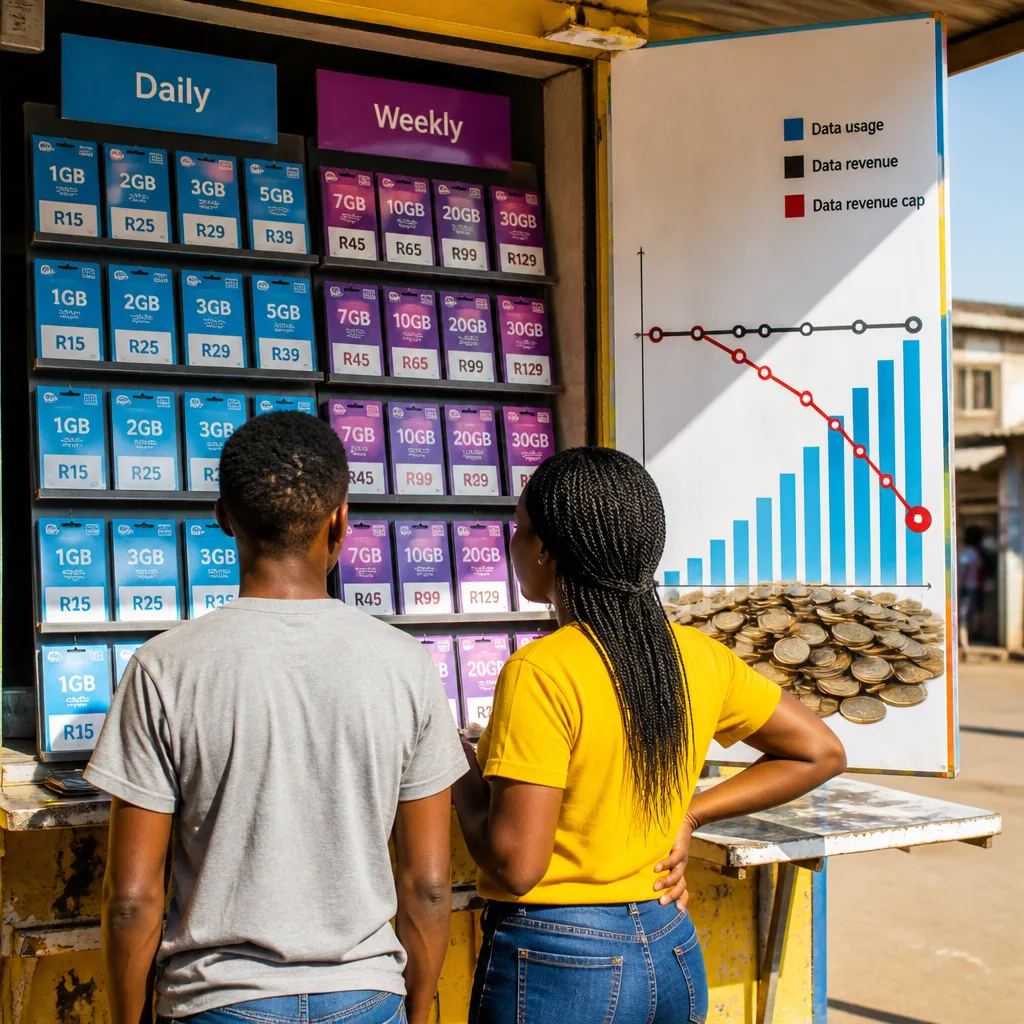
Vodacom’s move to smaller, cheaper data bundles has created a ceiling for data revenue growth in South Africa, even as average data consumption per device climbed sharply over the past four years, an analysis of Vodacom Group’s annual financial performance from 2011 to 2026 reported.
Revenue and reporting changes complicate the picture
The company stopped publishing a detailed breakdown of South African mobile data revenue in 2020 after adopting IFRS 15. Prior to that, Vodacom provided explicit annual figures for Mobile Voice, Mobile Data and Mobile Messaging in South Africa. In 2019, total South African mobile data revenue was reported at R24.2 billion.
Post-2019, the group consolidated South African mobile customer service revenue into broad contract and prepaid segments. Contract customer revenue is now a blended figure that combines contract data, voice and messaging, which makes isolating pure contract data revenue difficult. In 2026, Vodacom reported contract customer revenue for South Africa at R25.2 billion.
Usage surges, revenue yield lags
Between 2022 and 2026, the average monthly data usage per smart device on Vodacom’s network in South Africa rose from 2.4GB to 6.3GB — an increase of about 162.5%. Over the same period, Vodacom South Africa’s prepaid mobile data revenue increased from R10 billion to R14.9 billion, a rise of roughly 49%.
Those divergent rates — rapidly rising data volumes but much slower revenue growth — point to a falling revenue yield per megabyte. The analysis links this to Vodacom’s strategy of offering smaller, more affordable weekly and daily data bundles rather than large, pricier monthly packages.
- 2019: South African mobile data revenue reported at R24.2 billion (last full pre-IFRS 15 breakdown).
- 2022–2026: Average monthly data per smart device rose from 2.4GB to 6.3GB (+162.5%).
- Prepaid revenue: Grew from R10 billion to R14.9 billion (+49%) in the same period.
- 2026 contract revenue: Contract customer revenue reported at R25.2 billion (blended data/voice/messaging figure).
Implications for consumers, competition and regulation
The pricing shift has made data more affordable for many South African consumers, particularly low-income and prepaid users who favour short-term bundles. But it appears to have capped the growth potential of data revenue for the operator in its largest market.
For the telecom sector, the trend raises questions about long-term revenue models as data consumption rises. Lower revenue per gigabyte can affect investments in network upgrades and expansion, unless offset by larger customer bases or higher-margin services. The blended reporting of contract revenue also reduces transparency on where growth or erosion is occurring within Vodacom’s customer segments.
Regulators and policy makers tracking digital inclusion and sector health may take particular interest in the gap between usage growth and revenue growth. The pattern suggests greater demand for connectivity but weaker monetisation — a combination that can complicate infrastructure investment decisions.
| Metric | 2022 | 2026 | Change |
|---|---|---|---|
| Average monthly data per smart device | 2.4GB | 6.3GB | +162.5% |
| Prepaid mobile data revenue (SA) | R10 billion | R14.9 billion | +49% |
| Last full reported SA mobile data revenue (pre-IFRS 15) | 2019: R24.2 billion | ||
| Contract customer revenue (blended) | 2026: R25.2 billion | ||
The shift to affordable, short-term bundles has distributional benefits, improving access for users who cannot afford monthly bundles. But the trade-off for operators is clear: more gigabytes sold does not automatically translate into proportionate revenue growth.
Further analysis is limited by the change in Vodacom’s reporting format. Without separate contract data figures, outside observers must rely on prepaid revenue and blended contract figures to estimate data revenue dynamics within South Africa.
As the telecoms market evolves, observers will watch whether Vodacom and competitors adjust pricing strategies or product mixes to restore revenue yields while maintaining affordability.














