
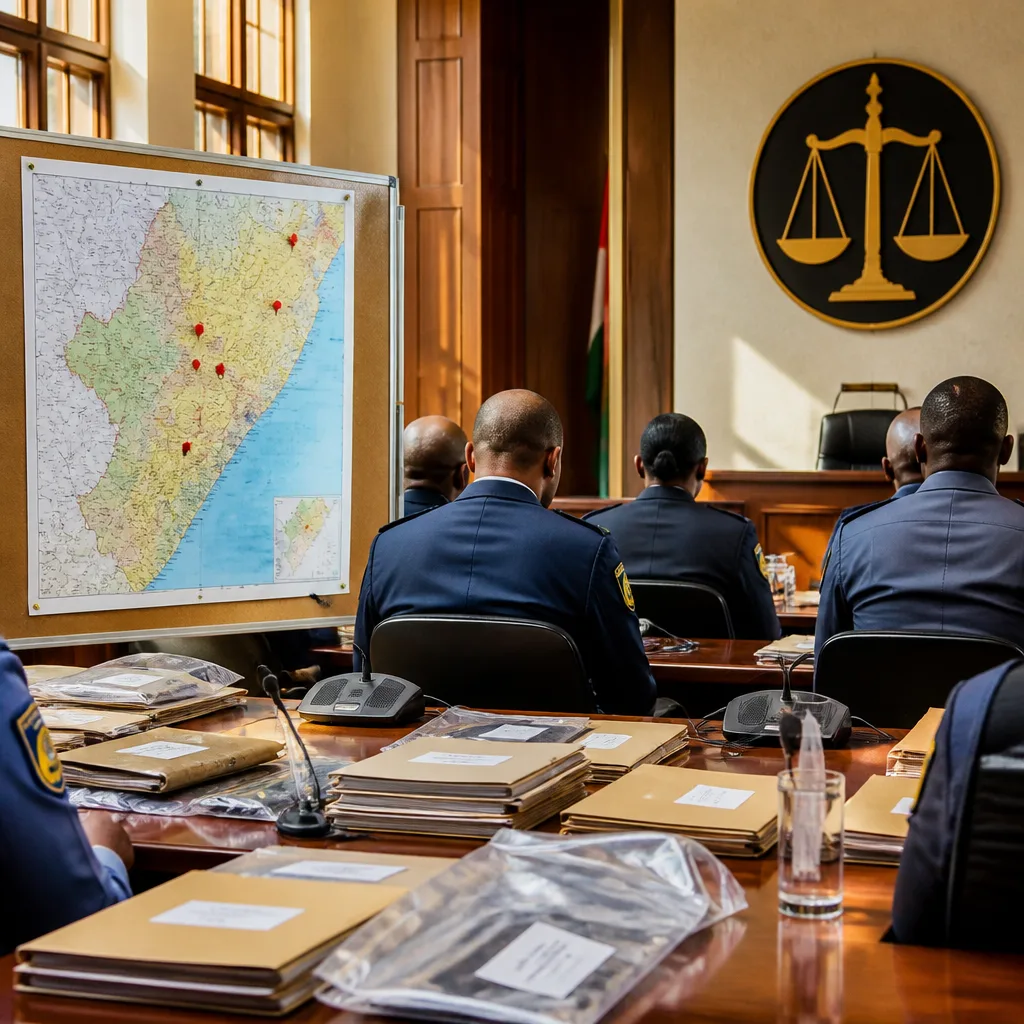
The South African Police Union (SAPU) has urged that members of the South African Police Service (SAPS) who act unlawfully must be held to account, after testimony at the Madlanga Commission of Inquiry revealed that 149 people were killed in task‑team operations in KwaZulu‑Natal over three years.
Commission heard details of deadly operations
At the commission, the Independent Police Investigative Directorate (IPID) Deputy Director for Investigations, Len John, told the inquiry that the deaths related to a range of incidents including cash‑in‑transit heists, taxi violence and drug unit operations in the province. John described the shootings as extra‑judicial killings and alleged that officers sometimes delayed contacting IPID to manipulate subsequent investigations.
Jabulani Mabena, SAPU’s national spokesperson, said the union supported holding members who acted outside the law to account but warned against prosecuting members in the media. He told the commission the union would commend good policing while objecting to abuses of power.
“We as SAPU—are saying if there’s members that really do things out of the law that they have to act upon, there should be accountability that should be taken against such members,”
Union stance: accountability, but caution
SAPU framed its position as twofold: it called for disciplinary or criminal consequences where evidence supports misconduct, and at the same time emphasised a careful approach to public accusations against police personnel. The union said it was wary of media‑led prosecutions of members while also opposing any abuse of police powers.
The testimony before the Madlanga Commission draws attention to the tensions between frontline policing practices, oversight by bodies such as IPID, and the need for transparent investigations where lethal force is used. Allegations that scenes were manipulated by delayed notifications, if substantiated, would raise questions about the integrity of internal and external investigative processes.
- 149 deaths reported in task‑team incidents
- 77 incidents documented over a three‑year period
- Incidents linked to cash‑in‑transit heists, taxi violence and drug unit operations
| Figure | Detail |
|---|---|
| 149 | Deaths in task‑team incidents (KwaZulu‑Natal) |
| 77 | Incidents recorded over three years |
Implications for oversight and investigations
IPID, as the statutory oversight body for police conduct, plays a central role when deaths occur during police operations. The commission heard allegations that officers sometimes delayed informing IPID of incidents — an assertion that, if proven, could have consequences for both criminal investigations and public confidence in policing oversight.
While SAPU emphasised accountability, it also cautioned against premature public condemnation of officers. This reflects a broader debate about balancing the rights of accused members with the need for transparent and independent inquiries into deaths involving police.
The Madlanga Commission is examining wider claims of criminality and capture within the criminal justice system. Evidence about killings in police task‑team operations is one element of the broader inquiry into systemic failures and alleged abuse within state institutions.
How the commission’s findings relate to existing IPID investigations, potential internal SAPS disciplinary processes and possible criminal prosecutions will depend on the commission’s final report and subsequent actions by oversight and prosecuting authorities. The commission’s hearings and any supporting evidence will be critical to determining whether further prosecutions or reforms are pursued.
For now, SAPU’s position as reported at the commission is clear: where members have acted outside the law they should face accountability, but the union will resist media‑driven attempts to conclude guilt before formal processes are completed.













