
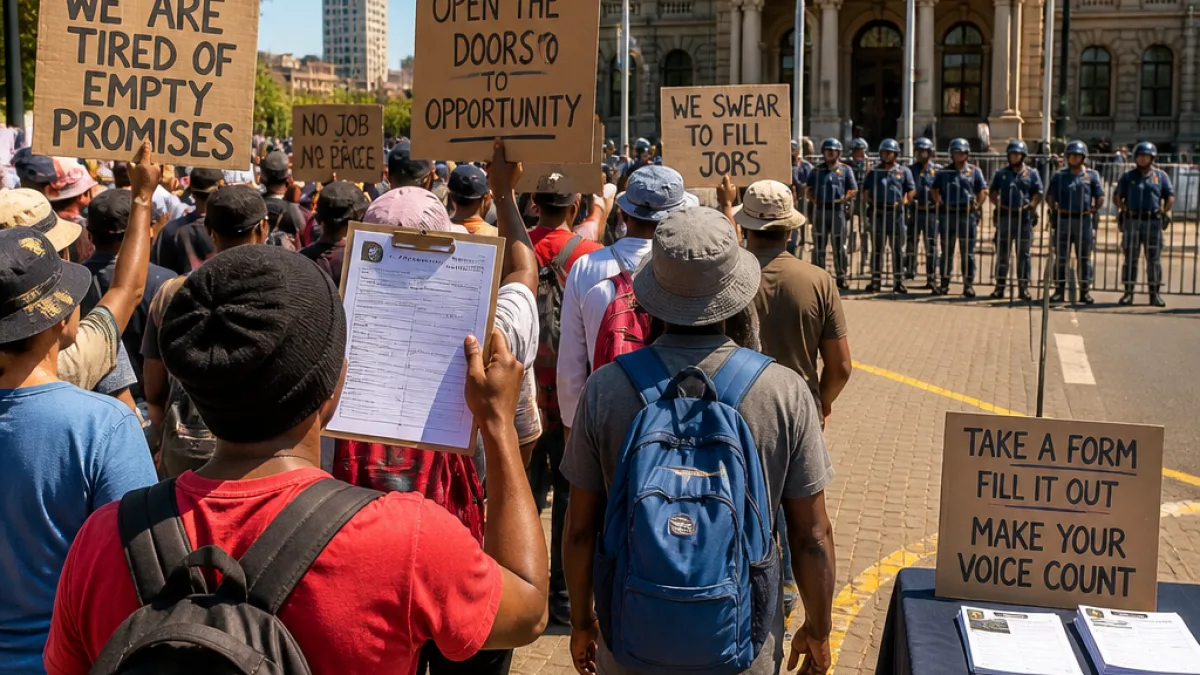
Frustration among unemployed teachers in KwaZulu‑Natal boiled over on Thursday as a contingent marched through Pietermaritzburg to demand clarity from the provincial government about years of unfilled posts and persistent teacher shortages.
March to the Premier’s Office
The teachers assembled outside the Department of Education offices in Langalibalele Street and proceeded to the Premier’s Office to press Premier Thami Ntuli for answers on whether memoranda and grievances they have submitted over several years have been received and acted upon.
March leader Khona Mtolo told the crowd she graduated in 2023 and that unemployed teachers were already demonstrating then for employment. She said the aim of Thursday’s action was both to demand jobs and to confirm whether their complaints had reached the premier.
“We want to know if the premier has been receiving our grievances and memorandum that we have been giving to the Department of Education all these years. We need answers,”
Allegations of corruption and exploitation
Mtolo and other protesters raised serious allegations about the recruitment process. They said qualified educators seeking posts had encountered requests for bribes, that vacancies were being sold, and that some senior officials had demanded sexual favours in exchange for employment.
Those allegations prompted calls from the group for urgent, independent investigations because, they argued, schools continue to face shortages while qualified teachers remain unemployed.
Local faces, province-wide problem
Photographs from the march show named participants including Bonisiwe Masango, Zandile Nzama, Eunice Nzimande and Domicile Cele. The demonstration reflects a broader, long-running challenge in the province: gaps between available posts and the number of teachers appointed, and community concern over how appointments are awarded.
- Route: Department of Education offices (Langalibalele Street) to the Premier’s Office
- Principal demands: Employment opportunities, confirmation that memoranda reached the premier, independent investigation into recruitment allegations
- Notable claim: Allegations of bribery, sale of posts and sexual propositions by senior officials
Why this matters
Teacher shortages affect class sizes, curriculum delivery and ultimately learners’ outcomes across the province. If allegations of corruption and abuse in recruitment are substantiated, they would also indicate systemic failings that disadvantage qualified applicants and harm communities already battling educational backlogs.
Protesters emphasised that the issue is not simply employment for themselves but the quality and continuity of education in KwaZulu‑Natal schools.
What the teachers want
The marchers asked for a clear timeline on when vacancies will be filled, confirmation that their memoranda were received by the premier and an independent probe into the alleged malpractices within recruitment processes.
| Demand | Purpose |
|---|---|
| Employment for qualified teachers | Address shortages and reduce learner-to-teacher ratios |
| Confirmation of receipt of grievances | Ensure provincial leadership is aware and responsive |
| Independent investigation | Probe allegations of bribery, sale of posts and sexual exploitation |
What is known and what remains unanswered
The march was peaceful and focused on securing a response from the Premier’s Office. Protesters made specific, serious claims about recruitment practices; however, the source material does not indicate whether the Department of Education or the premier’s office has opened an investigation or responded to the allegations.
Community members and parents watching the demonstration expressed concern that unresolved staffing shortfalls could worsen educational outcomes if not addressed urgently.
Next steps and practical information
Teachers said they will continue to press for accountability and transparency. Parents and residents who wish to follow developments should look for official statements from the KwaZulu‑Natal Department of Education and the Premier’s Office. Any criminal allegations should be investigated by the relevant law enforcement agencies.
The protest underlines a local reality: the quality of schooling depends not only on the existence of qualified graduates, but on fair, transparent appointment processes and timely government action to fill vacancies.
As this story develops, the attention will focus on whether the provincial government responds substantively to the grievances and whether formal probes are launched into the allegations raised by the marchers.












