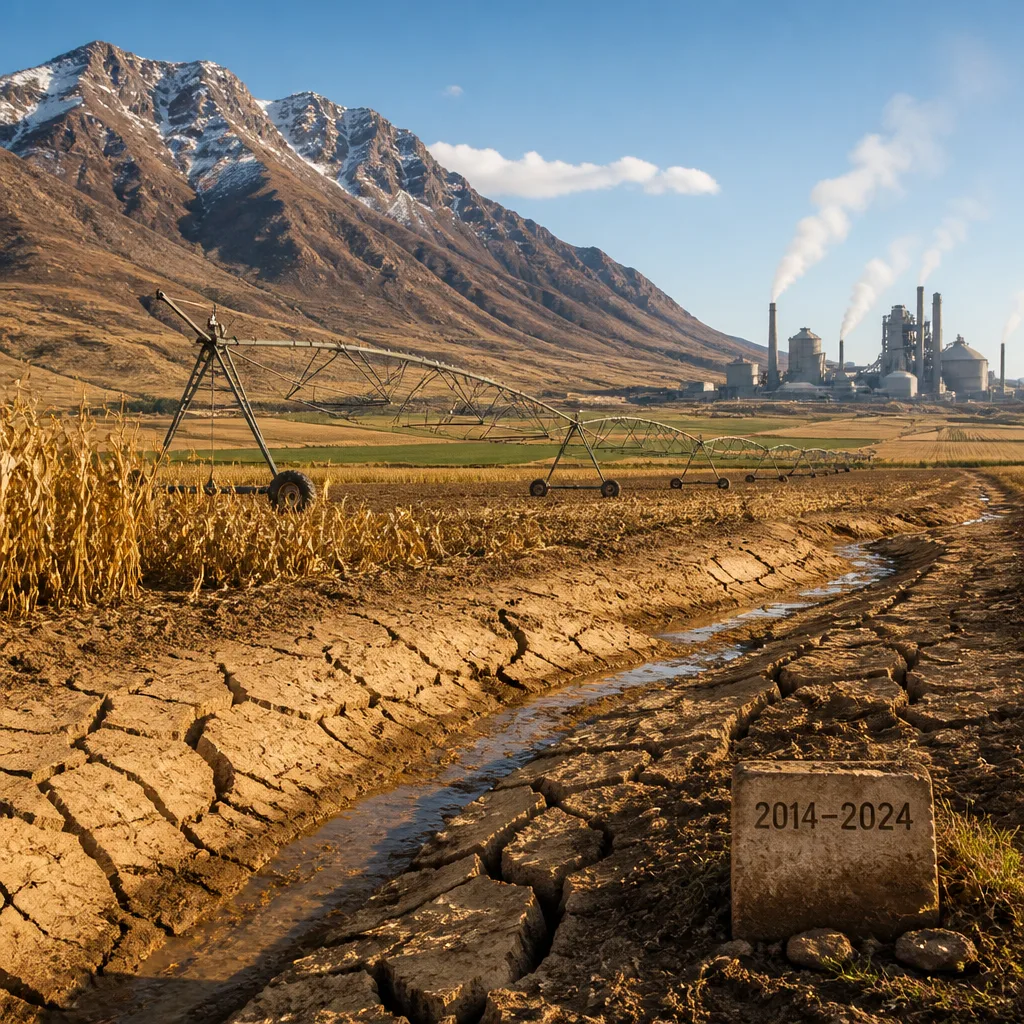
A study published on 25 August in Nature’s Communications Earth and Environment finds that emissions from 122 of the world’s largest fossil fuel and cement producers are linked to about half of the climate-driven reductions in water availability across the Western United States over the past 75 years.
Key findings on snowpack, streamflow and irrigation demand
Researchers traced changes in both water supply and demand to emissions from major producers including BP, Chevron, ExxonMobil and Shell. They report that, between 2014 and 2024, climate change led to a 36% reduction in Western snowpack and a 13% decline in warm-season streamflow, while irrigation demand rose by more than 4%. Emissions attributed to the 122 producers accounted for around half of those changes.
- Snowpack loss: 36% reduction (2014–2024)
- Warm-season streamflow decline: 13% (2014–2024)
- Irrigation demand: increase of >4%
- Attribution: about 50% of observed changes linked to emissions from 122 major producers
Timing of runoff has shifted, compounding shortages
The study also shows that the seasonal timing of river flows has shifted. Snowmelt and runoff now arrive earlier in the year, reducing the amount of water available during the warmer months when irrigation needs are greatest. On average, the midpoint of annual streamflow occurs about six days earlier because of emissions traced to the companies; in some mountain areas the shift is as much as 30 days.
Those timing changes intensify pressure on reservoirs and groundwater as water managers try to meet late-summer demands. The researchers identified several heavily farmed basins as particularly affected: the Klamath, Sacramento, San Joaquin and Middle Columbia river basins experienced both significant drops in streamflow and rising irrigation needs.
Groundwater depletion and agricultural strain
The analysis highlights substantial groundwater losses in California’s Central Valley, a region central to US food production. From 2003 to 2024, about 20% of the valley’s total groundwater loss was linked to climate change, and roughly half of that component was attributed to emissions from the major producers tracked in the study.
Across the Western US, agriculture consumes a large share of developed water supplies. The study notes that agriculture accounts for about 80% of developed water use in the region, meaning that shortages and timing shifts translate directly into stress on food production, farm incomes and rural communities.
Longstanding overuse and basin-specific shortfalls
Some basins are already operating beyond sustainable limits. The Colorado River Basin, for example, has faced demand exceeding supply since the early 2000s. In the San Joaquin Valley, surface water allocations have at times exceeded the amount physically available.
| Metric | Change (period) |
|---|---|
| Western snowpack | −36% (2014–2024) |
| Warm-season streamflow | −13% (2014–2024) |
| Irrigation demand | +>4% (2014–2024) |
The study’s methodology links historical emissions from specific producers to regional climate changes, and then to hydrological impacts. By attributing a substantial share of observed changes to a relatively small group of companies, the authors provide a clearer line between industrial emissions and local water stress.
Implications for public health and policy
Reduced water availability and altered runoff timing have direct public health implications. Water scarcity can affect sanitation, agriculture-based livelihoods, food prices and the resilience of communities to heat and drought. The findings add to evidence used by policymakers seeking to design water allocation, groundwater management and climate mitigation strategies that account for both historical emissions and future risk.
For individuals and communities, the study underscores the need to consult local water authorities and public health clinics about water-safety measures, and to support policies that strengthen water security and climate resilience. Health professionals advise that people check with a clinic or their doctor rather than attempting to manage water-related health concerns alone.
The research contributes to an expanding literature tying major emitters to specific environmental and societal harms. It will likely inform legal, regulatory and planning debates around responsibility for climate impacts and the allocation of adaptation resources.