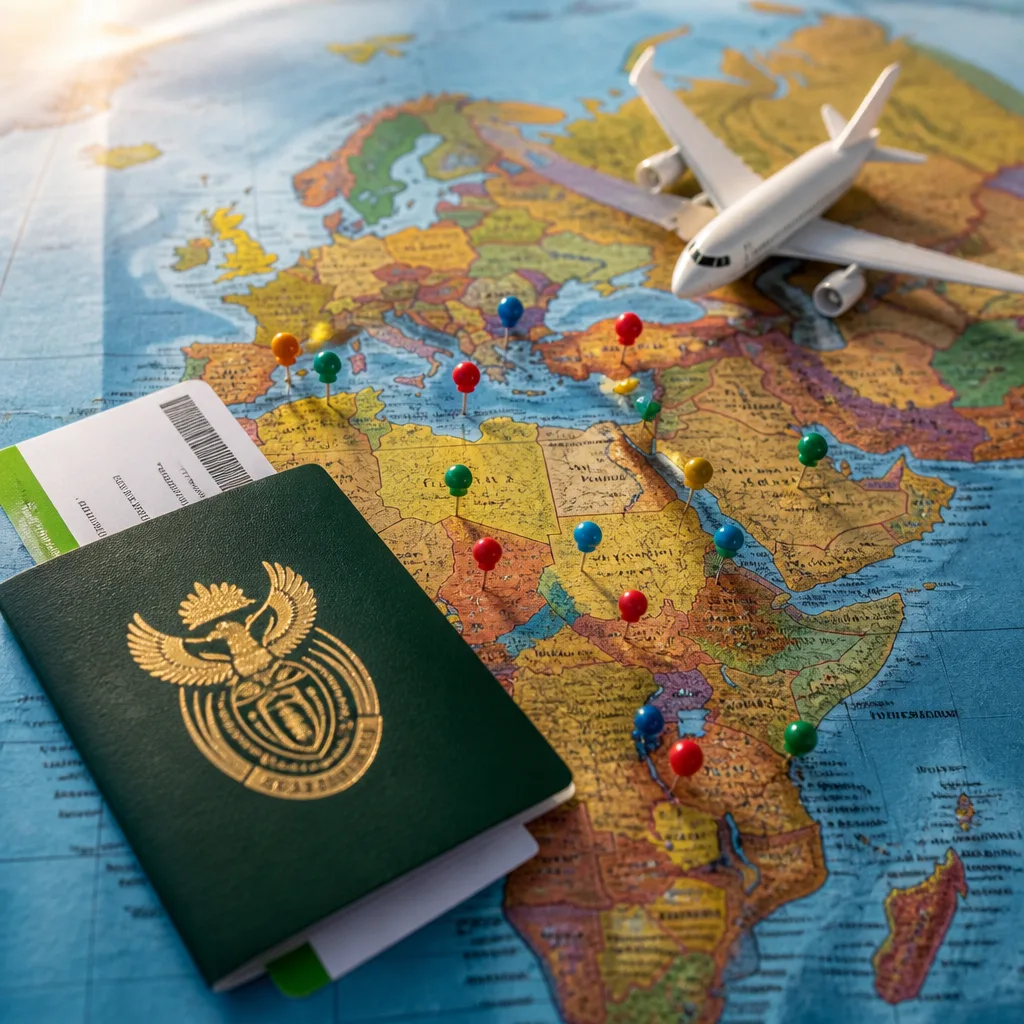
The South African passport has cemented its position as the strongest travel document on the African mainland, the Henley Passport Index shows. Released on 19 August 2026, the ranking gives South African citizens visa-free or visa-on-arrival entry to 101 destinations, placing the country 50th worldwide.
What the ranking means for travellers
For holidaymakers, businesspeople and expatriates, the result underlines South Africa’s relative mobility advantage across Africa and beyond. The Henley index compares passports by counting countries offering visa-free or visa-on-arrival access; a higher tally means fewer visas to arrange before travel.
While several African island nations outrank South Africa — notably Seychelles and Mauritius — no mainland African state matches South Africa’s reach in this edition. That gives South Africans a useful platform for tourism, regional commerce and international collaborations without the delay and cost of advance visas.
Regional context: how neighbours compare
The report highlights a significant gap between South Africa and many of its neighbours. Within Southern Africa, South Africa sits well ahead of neighbouring countries in global ranking and travel access.
- Botswana appears at rank 62 with access to 81 destinations.
- Namibia is ranked 66, with entry to 74 destinations.
- Lesotho has access to 73 destinations.
- eSwatini offers its citizens entry to 71 destinations.
- Zimbabwe sits at rank 76 with access to 61 destinations.
- Mozambique is placed at rank 77 with 60 destinations.
Looking at the wider continent, major economies show a mixed picture. Kenya ranks 69th with entry to 70 destinations, while Nigeria appears much lower at 91st with access to 44 destinations. The contrast illustrates the uneven landscape of travel freedom across Africa.
| Country | Global rank | Accessible destinations |
|---|---|---|
| South Africa | 50 | 101 |
| Botswana | 62 | 81 |
| Namibia | 66 | 74 |
| Kenya | 69 | 70 |
| Nigeria | 91 | 44 |
Global perspective and implications
On the global stage, the range between the strongest and weakest passports remains wide. The index places Singapore at the top with access to 192 destinations, while Afghanistan occupies the lowest position with entry to just 22 destinations. South Africa’s spot at 50 shows solid middle-ranking global mobility, especially strong relative to many developing economies.
For South Africans this ranking can mean shorter lead times when planning travel and potentially lower costs associated with visas. It may also support South African businesses and professionals who need regular international mobility for trade, conferences or project work.
At the same time, officials and travel industry stakeholders often use these indexes when negotiating new bilateral arrangements or considering consular support needs. Enhanced access often follows diplomatic engagement and reciprocal visa arrangements, so the ranking can also reflect the outcomes of recent foreign policy and bilateral negotiations.
While island nations on the continent still have higher standings, South Africa’s position as the mainland leader in visa-free access offers practical benefits to citizens who travel frequently and to those planning one-off trips. For budget-conscious travellers and families, knowing which trips do not require costly or time-consuming visas can make a real difference when choosing holiday destinations.
As international mobility continues to shift with geopolitics and bilateral agreements, travellers and businesses should keep an eye on future Henley releases and official announcements from the Department of Home Affairs and the Department of International Relations and Cooperation.