South Africa has moved from strategy to execution in its green hydrogen ambitions, announcing a first wave of six priority projects under the national green hydrogen programme. The most advanced in the portfolio is an electro sustainable aviation fuel (eSAF) project at Saldanha Bay which, according to the project proponent, has reached a final investment decision.
Investment milestone for Saldanha eSAF
The Phelan Green Group’s eSAF facility in Saldanha Bay has secured an off-taker agreement and a US$100 million equity commitment, the government said. Construction is expected to begin in the first quarter of 2027, with the first exports targeted for the first quarter of 2029.
“This is an important milestone. As the World Economic Forum noted earlier this year, the real bottleneck in scaling clean hydrogen is demand, not technology,”
The statement was delivered on behalf of President Cyril Ramaphosa by the Minister of Electricity and Energy, Dr Kgosientsho Ramokgopa, at the African Green Hydrogen Summit in Cape Town.
Projects span the hydrogen value chain
Minister Ramokgopa said the six selected projects were chosen through a rigorous assessment designed to improve bankability and strengthen investor confidence. The priority portfolio is intended to catalyse both export and domestic demand and covers multiple parts of the green hydrogen value chain, including:
- green ammonia (including the Coega Green Ammonia Project in the Eastern Cape, which has completed early preparatory work but needs further commercial and technical development before a final investment decision);
- electro sustainable aviation fuel (the Saldanha Bay project);
- low-emissions iron and steel;
- green methanol; and
- projects aimed at stimulating domestic hydrogen demand.
The portfolio selection marks a shift from pilot studies and policy formation towards project-level investment and construction timelines.
Why the announcement matters
For South Africa, green hydrogen is pitched as more than an emissions tool: it is a potential industrial opportunity. The projects aim to secure long-term offtake agreements — seen by the government as critical to bankability — and to trigger procurement of major equipment and defined routes to construction.
At the summit Minister Ramokgopa emphasised that moving to investment decisions, ordering equipment and establishing construction timetables are the actions that translate policy into economic activity. The Saldanha project’s stated milestone highlights the government’s view that demand-side certainty is key to scaling the sector.
Near-term timeline and remaining questions
Key near-term dates supplied by government and project proponents are:
| Milestone | Timing |
|---|---|
| Construction start (Saldanha eSAF) | 1Q 2027 |
| First exports (Saldanha eSAF) | 1Q 2029 |
Beyond Saldanha, the Coega Green Ammonia Project has completed early preparatory work but still requires additional commercial, technical and financial development before it can reach a final investment decision. Details of the other four projects were described in thematic terms rather than by developer name or exact locations in the announcement.
What to watch
- Whether the announced off-take agreements and equity commitments withstand due diligence and financing processes;
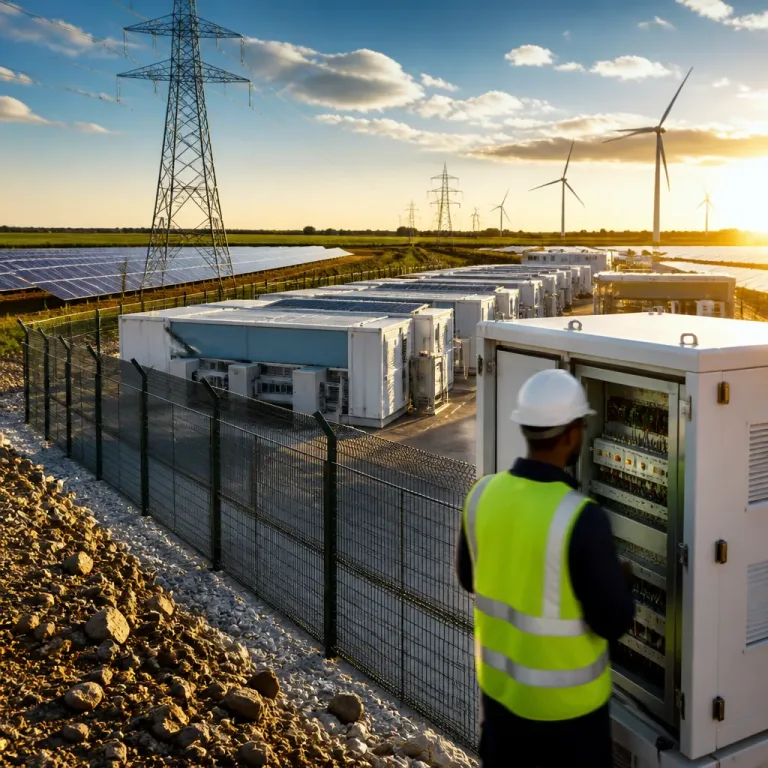
- progress on permitting, grid and port infrastructure needed to support large electrolyser plants and export logistics;
- how these projects will link to domestic demand initiatives such as low-emissions steel or local petrochemical feedstocks.
The government has framed the new portfolio as a test of the policy architecture built over recent years: the transition from concept to construction will show whether South Africa can attract and lock-in the capital and offtake relationships required to build a green hydrogen export industry while also supporting local industrial decarbonisation.
As the sector moves into delivery, attention will shift from announcements to contract detail, financing conditionalities and the physical work of building electrolysers, desalination and storage facilities and the supporting transmission and port infrastructure that these projects require.