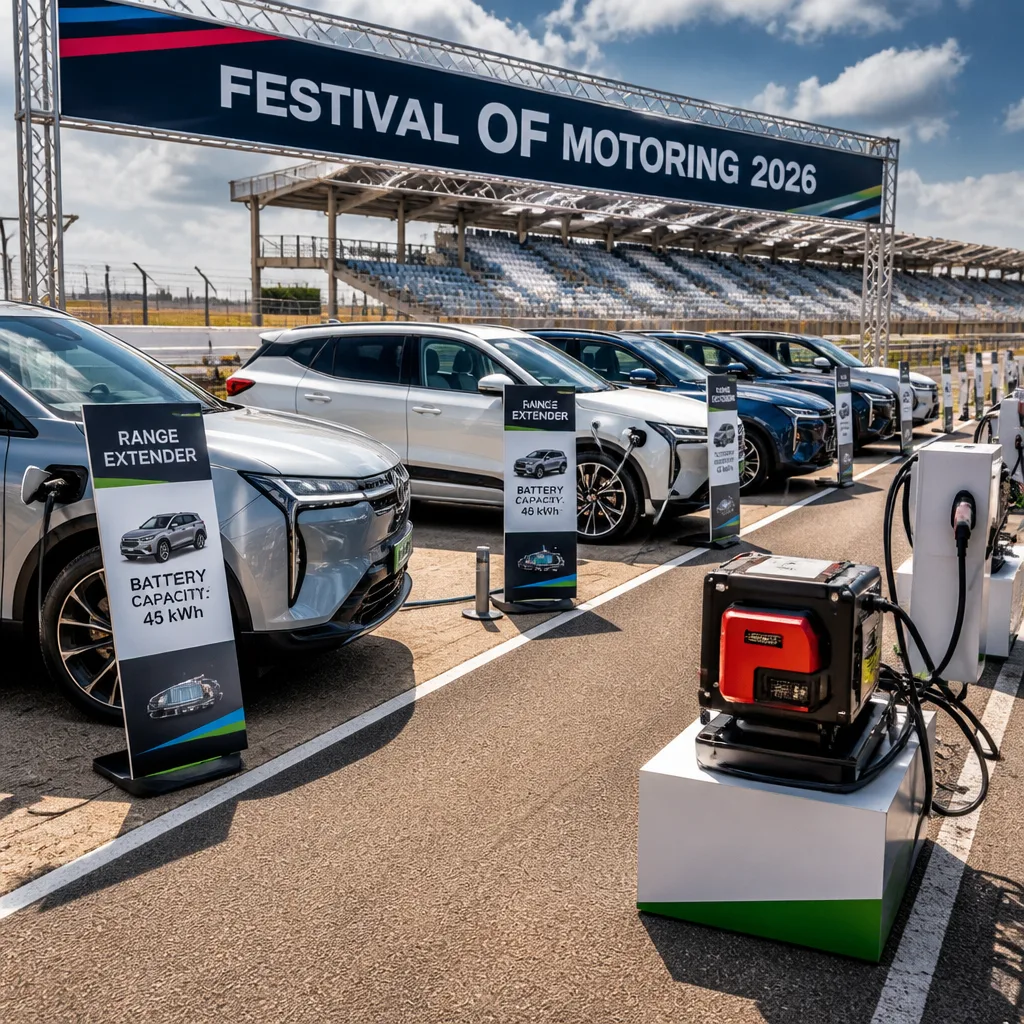
The 2026 Festival of Motoring at Kyalami Grand Prix Circuit underlined a shifting landscape in South Africa’s automotive sector as a wave of Chinese manufacturers presented models aimed across the market, not just the budget end.
Broader ambitions than price alone
Brands including Changan, Chery, Geely, Dongfeng, Omoda, Jaecoo, GWM, iCaur, LDV, JMC and BAIC used the show to display a wider technology mix: fully electric vehicles (EVs), hybrids, range‑extender electric vehicles (REEVs), premium SUVs and performance‑orientated bakkies. The exhibitor line‑up signals a drive to compete across segments historically dominated by Toyota, Volkswagen, Ford and Suzuki.
Rather than relying solely on low prices, the Chinese entrants emphasised alternative powertrains and features that speak to South African buyers wrestling with limited public charging and long travel distances.
Range‑extenders as a practical bridge
One of the most notable introductions was the Changan Deepal S05 REEV. The model combines a 1.5‑litre petrol generator with a 27kWh battery pack. According to Changan, the S05 achieves a total driving range exceeding 1 000km, including up to 200km of electric‑only driving. The company expects to launch the S05 locally in November.
“Changan claims a total driving range exceeding 1,000km, including up to 200km of electric‑only driving.”
For South Africa, where public charging infrastructure remains limited, REEVs present a pragmatic route for drivers who want extended electric‑only trips without the anxiety of being far from a charger. The petrol generator recharges the battery or provides drive power when the battery is depleted, reducing dependence on charging points while still delivering part‑time zero‑emission running.
- Practical advantage: REEVs reduce range anxiety by combining an internal combustion generator with an electric drivetrain.
- Consumer choice: Chinese marques are offering multiple electrification strategies — full BEV, hybrid, and REEV — to suit infrastructure and budget realities.
- Market pressure: Established brands may face renewed competition across segments, not only at the entry level.
Electrification without a one‑size‑fits‑all push
The Festival highlighted that manufacturers are pursuing varied pathways to electrify fleets. Some are showing full battery EVs; others are promoting hybrids or REEVs to address different needs and charging environments. That matters for South African buyers who manage tight data and transport budgets and for fleet operators who balance costs, range and uptime.
For policymakers and industry stakeholders, the diversity of approaches raises questions about how quickly public charging can and should scale, what incentives might support adoption, and how local aftersales and parts networks will adapt to new powertrains.
| Model | Key specification |
|---|---|
| Changan Deepal S05 REEV | 1.5‑litre petrol generator; 27kWh battery; >1 000km total range; ~200km electric‑only; local launch expected November |
While the Festival of Motoring is an industry showcase rather than a sales report, the presence of multiple Chinese firms offering premium and technology‑heavy vehicles suggests a strategic shift. If these models reach showrooms at competitive prices with reliable aftersales support, South African buyers could see faster change in the market mix than in previous election cycles of automotive competition.
For motorists, that could mean more affordable EV options, hybrid alternatives that conserve fuel, and REEVs that ease the transition until charging infrastructure becomes more widespread. For policymakers, it underscores the urgency of a coherent approach to charging networks, incentives and skills development to ensure the market evolves safely and sustainably.
The Changan S05’s November launch will be one of the first local tests of whether range‑extender technology resonates with South African drivers and whether it can bridge the practical gap between petrol vehicles and fully battery‑electric transport.
What to watch next: pricing and warranty terms when models arrive locally, the development of public and private charging infrastructure, and how legacy brands respond to increased competition across vehicle segments.