
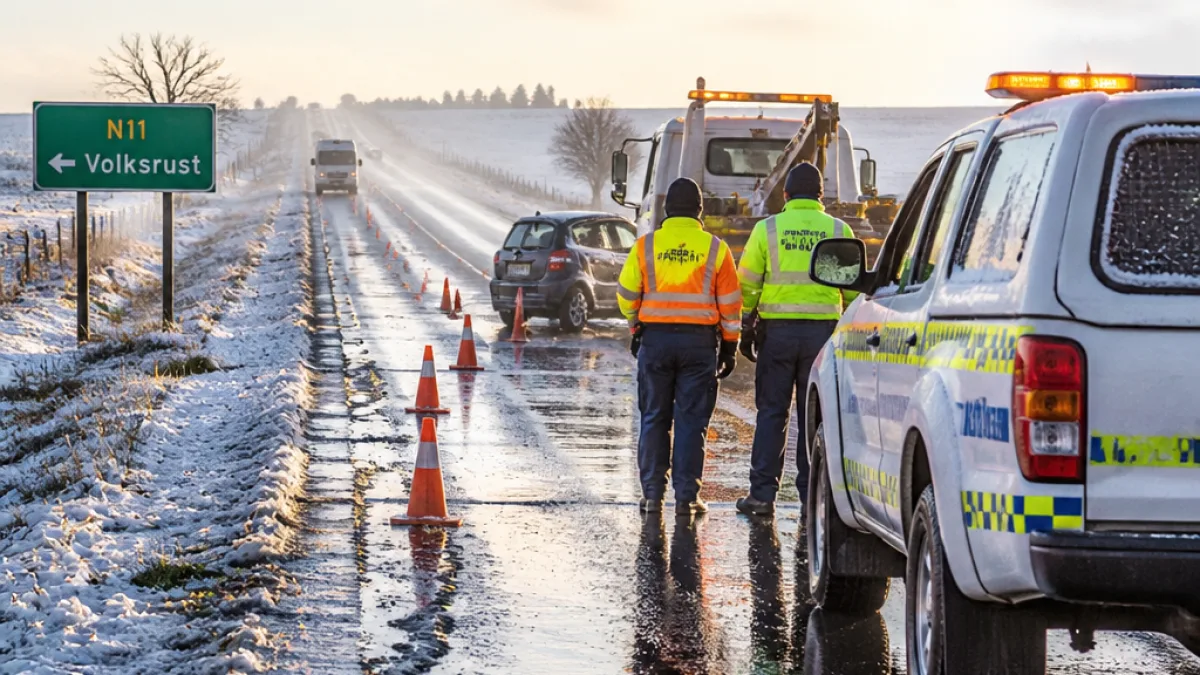
Mpumalanga motorists have been warned to exercise extreme caution after persistent rain, mist and localized snowfall affected major routes in the province on Tuesday. The provincial MEC for community safety, security and liaison, Jackie Macie, urged drivers to adapt to hazardous road conditions and to avoid non‑essential journeys where possible.
Where conditions are worst
Snow was reported on the N11 towards Volksrust and on the N3 in the province on the route heading to KwaZulu‑Natal. Overnight and early‑morning mist has also been recorded on a number of roads, reducing visibility for motorists travelling at dawn and after dark.
| Route | Reported condition |
|---|---|
| N11 (towards Volksrust) | Snowfall; wet and potentially icy surfaces |
| N3 (in Mpumalanga towards KZN) | Snowfall reported; mist and low visibility in places |
Official advice for drivers
The MEC reminded motorists that wet and icy roads increase the risk of collisions and that reduced visibility — especially at night — adds to the danger. Authorities emphasised practical steps drivers can take to reduce risk:
- Reduce speed and allow extra travel time;
- Keep headlights on to improve visibility to other road users;
- Maintain a safe following distance from the vehicle ahead;
- Avoid crossing low‑lying bridges and flooded areas where water may conceal hazards;
- Delay or postpone non‑essential trips until conditions improve.
“Let us be on high alert and adjust our driving in line with these adverse conditions to stay out of danger,”
Macie said traffic law enforcement officers and emergency personnel were on high alert and monitoring road conditions. At the time of the report no major crashes had been recorded.
Local implications and travel planning
Major national routes such as the N11 and N3 are key corridors for commuter traffic, freight and interprovincial travel. Even short stretches of snow or ice can force slowdowns and create long delays, particularly where visibility is poor. Motorists travelling between Mpumalanga and KwaZulu‑Natal should plan for slower progress and expect possible temporary interventions by traffic authorities.
Tourists and visitors to higher‑lying areas should be aware that sudden changes in weather can affect accessibility to mountain passes and scenic routes. Road users relying on real‑time navigation apps should cross‑check with local traffic updates and law enforcement advisories before and during travel.
Practical reminders for residents
Besides driving precautions, residents are reminded of basic measures to cope with cold, wet weather. Animal welfare organisations have previously appealed to pet owners to protect animals from cold, wind and rain; such reminders are particularly relevant during spells of snow and persistent rain.
Emergency services are maintaining heightened readiness. Members of the public encountering hazards such as flooded roads, stranded vehicles or black ice should contact local traffic or emergency control centres for assistance rather than attempting risky recoveries themselves.
Monitoring the situation
Motorists are advised to keep tuned to official updates from traffic authorities and provincial communications channels as conditions evolve. Where possible, avoid night travel when mist and low visibility are most severe. Authorities will continue to provide updates should conditions deteriorate or if any major incidents occur.
This advisory follows reports from traffic monitoring teams and the provincial community safety office; motorists should treat the situation as dynamic and plan journeys with safety as the priority.













