A travel trend that shuns speed and screens took centre stage in a recent trip to Forster on New South Wales’ mid‑north coast. The writer, John Walsh — former executive producer of the TV travel series Getaway — tested a slow‑travel, nostalgia‑led holiday, choosing caravan‑park accommodation that favours analogue touches and low cost over boutique hotel bells and whistles.
What is slow travel and who is it for?
Slow travel, also called nostalgia travel or digital detoxing, emphasises unhurried time, fewer distractions and a return to simple pleasures: paper maps, long walks, screen‑free activities and revisiting places with personal meaning. Walsh travelled about 3.5 hours north of Sydney to Forster to experiment with the approach, opting for Discovery Parks Forster on the Wallamba River.
"I’ve got a tank full of E10, a charged up iPod, a Kodak Instamatic, Converse high tops and a pair of jorts. I’m going old school, I’m going nostalgic, I’m going analogue."
The trip was not an exercise in austerity — the cabin included modern comforts — but carefully limited technology and a shift in mindset to prioritise place and people over constant connectivity.
Why choose a caravan park cabin?
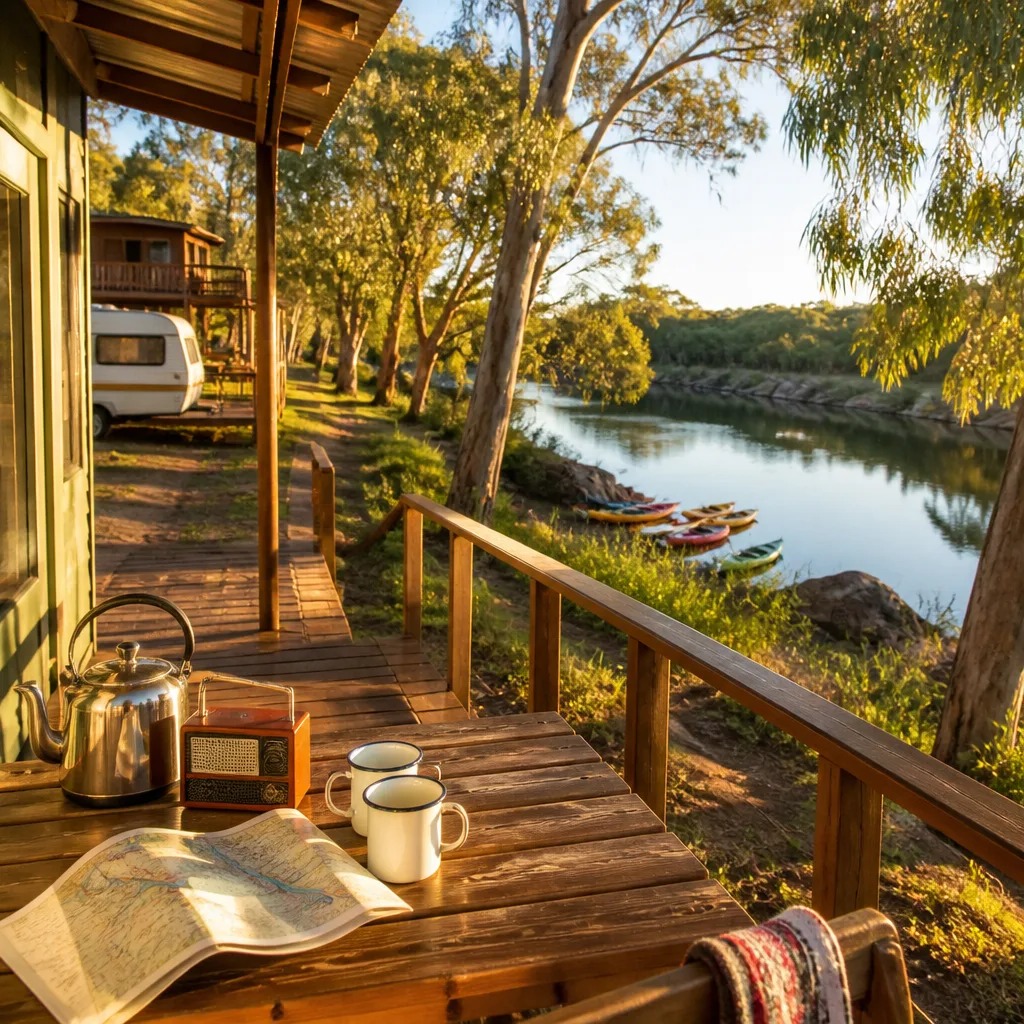
Caravan and holiday parks often hold the best local real estate in coastal towns: riverfronts, beachfronts and forest edges. Walsh chose a Deluxe Two‑Bedroom Riverfront Cabin, describing the view as possibly the best he'd seen at a holiday park. Practical comforts — a full kitchen, air conditioning and two TVs — stayed, but small nostalgic details made the experience feel different from a typical hotel stay. He received a traditional metal key on arrival rather than a key card or digital wristband, a small ritual that reinforced the analog mood.
- Cost‑aware: holiday parks tend to be more affordable than hotels while offering space for families.
- Nature‑first: riverside and beachfront sites bring outdoor activities within easy reach.
- Low‑tech options: opportunities to switch off devices and reintroduce simple entertainments.
Practical details from the stay
Walsh’s choices illustrate how to stage a slow‑travel break without forgoing convenience. He brought only necessary technology — an iPhone 16 but left a newer phone at home — and leaned into offline pleasures. The cabin’s features supported family needs while allowing for a pared‑back rhythm.
| Feature | Benefit |
|---|---|
| Deluxe Two‑Bedroom Riverfront Cabin | Space for family, private riverside outlook |
| Full kitchen | Cost savings and flexibility for meals |
| Air conditioning | Comfort during warmer months |
Walsh notes that holiday parks often offer the best value and location in seaside towns — a helpful tip for budget‑conscious travellers seeking a more authentic, slower holiday pace.
How South African travellers can borrow the idea
The slow‑travel experiment translates easily for South African trips. Consider provincial coastal towns, riverside resorts or inland holiday parks where you can:
- Choose self‑catering or cabin accommodation to cut costs and control your daily rhythm.
- Bring a small selection of low‑tech entertainment — a paperback, a deck of cards or a simple camera — to encourage offline time.
- Set clear boundaries with devices (for example, no phones at mealtimes or one designated daily check‑in) to preserve the detox effect.
Walsh’s trip shows that slow travel is not about roughing it; it’s a deliberate scaling down of distraction so you can notice place, community and time. For families and solo travellers alike, this approach can deliver a richer stay at a lower cost — and leave you refreshed rather than drained by a frantic itinerary.
For those planning a break on a budget or wanting to try a digital detox, a riverfront cabin or holiday‑park stay remains a strong option. It may also remind you that sometimes the best travel memories are made when you slow the pace and let the place do the heavy lifting.