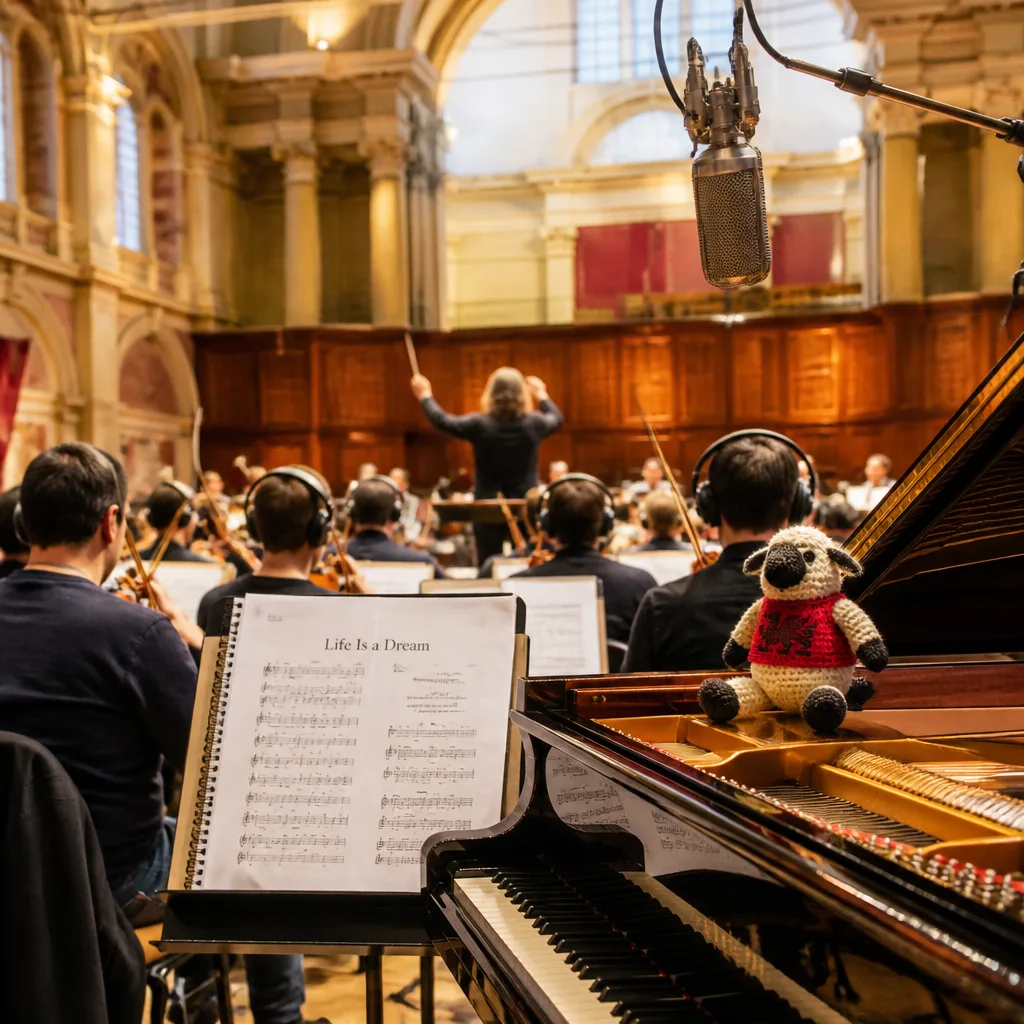
Sir Anthony Hopkins has released his first formal album of original compositions — a 12‑track collection titled Life Is a Dream — recorded with the Philharmonia Orchestra and conducted by maestro Gustavo Dudamel. The recording took place at London's Alexandra Palace in April and is scheduled for release by Decca Records on 21 August.
From acting acclaim to a lifelong musical outlet
The academy‑award winning actor, now 88, has long worked at the intersection of film and music, composing scores for several films in which he has been involved. But this release represents a more personal and sustained presentation of his own compositions, material he says he has been developing over decades.
"Impostor syndrome," he said of doubts about his own work.
Hopkins told reporters the new album draws heavily on memories of his upbringing in Wales and traces emotional themes from childhood through adolescence. He described music as his deepest vocation and contrasted it with acting, which he called a more disciplined craft.
What the album contains and how it was made
Life Is a Dream contains 12 original pieces composed by Hopkins across roughly six decades. The project was captured with the Philharmonia Orchestra under Dudamel’s baton at the historic Alexandra Palace, a venue known for its acoustics and scale. Decca will handle the album’s release and distribution.
- Composer and performer: Sir Anthony Hopkins
- Orchestra: Philharmonia Orchestra
- Conductor: Gustavo Dudamel
- Recording location: Alexandra Palace, London (April)
- Release date: 21 August (Decca Records)
Hopkins began playing the piano at around age 4 and composed his first piece, a waltz, in 1960 when he was about 22. Over the years he composed and contributed scores for several films, including the opening for the 1993 film Shadowlands, and later works on films he directed and starred in such as August (1996) and Slipstream (2007), as well as the 2020 film Elyse.
Listening notes and artistic intent
Hopkins framed the album as an autobiographical project: musical sketches and movements inspired by the landscapes and personal memories of his youth in Wales. While he acknowledged a melancholic undercurrent to the material, he also spoke of music as granting him a greater sense of freedom than acting.
Those familiar with his film work will recognise a through‑line from his previous scoring efforts to this present collection — an interest in melody, atmosphere and the way music can carry narrative feeling without words.
| Element | Detail |
|---|---|
| Number of tracks | 12 |
| Primary collaborators | Philharmonia Orchestra; Gustavo Dudamel (conductor) |
| Recording venue | Alexandra Palace, London |
| Label | Decca Records |
Classical listeners and fans of Hopkins’ acting alike may be curious to hear how his direct experience with storytelling and character informs purely musical composition. The album’s title, borrowed from a famous Spanish play, signals a thematic focus on memory, dream and reflection.
What this release means
For South African and international audiences, Hopkins’ album adds to a growing catalogue of established screen actors exploring music as a primary mode of expression. It underscores how figures known for one art form often cultivate parallel creative lives over decades.
Whether the record reaches classical charts or draws interest from film music aficionados, it confirms that Hopkins sees music not as a hobby but as a vocation he has nurtured since childhood.
Listeners can expect a record rooted in personal history and shaped by the full resources of a major orchestra — a deliberate statement from an artist whose creative reach extends well beyond the screen.