
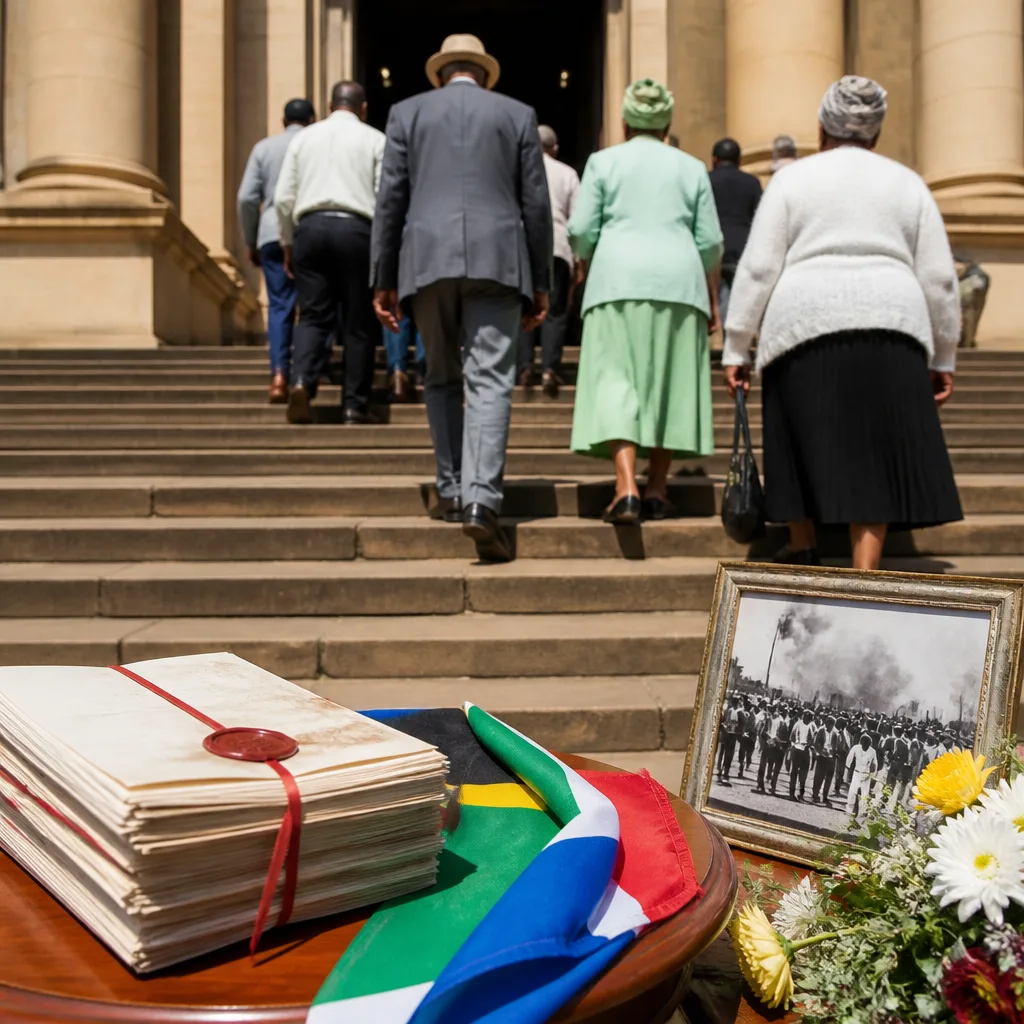
Survivors and relatives of victims of the 1960 Sharpeville massacre have launched a class action against the South African government, seeking compensation and a ruling that the apartheid-era Indemnity Act is unconstitutional.
What the application seeks
The legal action targets the statute that, under apartheid, shielded police and the state from prosecution and civil claims arising from security operations. The applicants say that the act has blocked efforts for decades to secure redress for those killed, injured or otherwise harmed when the police opened fire on peaceful protestors on 21 March 1960.
According to the papers, at least 91 people were killed and 238 wounded during the shootings in Sharpeville, a watershed event in the struggle against apartheid. Lawyers for Human Rights and allied legal teams are representing survivors and family members in the suit, which seeks both a declaration on the constitutionality of the Indemnity Act and compensation where appropriate.
Legal and moral stakes
Lawyers for Human Rights say that if the court declares the Indemnity Act inconsistent with the post‑1994 Constitution, survivors and families would be able to pursue civil claims against the state for the harms they endured. The group argues that overturning the act is necessary to finally address long-standing injustice and to allow for reparatory relief.
The applicants assert that the Indemnity Act effectively denied victims and their families any judicial remedy for conduct that would today be examined under constitutional and human-rights standards. The litigation therefore tests whether an apartheid-era shield can persist in the face of constitutional protections.
Historical context and continuing impact
The Sharpeville shootings were a turning point in South African history and remain central to national memory. Survivors and next of kin contend that the physical, psychological and socio‑economic consequences of the incident continue to afflict families across generations.
One survivor named in background material, Sekolotsa Abram Mofokeng, was reportedly 20 when he was shot on 21 March 1960 and later arrested in hospital; the bullet is said to remain lodged in his body. Cases like his are cited in the papers as emblematic of enduring injury and the absence of remedy.
Numbers at a glance
| Event | Reported figure |
|---|---|
| People killed | 91 |
| People wounded | 238 |
Possible consequences
- If the court rules the Indemnity Act unconstitutional, survivors could open civil claims for compensation.
- A favourable ruling may prompt review of other apartheid-era legal mechanisms that limit accountability.
- A decision against the applicants would likely be contested and could prompt further legal and political debate about remedies for apartheid injustices.
The matter raises broader questions about state responsibility for historical violations and how the law recognises and remedies collective trauma. Past attempts to secure compensation for apartheid-era harms have met legal and procedural obstacles; this litigation seeks to remove a central statutory barrier.
At the time of publication, the litigation is at its initial stage. Court dates, detailed prayer for relief and the full list of applicants were set out in the founding papers but may be subject to further legal process. The outcome will be closely watched by survivors' groups, human-rights organisations and legal commentators, and could carry implications for other claims arising from apartheid-era state actions.
This report will be updated as the court process unfolds and further documents become public.














