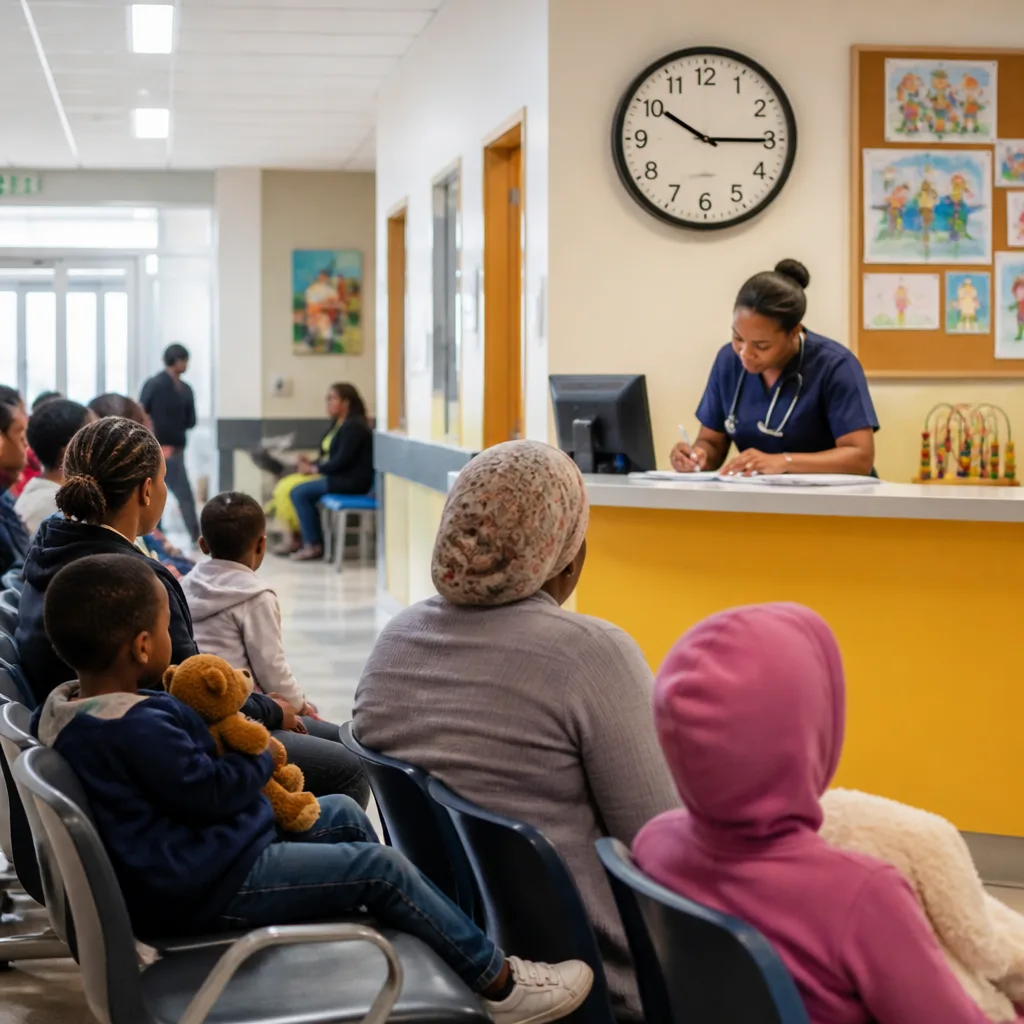
Emergency departments across England are seeing a growing number of children and young people in acute mental distress, including some as young as six, according to an analysis by the Royal College of Paediatrics and Child Health (RCPCH). The college said the trend reflects gaps in community and crisis services, leaving families with little alternative but A&E.
Data reveal steep increase and long waits
The RCPCH analysis — compiled from figures provided under the Freedom of Information Act by NHS England — found that attendances at A&E for mental health concerns among six- to 17-year-olds rose to 75,491 in 2025, up from 55,525 in 2019. That represents a 36% increase, substantially higher than the overall rise in A&E visits of just over 8% in the same period.
Some of the most marked increases were among younger children aged six to nine. The college also reported that more than 6,200 children — about 8% of those presenting with mental health problems — waited in A&E for longer than 12 hours.
| Year | A&E attendances for 6–17-year-olds (mental health) |
|---|---|
| 2019 | 55,525 |
| 2025 | 75,491 |
Doctors who contributed to the analysis said cases brought to A&E included children and adolescents referred by families, carers and the police. Presentations ranged from self-harm and eating disorders to emotional crisis and challenging or aggressive behaviour in some instances.
Paediatricians warn A&E is no substitute for dedicated crisis care
The RCPCH emphasised that emergency departments are a vital backstop but were not designed as long-term locations for managing young people in mental health crisis. The college linked the increase in emergency presentations to uneven availability of community mental health support and crisis services, which has left many families with limited options.
"Behind every one of these figures is a child or young person in distress and a family who didn't know where else to turn," the RCPCH's officer for mental health, Dr Sam Jones, said. "Emergency departments are a vital safety net, but they were never designed to be a place where children in mental health crisis wait for days at time. This is a national crisis that will only get worse without urgent intervention."
The college called for increased investment in child and adolescent mental health services (CAMHS) and for better training across health, social care and education to identify and respond to children who are struggling.
Government response and implications for health services
The UK government said it was working on improvements and would set out plans in due course. The RCPCH analysis underscores pressures on emergency departments and highlights the need for a coherent crisis pathway so that children receive timely, specialist support rather than prolonged waits in A&E.
For readers and health professionals here, the findings serve as a reminder of the consequences when community mental health capacity is insufficient: emergency services absorb demand they are not configured to meet, staff face greater stress, and vulnerable children risk delayed access to appropriate care.
- Key figures: 75,491 A&E attendances in 2025; 36% rise since 2019; >6,200 waited over 12 hours.
- Main concerns: lack of crisis provision in the community, long A&E waits, younger children increasingly affected.
- Calls to action: boost CAMHS funding, strengthen multi-agency training and establish clear crisis pathways for young people.
Parents and caregivers who are worried about a child or young person's mental health should contact their GP, local mental health services or emergency services if there is a risk of harm. Clinical professionals recommend seeking immediate help rather than attempting to manage serious signs of distress at home.
This report draws on the RCPCH analysis of NHS England figures and statements from the college and government. Further research and policy detail are awaited as officials set out planned responses.