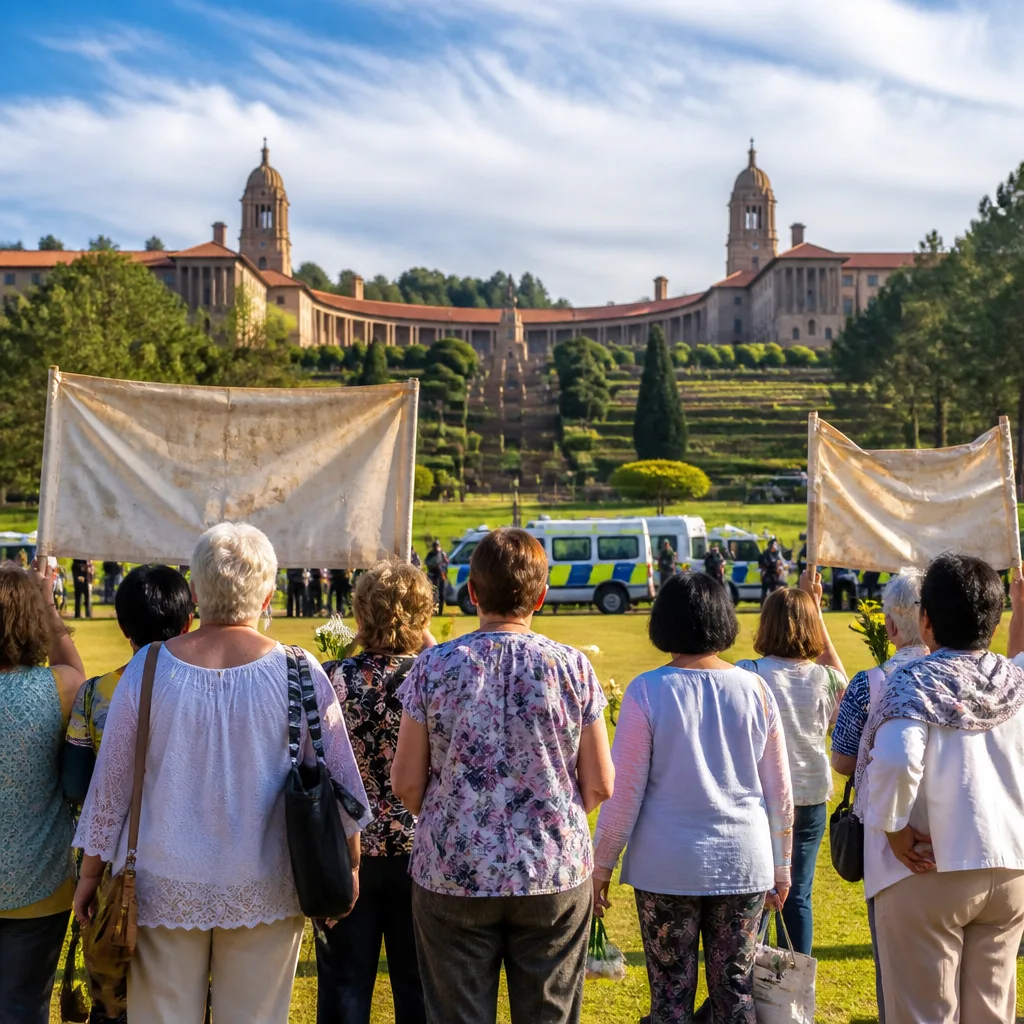
Pretoria — Seventy years after about 20,000 women marched to the Union Buildings to protest extensions of pass laws to Black women, yesterday’s National Women’s Day commemorations were marked by both celebration and deep unease.
One of the march’s original leaders, Sophie Williams‑de Bruyn, who was 18 in 1956 and is now 88, returned to the same grounds. She used the occasion to question whether the political gains of the past have brought real improvements to women’s everyday lives.
“How can we fully celebrate our past victories when our present reality is so deeply disappointing and distressful?” Williams‑de Bruyn asked, setting a sombre tone for the commemoration.
What the day remembered — and what remains
The 9 August 1956 protest at the Union Buildings became a defining moment in the anti‑apartheid struggle. Women delivered petitions opposing the pass laws — a core instrument of apartheid that limited where Black South Africans could live and work — and stood in silence for 30 minutes before leaving. That action is now commemorated annually as National Women’s Day.
The country’s political landscape changed dramatically after apartheid: nearly four decades later, apartheid was dismantled and the first democratic elections in 1994 ushered in a constitutional order that puts equality and human dignity at its centre. Women have since entered Parliament in significant numbers and hold senior positions across government and the judiciary.
But yesterday’s ceremony highlighted a gap between formal equality and material conditions. Commentators and participants at the event noted that the freedoms enshrined in the constitution have not consistently translated into improved security, reliable public services or expanded economic opportunity for many women.
- 1956: Women’s march to the Union Buildings against pass laws.
- 1994: First democratic elections and a constitution that guarantees equality.
- 2026 (this commemoration): Reflection on persistent gaps in security, services and economic inclusion.
| Year | Significant development |
|---|---|
| 1956 | Mass march to Union Buildings protesting pass laws |
| 1994 | First democratic elections; constitution adopted |
| 2026 | 70th anniversary commemoration; concerns raised over service delivery and safety |
Officials note gains, activists urge action
The President referenced the progress made since 1956 during the commemoration, highlighting increased representation of women in public office. Yet participants and speakers repeatedly underlined that representation alone has not resolved threats to women’s safety, nor has it ensured adequate access to education, health services or economic stability for many.
Those attending reflected that the march’s symbolic power remains vital. For many, the annual commemoration is both a reminder of past sacrifices and a call to address contemporary challenges that continue to affect women across the country.
The event offered a clear message: legal and political rights are necessary but not sufficient. Translating constitutional guarantees into tangible improvements in daily life will require focused policy responses on safety, service delivery and economic inclusion.
Organisers and veteran activists signalled that the struggle for substantive equality will continue to require mobilisation, oversight and sustained government attention. Details on follow‑up initiatives announced at the commemoration were not immediately available and appear to be still developing.
The 1956 march remains a touchstone in South Africa’s democratic memory. Yesterday’s commemoration combined respect for that legacy with a practical demand: the freedoms won must lead to safer streets, better services and real economic opportunities for all women.