
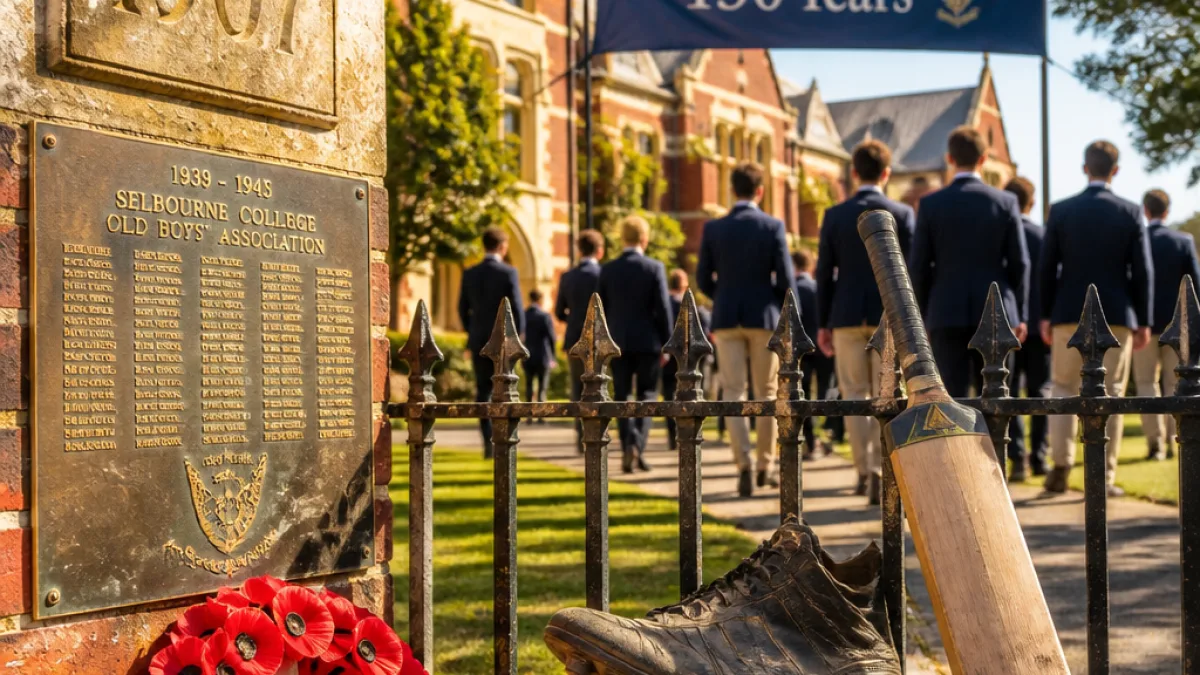
Selborne College in East London traces its roots to 1872, making it the oldest school in the town now commonly referred to locally as KuGompo City. Over one and a half centuries the institution has shifted names, locations and student intake, producing a roster of prominent alumni and retaining traditions that speak to the town’s history.
From Panmure Public School to Selborne
The school was established by Pastor Heinrich Muller as Panmure Public School in 1872. At the time East London was a small cluster of settlements along the Buffalo River; the three settlements were formally united as East London in 1873, and a census in 1875 recorded a population of about 2,134.
Between 1886 and 1903 the original co-educational institution split into separate single-sex schools: the girls’ school later became Clarendon, while Panmure continued as an all-boys school. In 1907, under headmaster George Rattray, the school was renamed Selborne College in honour of William Waldegrave Palmer, the Second Earl of Selborne and British High Commissioner for Southern Africa from 1905 to 1910. With the new name came adoption of the Earl’s family coat of arms and the Latin motto Palma Virtuti — “Reward is to the Brave.”
“Palma Virtuti” — Reward is to the Brave.
Growth, war and ceremony
As East London expanded around the turn of the 20th century, the school outgrew its original site and moved to Muir Street in 1922. In 1924 a War Memorial was erected in front of the school to commemorate former pupils who died in World War I. Selborne also established the Ceremony of the Key to honour the fallen Old Boys; the ritual was given a strict military format in 1939 at the start of World War II and the college maintains that ceremonial tradition on Founders’ Day each year.
Apartheid, change and modern identity
In 1948, with the advent of apartheid policies, Selborne became a whites-only school, a status it retained until the early 1990s. The institution opened its doors to non-white students in 1992, a significant turning point in its modern history. The transition reflects broader social and political shifts in South Africa and the Eastern Cape’s changing demographics and civic expectations.
Notable alumni and local legacy
Selborne’s alumni list includes figures who achieved national and international prominence. The school counts among its former pupils billionaire philanthropist Allan Gray and Formula One world champion Jody Scheckter. Their successes are often cited locally as examples of the school’s long-standing influence beyond East London.
- Established: 1872 (as Panmure Public School)
- Renamed: 1907 (Selborne College)
- Moved: 1922 (Muir Street premises)
- War memorial: Erected 1924; Ceremony of the Key observed annually
- Desegregation: 1992 (opened to non-white students)
Timeline
| Year | Event |
|---|---|
| 1872 | Founded as Panmure Public School by Pastor Heinrich Muller |
| 1886–1903 | Split into single-sex institutions; girls’ school later becomes Clarendon |
| 1907 | Renamed Selborne College under headmaster George Rattray |
| 1922–1924 | Moved to Muir Street; War Memorial erected in 1924 |
| 1948 | Became whites-only under apartheid |
| 1992 | Opened to non-white students |
What this means for East London
Selborne’s story is bound up with East London’s evolution from a small riverine cluster to a city. Its retained rituals and memorials remain part of the town’s civic fabric, while the school’s post-1992 direction mirrors local shifts towards greater inclusion. For alumni, current pupils and residents, Selborne represents continuity — for some a proud inheritance, for others a reminder of segregated chapters that the community has had to confront and transform.
As East London continues to grapple with modern challenges — from service delivery to economic revitalisation — institutions such as Selborne play a role in civic memory and social capital. The college’s long history makes it a local touchstone for discussions about heritage, commemoration and the responsibilities of historic schools in contemporary South Africa.
Reporting note: This account draws on the school’s recorded history, public memorials and the documented timelines associated with Selborne College’s founding, relocations and changes to its student intake.












