
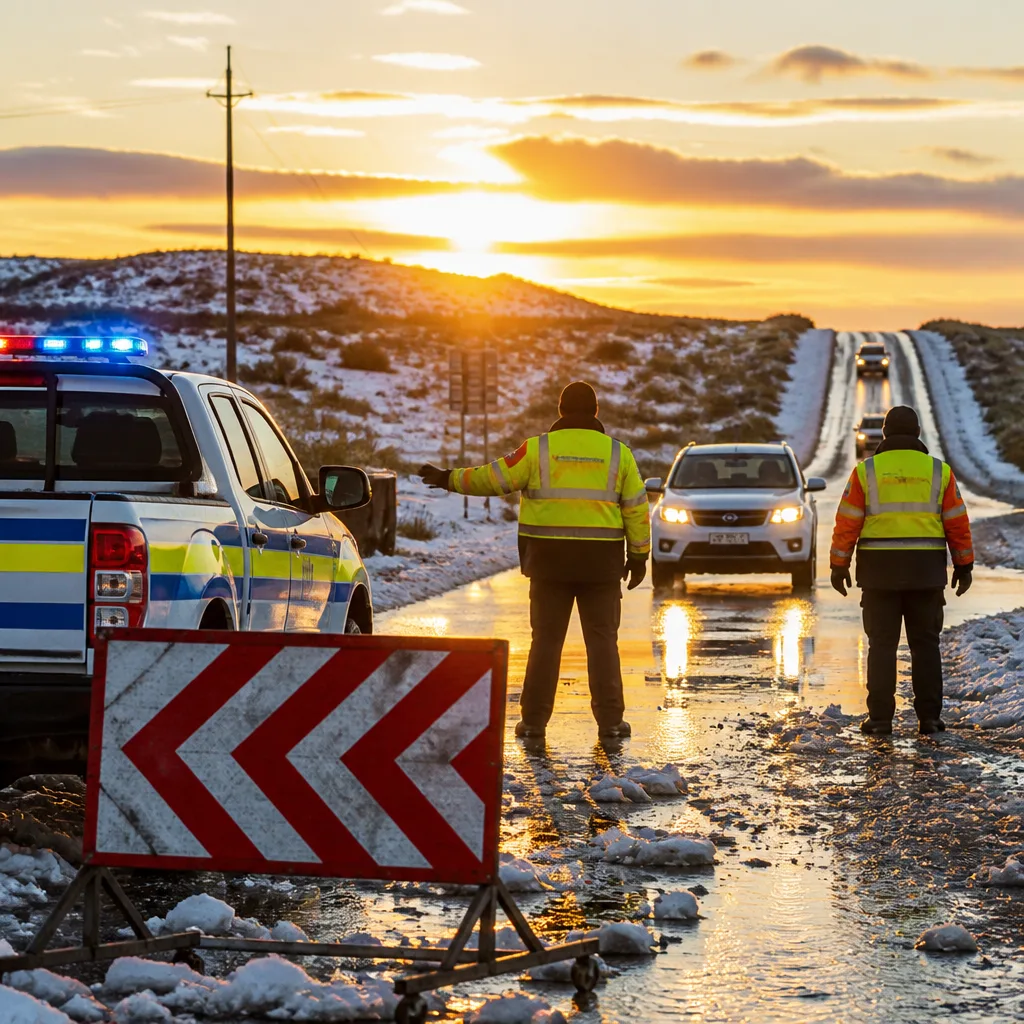
12 August 2026 — The South African Police Service (SAPS) in the Northern Cape has issued a province-wide appeal for caution after floods, snow and icy conditions were reported in multiple districts, the police said on Wednesday.
Motorists urged to adjust driving and follow road signs
Colonel Cherelle Ehlers, the Northern Cape police spokesperson, said drivers should reduce speed and increase following distances to allow for extra reaction time on slippery roads. She warned that standing water can conceal potholes and that spray from large vehicles may reduce visibility.
"Use headlights at all times to enhance visibility and ensure your vehicle is visible to others. Ensure windshield wipers are functioning properly to maintain clear visibility. Avoid puddles and standing water, which may conceal potholes," Ehlers said.
She also advised motorists to obey road-closure signage and to use alternative routes where indicated. If conditions deteriorate, drivers should pull over safely and avoid distractions.
Domestic fire and carbon monoxide risks highlighted
Besides travel hazards, Ehlers warned about increased domestic fire and carbon monoxide risk as residents use heaters, fireplaces and candles during cold conditions.
- Extinguish all fires in fireplaces and switch off heaters before going to bed.
- Do not sleep with burning candles and avoid using open-flame devices inside homes.
- Leave a door or window partially open when using fuel-fired heaters to reduce the risk of carbon monoxide poisoning.
- Install and test smoke alarms; take care when cooking with gas or open fires.
- Avoid overloading multi-plugs and wall sockets with heating appliances; switch off electric blankets at night.
Ehlers gave practical advice for kitchen fires, noting the danger of applying water to oil or grease fires, which can spread flames. She recommended using a fire extinguisher instead and keeping matches, lighters and flammable liquids out of the reach of children.
Quick reference: hazards and immediate actions
| Hazard | Immediate action |
|---|---|
| Flooded or icy roads | Reduce speed; increase following distance; use headlights; avoid standing water |
| Reduced visibility from spray | Keep distance from large vehicles; pull over safely if visibility is poor |
| Home heating and open flames | Extinguish fires before sleeping; ventilate when using fuel heaters; test smoke alarms |
| Kitchen grease fires | Do not pour water on oil fires; use an extinguisher or smother the flame if safe |
The police advisory did not specify the exact districts affected, but said that multiple districts across the province had experienced the extreme weather. SAPS called on residents to remain vigilant and alert while the conditions persist.
Emergency services commonly advise that sudden weather changes can increase both road collisions and house-fire incidents, placing additional demands on policing and rescue personnel. The Northern Cape has dispersed settlements and long travel distances between towns; officials have in past cold-weather events emphasised planning, keeping vehicles roadworthy and carrying emergency kits when travelling.
Community members and commuters are advised to monitor local weather updates and road status notices from provincial authorities and to follow instructions from traffic officers and other emergency services. Where possible, unnecessary travel should be avoided until conditions improve.
The SAPS appeal on 12 August 2026 forms part of a broader public-safety effort during adverse weather events to reduce accidents, injuries and preventable fatalities. Residents with urgent concerns are expected to contact their nearest police station or emergency services as appropriate.













