Community health education needs to move beyond a narrow focus on illness if it is to support the dignity, participation and rights of disabled people, according to an argument emerging from Sedibeng.
The discussion challenges the tendency to treat health as a concern that begins only when someone becomes sick. It places prevention, social well-being, dignity, participation and empowerment at the centre of education about health, while questioning the way disability is commonly explained to communities.
Disabled people are often viewed primarily through the language of sickness, deficiency or treatment. That framing can lead to the assumption that a person is broken or requires fixing. It also risks placing the responsibility for exclusion on an individual, rather than examining the environments, institutions and attitudes that determine whether people can take part fully in everyday life.
From patients to participants
For many years, the dominant framework for understanding disability has been the medical model. Under this approach, disability is mainly located in an impairment in a person’s body or mind. Professionals are therefore expected to diagnose, treat, rehabilitate or cure.
The medical model has provided important knowledge, technologies, therapies and support services. These remain resources on which many disabled people depend. The concern raised in the discussion is not that medical care has no value, but that it becomes inadequate when it is used as the only explanation for disability.
When the medical model is applied without considering wider conditions, disabled people can be reduced to patients. Their identities, choices and contributions may receive less attention, while the barriers around them remain unchallenged. In education, that can influence how learners are viewed, what opportunities are made available to them and whether their participation is treated as a central responsibility.
The social model and the responsibility of communities
Disability activists developed the social model of disability in response to this limitation. The model argues that impairment alone does not explain the disadvantage experienced by disabled people. Inaccessible buildings, discriminatory attitudes, exclusionary institutions and unequal opportunities can create the conditions that prevent participation.
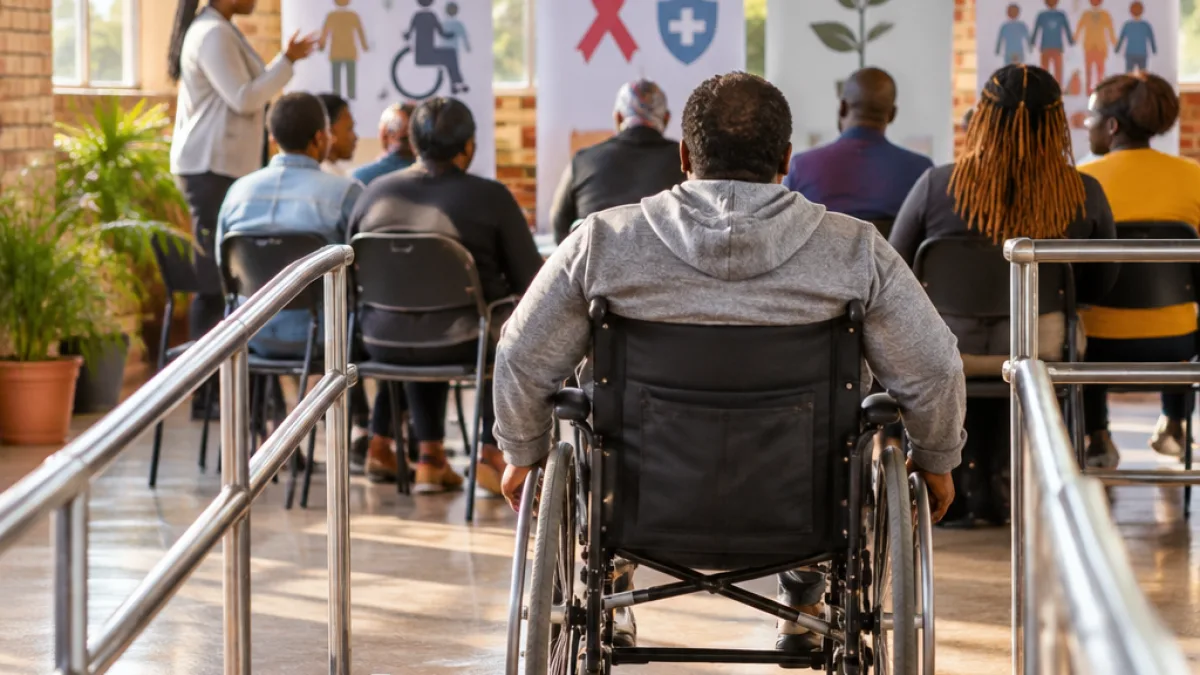
A wheelchair user, in this understanding, is restricted not simply by using a wheelchair but by encountering a building without a ramp. In the same way, a deaf person’s exclusion can be intensified when Sign Language interpretation is not available. The examples shift attention from personal tragedy to the design of public spaces, services and communication.
This distinction is significant for community health education because learning is not only about identifying conditions or directing people towards treatment. It can also help communities recognise the practical and social obstacles that affect disabled people’s access to education, services and public life.
What a broader approach can change
A more inclusive approach would bring together the useful elements of medical support with a stronger focus on rights and social responsibility. Treatment, rehabilitation and assistive technologies can remain important, while education also asks whether schools, public facilities and community programmes are accessible and welcoming.
- Health education: should include prevention, social well-being and empowerment, rather than concentrating only on sickness.
- Disability rights: require attention to discriminatory attitudes, inaccessible environments and unequal opportunities.
- Community participation: means recognising disabled people as active contributors, not only as recipients of care.
- Professional practice: should support individuals while also acknowledging the barriers created by institutions and society.
The approach also places learners and families within a wider conversation about dignity. A disabled learner should not be understood only in terms of an impairment or the services they may require. Their ability to participate is shaped by the support available, the accessibility of the environment and the willingness of institutions to remove exclusion.
For teachers and community educators, the message is practical: the language used to explain disability can influence expectations. If disability is presented only as illness or limitation, communities may overlook the role of access and inclusion. If it is discussed alongside rights, participation and social responsibility, education can contribute to changing those expectations.
The argument does not call for medical knowledge to be discarded. Instead, it seeks a fuller understanding that recognises both the value of professional support and the effects of social barriers. Bringing those perspectives together can help community health education serve a wider purpose — promoting not only treatment, but also belonging, equality and meaningful participation.